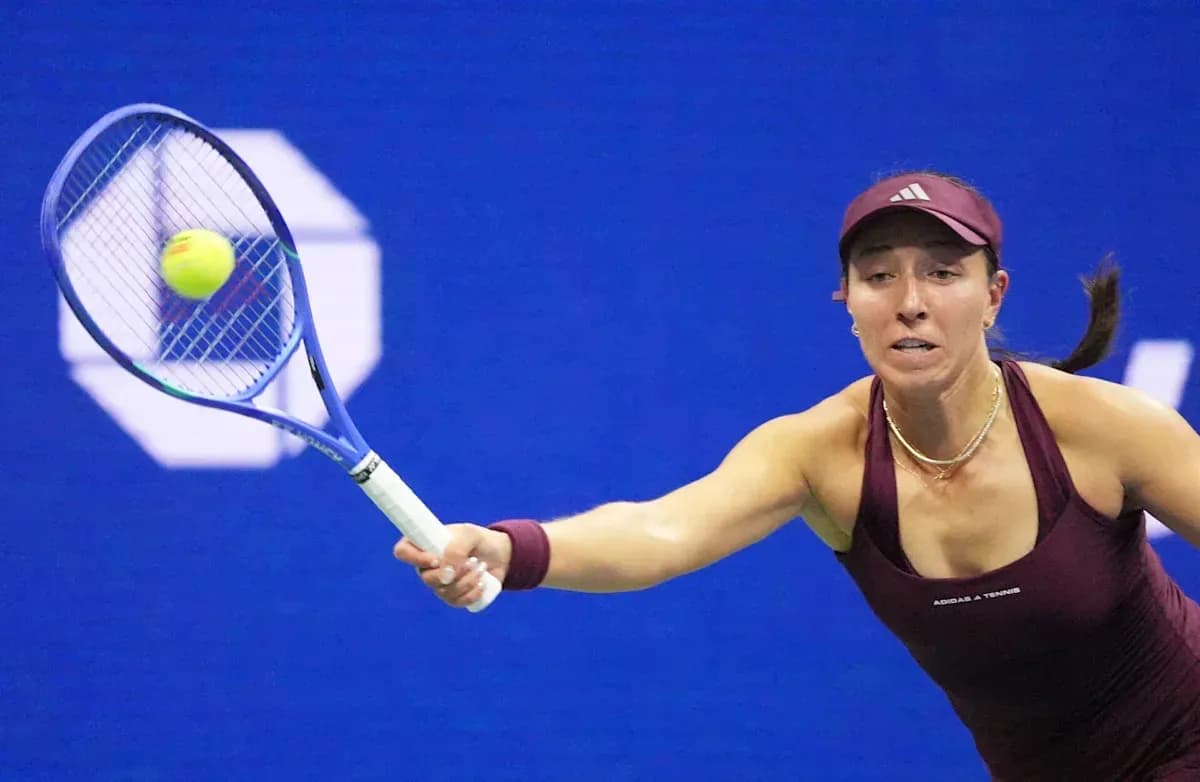
Jessica Pegula Withdraws from Singapore Open: Fitness Concerns Arise
Jessica Pegula has withdrawn from the WTA 500 Singapore Open, scheduled to start on September 21, a decision that will raise more questions than it answers about the World No. 3’s physical condition heading into the business end of the season.
For anyone who watched her US Open semifinal defeat to Aryna Sabalenka, the news lands with a sense of inevitability rather than shock.
A flat semifinal and a fading spark
Pegula’s run in New York had carried the familiar hallmarks of her rise into the game’s elite: clean ball-striking, disciplined patterns, and a stubborn refusal to go away. Then came Sabalenka.
On semifinal day, the American never quite looked like herself. The intensity that usually crackles off her racket felt muted. Her movement lacked its usual snap. She appeared flat, short of energy, and a step behind the ferocious pace Sabalenka imposed from the first ball.
Some observers pointed straight at Sabalenka’s level. The Belarusian can make anyone look rushed, anyone look second-best. Yet Pegula’s body language told its own story. This wasn’t just about being out-hit. It looked like something deeper.
The “mystery bandages” in New York
Hints had been there all fortnight.
Across her US Open run, Pegula took the court with a series of unexplained bandages that did not go unnoticed. In the quarterfinals, one sat on her shin. In the semifinal, another appeared high on her leg, near the quadricep.
No explanation followed. No official injury detail, no on-the-record clarification. They could prove completely unrelated to her Singapore withdrawal, but in elite tennis, patterns matter. Fans and analysts saw the tape, saw the dip in energy, and filed it away.
Now, with Pegula stepping out of a key WTA 500 event, those small details feel a lot louder.
WTA Finals picture: Pegula still in control
What this means for the wider season is where the story really sharpens.
The top eight singles players will book their tickets to the WTA Finals in Indian Wells, which begin on November 8. Pegula, sitting at World No. 3, remains firmly on course to qualify. Her body of work across the year has already given her a strong cushion in the race.
She and Coco Gauff, ranked fourth, currently carry American hopes in that elite field. Behind them, Amanda Anisimova sits at World No. 11, on the outside looking in and needing a surge over the next stretch to make things interesting.
Pegula, at least on paper, does not face that kind of scramble. She has points in the bank, reputation established, and a clear lane toward Indian Wells.
But the calendar still has two demanding months left. Hard courts, travel, pressure, and the expectation that a top-three player will be there when the trophies are handed out.
Skipping Singapore might simply be a smart, measured call to protect her body for the bigger stages still to come. Or it might be the first real sign that her push through the US summer has left a mark that needs more than a week off to heal.
Either way, the next time Jessica Pegula walks onto a court, all eyes will be on how freely she moves—and whether the bandages are gone.