Kei Nishikori's Last US Open Ends in Qualifying Defeat to Rei Sakamoto
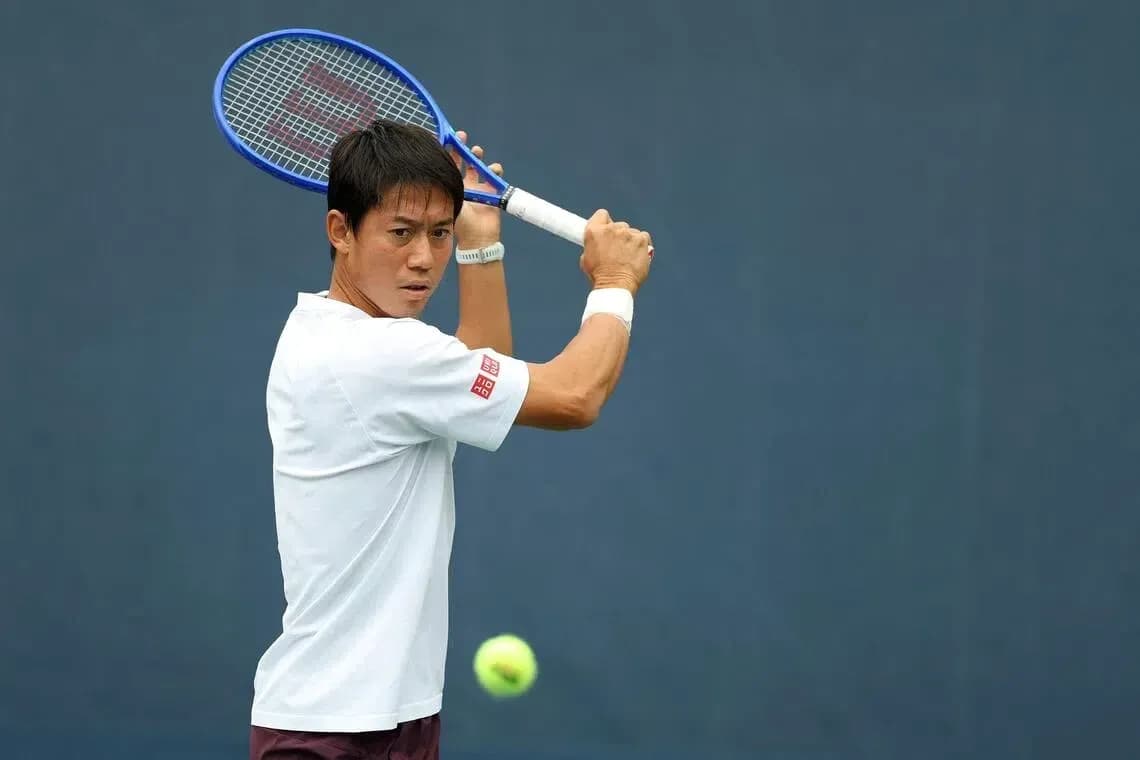
Kei Nishikori walked off Louis Armstrong’s outer courts for the last time at a US Open with no crowd-surfing farewell, no night-session roar, no final charge under the lights. Just a tight, bruising qualifying defeat to a countryman 16 years his junior — and a sense that the torch had finally, definitively, changed hands.
The 36-year-old, playing what is set to be his final season before retirement, fell 6-4, 7-6 (7-3) to 20-year-old Rei Sakamoto in the third round of qualifying on Aug 28, one win short of reaching the main draw at Flushing Meadows.
For the man who became the first Asian male player to reach a Grand Slam final here in 2014, this was not the ending he once imagined. But it was unmistakably symbolic.
Sakamoto’s serve writes a new chapter
From the start, Sakamoto’s serve dictated the story. The world No. 157 rained down 19 aces, repeatedly blasting his way out of trouble and denying Nishikori any rhythm. Nishikori, once one of the sharpest returners on tour, could not produce a single ace in reply.
The veteran actually made the first move. He broke early, sprinting to a 2-0 lead in the opening set, hinting at one more trademark New York run. Sakamoto did not blink. He broke back, then broke again, flipping the set on its head and taking it 6-4 with the authority of a player not interested in sentiment.
The second set turned into a serving duel. Both men held firm, Nishikori digging into his reserves of experience, Sakamoto leaning on raw power and aggression. No breaks. No let-up. It all came down to the tie-break.
That was where the gap between eras showed. Sakamoto surged ahead 6-1, hammering his spots, stepping in on anything short, and closing out the match 7-3 after 1 hour 42 minutes. He finished with 33 winners to Nishikori’s 14, a clean, cold statistical snapshot of a changing of the guard.
“My serves were really good, and I also managed to play aggressively,” Sakamoto said. He admitted he wants to become a player “on par with Kei” — on this evidence, he is not just chasing the dream, he is already knocking on the door.
A legend confronts his last flame
Nishikori, who received a qualifying wild card for the 2026 tournament, spoke with the clarity of someone who understands time has finally caught up.
“It’s a refreshing emotion, as if he totally blew out the last flame of a candle,” he said, describing how Sakamoto’s level surged past his own. “I felt I wasn’t able to cope once the level went up slightly.”
There was no bitterness in his words, only realism and a hint of pride in what comes next for Japanese tennis.
“Not happy to lose today, but I mean I’m happy for Rei, he’s the next Japanese top player so I hope he can make the top 10 soon. It was a great week for me. I was really enjoying it.”
This is the same Kei Nishikori who dragged himself through almost 20 years on tour, who reached No. 4 in the world, who played a US Open final, a semi-final, and “many great matches” in New York, as he put it. The same player who stood on the podium in Rio de Janeiro in 2016 with an Olympic bronze medal around his neck.
“I really enjoyed my entire tennis life,” he said. “It was almost 20 years with the pros and especially here I had great memories, one time final, semis, many great matches I played here in New York so happy to play in the last moment.”
Those memories feel even heavier given the last few years. Since left hip surgery in January 2022, Nishikori has been fighting his body as much as his opponents. The pain, the layoffs, the comebacks that never quite stuck — they all led here, to a qualifying court in Queens, where his final US Open act ended not with a deep run but with a dignified bow.
New York bows out, Tokyo waits
Nishikori had been slated to play mixed doubles at this US Open with Naomi Osaka, a pairing that would have drawn global attention. He did not take the court for that either, another reminder of how fragile this closing chapter has been.
What remains is one more home stand. Nishikori is scheduled to compete at the Japan Open in Tokyo starting in late September, a fitting stage for a farewell run in front of his own fans.
Sakamoto, meanwhile, steps into the main draw in New York for the first time, “happy” simply to be there but armed with a game that suggests he will not be satisfied with just making up the numbers.
One Japanese star is walking towards the exit. Another has just pushed open the main-draw door. The next few weeks will tell whether Sakamoto can turn this symbolic win into the first step of his own Grand Slam story.