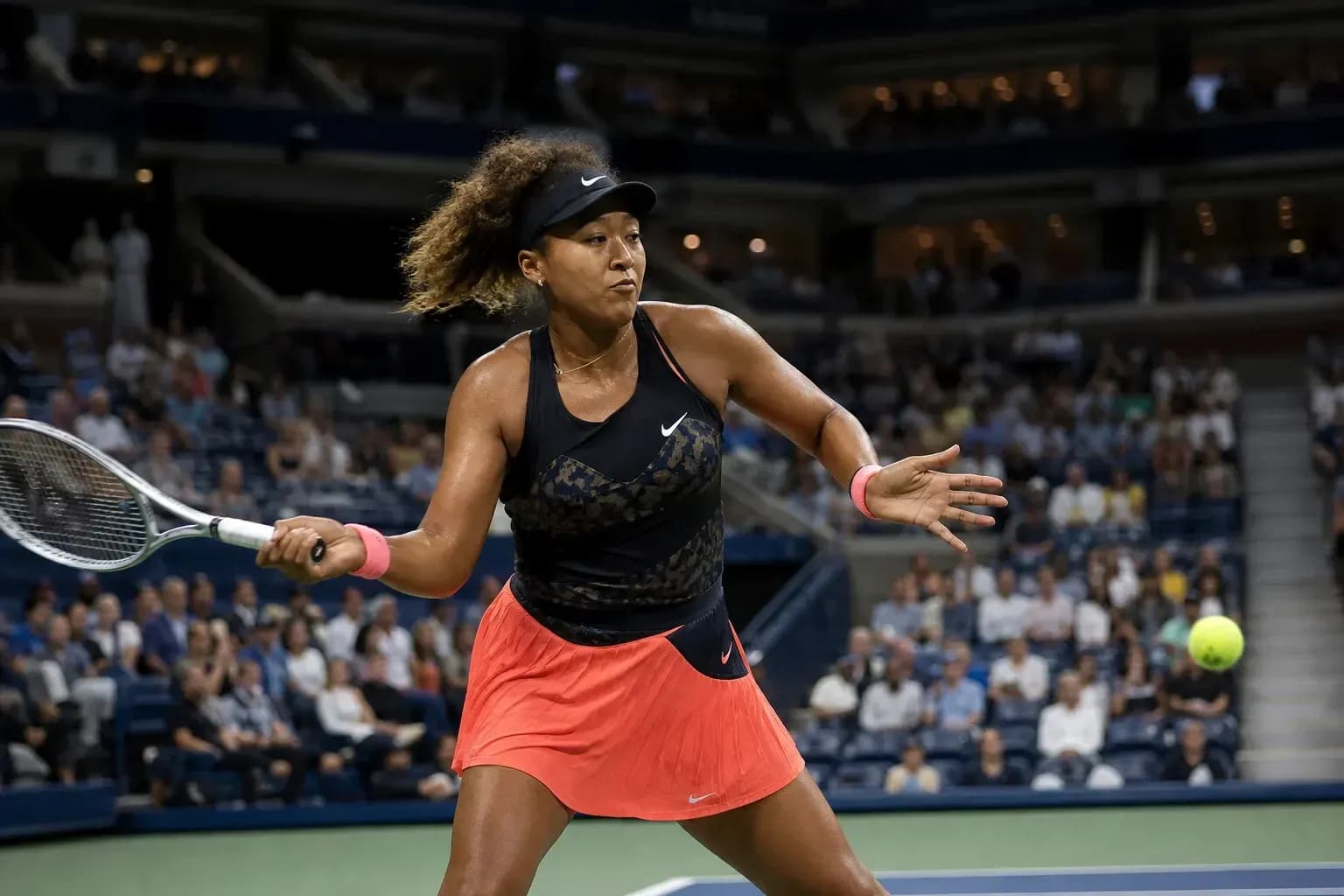
Naomi Osaka Edges Elise Mertens in US Open Thriller
Naomi Osaka has always felt at home in New York. On a humid evening at Louis Armstrong Stadium, under the hard glare of the lights and the low murmur of a restless crowd, she reminded everyone why.
The two-time US Open champion, seeded 13th this year, survived a draining three-set battle to beat 23rd seed Elise Mertens 6-3, 3-6, 7-5 and book her place in the round of 16 in Flushing Meadows.
Fast start, early statement
Osaka opened like a player who knows this court and trusts her weapons. The first set belonged to her serve and her first-strike aggression.
After a cagey start, she ripped through three games in a row, surging to a 4-1 lead. The rhythm on her serve clicked into place: heavy first deliveries, clean points, little drama. Mertens chased angles and tried to extend rallies, but Osaka’s power pinned her back.
Serving for the set, Osaka did not flinch. A cluster of big serves sealed the opener 6-3, and the stadium felt it: the former champion had found an early groove.
Mertens bites back
The second set told a different story.
Osaka came out swinging from the baseline, broke in the third game and looked ready to run away with it. Her groundstrokes were vicious, her intent obvious. Mertens, though, refused to fold.
The Belgian tightened her patterns, cut down the errors and began to feed off Osaka’s pace. The break advantage disappeared quickly as Osaka dropped the next two games, her timing faltering and her errors creeping up. What had looked like a routine night suddenly turned awkward.
Mertens grew in stature with every rally she extended. Osaka’s early break faded into the background as the Belgian levelled the match in sets, 6-3, and the tension inside Louis Armstrong rose a notch.
A bruising decider
The third set became a test of nerve as much as shot-making.
Mertens sensed vulnerability and pounced on a run of unforced errors from Osaka to edge ahead. The Japanese star, usually so decisive when she finds her range, started to misfire off both wings. Her shoulders sagged. The match felt as if it might slip away.
Then came the pause. Osaka took a medical timeout, a brief reset in a contest that had begun to tilt towards Mertens. When she returned, the energy shifted.
The rallies grew sharper. Osaka’s feet moved quicker. The errors did not vanish, but her intent hardened. She clawed her way back into the set, and when the chance appeared late in the decider, she grabbed it, breaking back to drag herself level.
Serving at 5-5, she uncorked one of the biggest shots of the night. An ace, pure and emphatic, pushed her to a 6-5 lead and sent a roar rolling around the stands. From there, she closed the door in the next game, completing a 7-5 finish that felt as much about resilience as talent.
Emotion, edge, and what comes next
“Honestly, I can’t believe I won this match,” Osaka admitted on court afterward, the adrenaline still evident. She thanked the crowd for riding the waves with her, acknowledging how their support had carried her through the swings in momentum.
There was another side to the evening, too. Osaka apologised for her on-court behaviour, including a moment of frustration when she threw her racket. It was a reminder of the intensity simmering beneath the surface in a match that never allowed either player to relax.
The win sends Osaka into the fourth round, where she will face either Elena Rybakina or Yulia Starodubtseva. The names are different, the challenge the same: survive, adapt, and keep finding answers under the lights of a tournament she has already made her own.
If this bruising three-setter is any indication, Osaka has come back to New York ready to fight for every inch.