Naomi Osaka Advances in US Open After Thrilling Match Against Siniakova
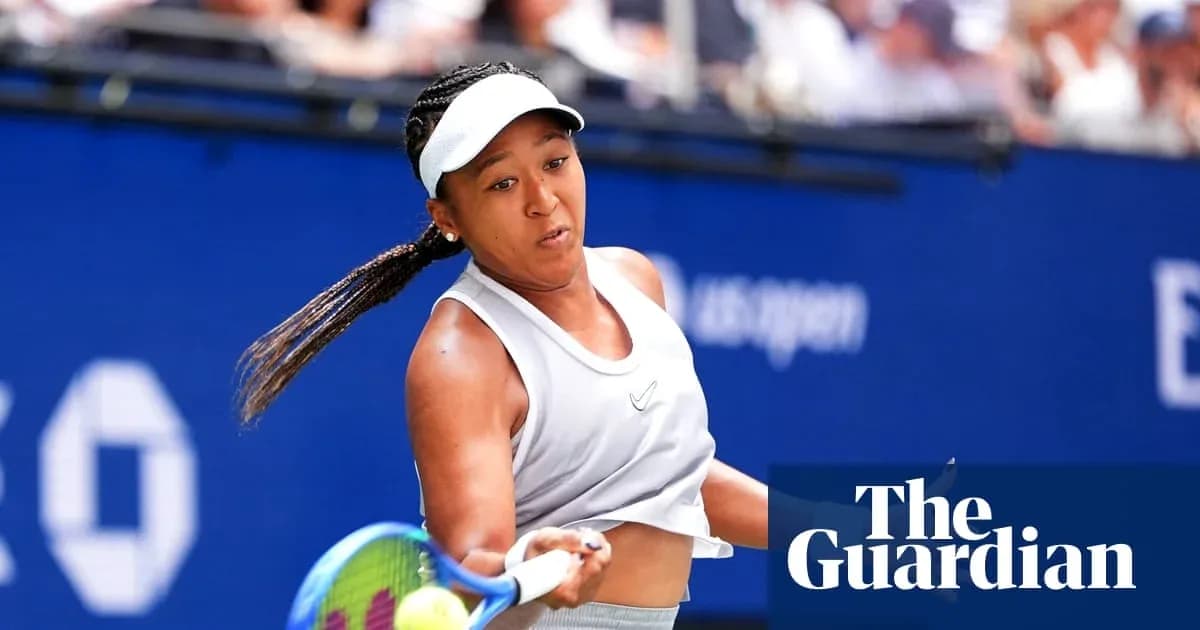
Naomi Osaka had the match in a headlock. Again.
A set up, a break up, Katerina Siniakova fading under the lights, and a routine stroll into the US Open third round seemed signed off. For the second straight match in New York, Osaka looked like the ruthless hard‑court champion who once owned this city.
Then the tension arrived.
What had been smooth and controlled suddenly tightened. The forehand, so clean for a set and a half, began to drag long. The first serve lost its bite. Siniakova, who had been hanging on, sensed the shift and refused to go quietly. Osaka’s lead slipped, the second set bled away, and a match that should have been over in straight sets lurched into a decider.
This is where Osaka’s season is different.
Instead of spiralling, she reset. She slowed everything down – her breathing, her between-point routine, even her body language. The third set looked like a different match. Osaka reasserted herself with a barrage of heavy serves and precise baseline hitting, ripping through the decider 6-1 to complete a 6-2, 5-7, 6-1 victory and book her place in the third round.
It was not clean. It was not simple. It was important.
A contender again
For the first time in years, Osaka arrived at the North American hard‑court swing looking like a genuine grand slam threat rather than a former champion trying to find echoes of her old self.
This season, she has finally stitched together a year that extends beyond her beloved hard courts. She reached the fourth round at Roland Garros and the quarter-finals at Wimbledon, both career-best runs, on surfaces that once exposed her impatience and uncertainty.
The grass campaign was the revelation. At Wimbledon, on a court that has long felt like enemy territory, she produced one of the standout wins of the tournament by beating world No 1 Aryna Sabalenka in the fourth round. The effort of reaching the Bad Homburg final the week before caught up with her in the Wimbledon quarter-finals, where fatigue dulled her edge, but the level she showed across that stretch was the sharpest since her last major title at the 2021 Australian Open.
She came to New York riding that wave of belief. That belief has brought something else with it: expectation.
Winning while nervous
The first two rounds at Flushing Meadows have carried that weight. In her opener against Anastasia Zakharova, Osaka twice gave up breaks of serve in a nervy performance, scraping through 7-6 (6), 7-6 (3). On Wednesday, the nerves cost her more than a lead – they cost her a set.
What has changed is how she responds when the match tilts away from her.
Osaka spoke about leaning on her past, about using her own history as a resource when the court starts to shrink and the racket feels heavier. When a match drifts into a third set, her mind goes back to the 2019 Australian Open final, when she recovered from a brutal momentum swing against Petra Kvitova to claim the title in three sets. That memory, that proof of resilience, has become a reference point.
Experience is her new weapon. She has seen almost everything, felt almost everything, and now knows how to mine those moments when a match demands calm rather than brilliance. In New York, where she has already lived some of her most intense days, she is trying to write another chapter rather than chase a ghost.
More than the tennis
Talking about Osaka now means talking about far more than her backhand or her break‑point conversion rate.
Every grand slam appearance this season has come wrapped in a visual statement. Walk-on outfits and match kits have become part of the Osaka theatre, sparking their own headlines and arguments. In New York, her look pays homage to Allen Iverson, the former NBA star whose defiant individuality reshaped the culture around him.
The reaction is always loud. Her elaborate choices are celebrated by some as playful and bold, mocked by others as attention-seeking. The same player who once admitted that the spotlight suffocated her now steps into stadiums wearing designs that guarantee she cannot be ignored.
For a quiet, inherently introverted person, fashion has become her language. It gives her a way to express herself that doesn’t rely on press conferences or social media posts. She runs, she hits, she entertains – and she dresses how she wants while doing it.
The backlash says more about her critics than about her. Those who still bristle at her anti‑racist stance during the early 2020s rarely miss a chance to question her motives or accuse her of hypocrisy, dragging up her past mental health struggles as if they disqualify her from enjoying the stage now. The bad faith is obvious. The anger at her mere presence, even more so.
On court, though, the equation remains simple: she is here to win tennis matches. The rest is noise.
A brutal road ahead
Osaka’s draw offers little comfort. Among the title contenders, she faces one of the steepest paths, with second seed Elena Rybakina looming as a potential fourth-round opponent. Before that, there is work to do. The third round awaits, and she will need more of the ruthless clarity she found in that final set against Siniakova.
Elsewhere in the women’s draw, another former champion moved with far less drama.
Iga Swiatek, the eighth seed and 2022 US Open winner, eased into the second round with a controlled 6-3, 6-2 win over Nadia Podoroska. Her performance carried the familiar hallmarks: early breaks, suffocating baseline pressure, and a match that never really felt in doubt. It was the kind of efficient opening that builds a quiet threat over the first week.
For Britain’s Harriet Dart, there was no such foothold. Coming through qualifying to reach the main draw, she ran into the 25th seed, Marie Bouzkova, and was swept aside 6-2, 6-2, outplayed from the baseline and never allowed to settle.
The men’s event delivered an early shock of its own. Félix Auger‑Aliassime, the third seed and a semi-finalist here last year, saw his campaign unravel as dizziness and illness took hold. After edging the first set against Karen Khachanov in a tie-break, he faded badly, losing 6-7 (5), 6-3, 6-2, 6-2 and exiting far earlier than expected.
So Osaka marches on, battle‑scarred but still standing, her tennis and her presence impossible to separate. The draw will not soften, the scrutiny will not ease – which raises the question that now hangs over this US Open: is she ready not just to handle all of it, but to own it again?