Nick Kyrgios Returns to Tennis After One-Month Ban for Cocaine Use
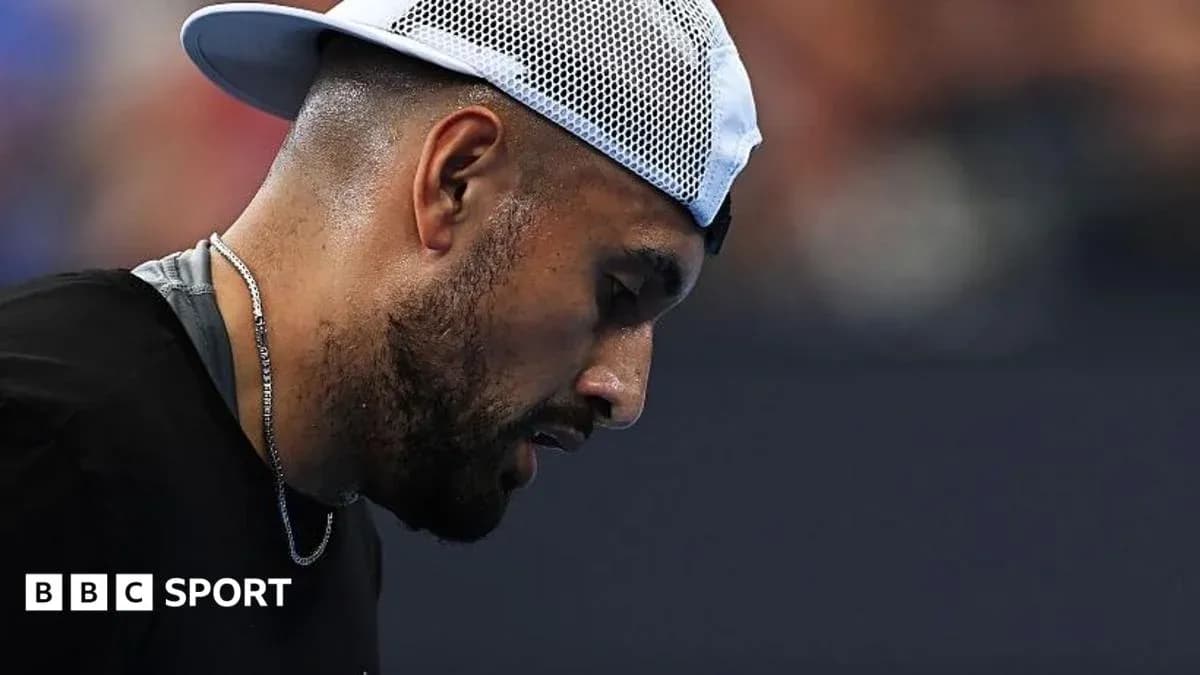
Nick Kyrgios is free to return to tennis after accepting a one-month ban for testing positive for cocaine – the latest twist in a career that has rarely strayed far from the spotlight.
The 31-year-old Australian was provisionally suspended on 4 August after a sample taken during the Mallorca Open in June was found to contain benzoylecgonine, a metabolite of cocaine. Kyrgios told investigators from the International Tennis Integrity Agency (ITIA) he had used cocaine at a nightclub in Magaluf in the early hours of 20 June, two days before his first-round match at the tournament.
He lost that match in straight sets to compatriot Adam Walton.
A short ban, but a clear line crossed
After consulting an independent expert, the ITIA accepted that Kyrgios had used cocaine out of competition. That distinction mattered. Under anti-doping rules, cocaine is listed by the World Anti-Doping Agency as a stimulant and substance of abuse, and in-competition use can lead to far heavier sanctions.
Kyrgios faced a potential three-month suspension. The pressure eased when he entered a treatment programme, and his punishment was cut to one month. The ban ended on Thursday, 3 September, making him immediately eligible to compete again.
He will forfeit €6,570 (£5,650) in prize money from the event and, already sliding down the rankings after an injury-ravaged spell, now finds himself at 918 in the world.
When the positive test was first announced, Kyrgios said he would step away from social media and public life for 28 days to “focus on getting myself right”.
A body breaking down, a career at the crossroads
The former world number 13 has played only four singles matches this season, his calendar shredded by knee and wrist problems that have stalked him in recent years. His last appearance came in men’s doubles at Wimbledon, where he and Alexander Bublik went out in the first round.
After his provisional suspension, Kyrgios spoke openly about the strain of trying to hang on at the top level while his body faltered.
He described the past few years of injuries as having taken “a huge toll on me, both mentally and physically”, writing on Instagram that “my body hasn't been able to do what my mind expects it to do” and admitting that coming to terms with being near the end of his career had been “harder than I ever imagined”. Then came the line that cut through the noise: “None of that excuses what I did.”
A lightning rod returns
Kyrgios has long been one of the sport’s most divisive figures. His shot-making and feel for the game have never been in doubt. His behaviour has rarely escaped it.
He has been hit with repeated heavy fines for smashing racquets, audible obscenities and running battles with umpires. The combustible on-court persona has been mirrored by turbulence away from the stadiums.
In 2023, he admitted assaulting an ex-girlfriend two years earlier, avoiding a criminal conviction but drawing fierce criticism. He has also been widely condemned for comments viewed as misogynistic, and in 2024 drew fresh scrutiny by sharing a post from controversial influencer Andrew Tate, later insisting he had gone “to all lengths” to distance himself from the self-proclaimed misogynist.
Even in the anti-doping arena, where he now finds himself under the microscope, Kyrgios has not stayed quiet. He recently attacked the handling of high-profile cases involving Jannik Sinner and Iga Swiatek, calling them “disgusting” for tennis.
Now he carries his own doping case on his record.
What’s left for Kyrgios?
Strip away the chaos and the achievements remain significant.
- Seven ATP Tour singles titles.
- A Wimbledon final in 2022, where he pushed Novak Djokovic to four sets.
- A home Grand Slam triumph in 2022 alongside Thanasi Kokkinakis in the Australian Open men’s doubles.
Those peaks feel a long way from a ranking of 918 and a one-month cocaine ban, yet the door is not closed. The ban is over. The injuries, he says, have dragged him towards the end. The question now is whether he has the desire – and the discipline – to write one more serious chapter in a career that has rarely known anything but extremes.