Novak Djokovic's Shocking First-Round Exit at the US Open
NEW YORK — The end didn’t come with a classic Djokovic roar or a defiant escape. It came with a limp, a grimace, and finally, tears.
On a heavy, bewildering night inside Arthur Ashe Stadium, Novak Djokovic lost in a way he simply doesn’t lose. Hadn’t lost in 18 years. A first-round exit at a Grand Slam, his first since the 2006 Australian Open, snapped a streak of 77 straight opening wins at the majors and left the greatest hard-court player of his era staring at something he has spent a career outrunning: time.
Across the net, Mariano Navone — a rugged Argentine grinder, a top-50 regular more at home on clay than under the Ashe roof — played the match of his life and walked away with a five-set shocker: 7-6(5), 5-7, 4-6, 6-2, 6-1 in four hours and 36 minutes.
He did it against a legend who seemed to age in real time.
A night that made no sense
For more than four hours, almost nothing added up, except the number next to Djokovic’s age: 39.
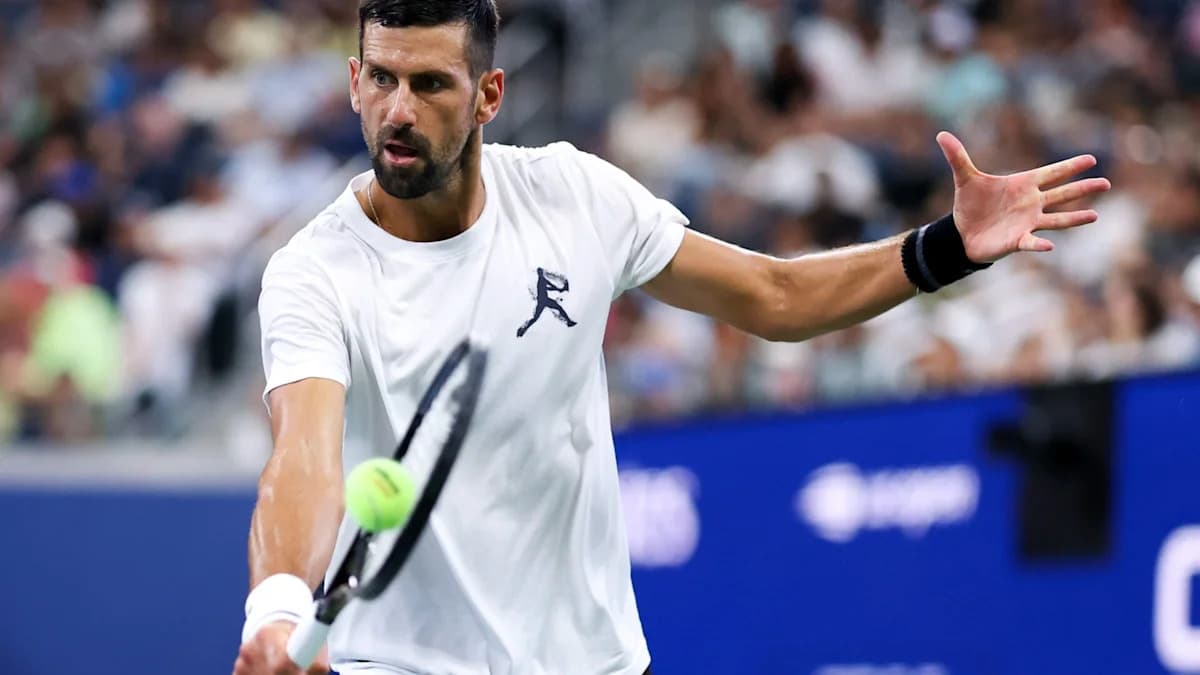
He started like the old Novak. Three aces in his first two service games. A 3-0 lead. The familiar early chokehold on a match that looked, on paper, like a gentle glide into the tournament.
Then the rallies lengthened. The points dragged past six, seven, eight shots. On a humid but hardly brutal New York night, Djokovic began to sag. Navone dug in, forced him to hit one more ball, then another. The Argentine, whose lone ATP Tour title has come on clay, suddenly looked completely at home on the biggest hard court in tennis.
Rain arrived seven games in. The roof closed, the air conditioning hummed, and the conditions swung toward Djokovic’s historical sweet spot: indoors, at night, in New York, where he has been close to untouchable for a decade and a half. It didn’t matter. The body language already told a different story.
By the end of the opening set — a 73‑minute grind that Navone snatched in a tiebreak — Djokovic was leaning on his knees between points. The pattern was stark: on rallies of four shots or fewer, Djokovic dominated. Anything longer, and Navone held the edge, chipping away at the champion’s reserves.
The body breaks
In the seventh game of the third set, the façade cracked.
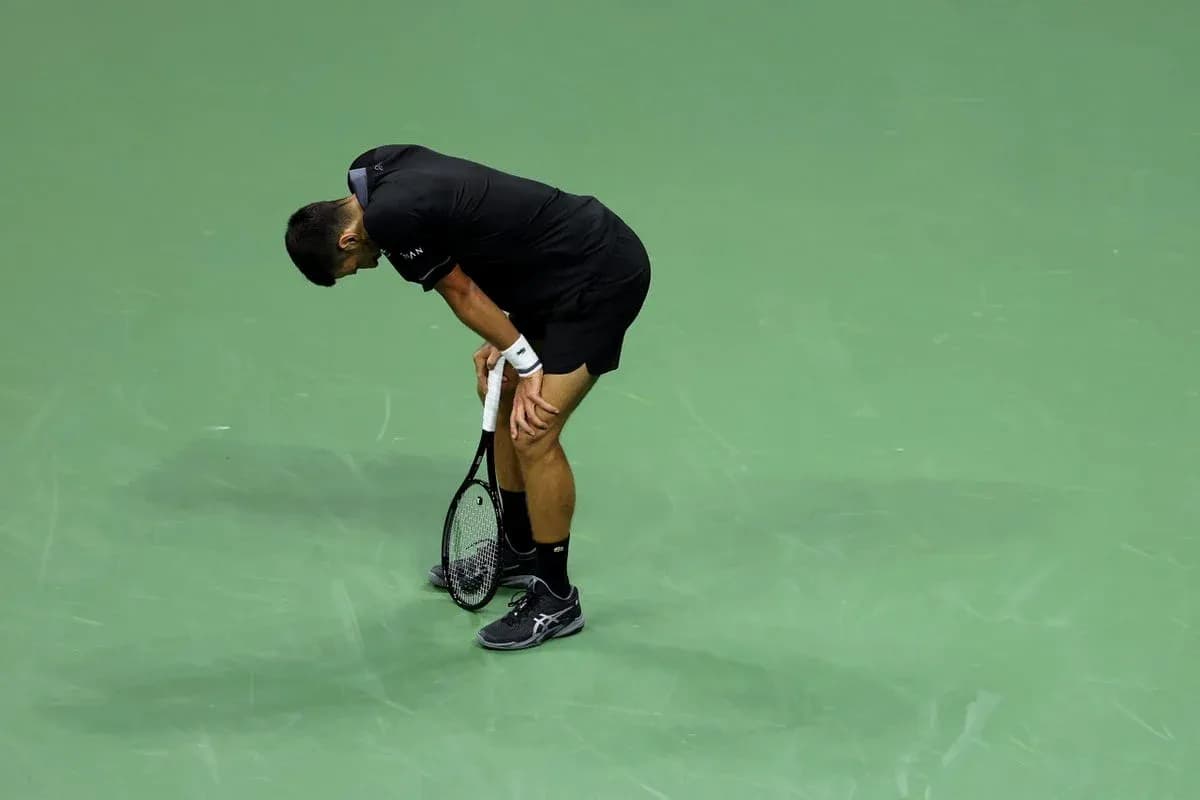
Djokovic walked to the side of the court and vomited into a bin mid-game. He kept playing, but each long rally looked like it took a year off his career. After points, he bent over, hands on thighs, trying to will his body through the next one.
He later called it “an awful feeling on the court,” describing vomiting, cramping, and pain that spread until “my whole body… starts to collapse.” He said the back “gave up in the end, and the shoulder,” and admitted it’s a problem he’s “been carrying unfortunately pretty much every match this year.”
He had felt it as early as the fourth game, he said. Still, he tried to leave room for the man who beat him, calling Navone “a nice guy, a fighter.”
The fighter across the net refused to fade. Djokovic, rusty after playing just one match since his straight-sets Wimbledon semifinal loss to Jannik Sinner, knew he had only one way out: attack, shorten points, play on the front foot. For two sets in the middle of the match, he somehow found enough.
He clawed back the second set. He edged the third. The scoreline read 7-6, 5-7, 4-6. The crowd, sensing another Novak escape act, rose with him. Navone, for the first time, looked shaken.
Then the fourth set began, and the clock on Djokovic’s body started to blare.
The dagger in the fifth
Djokovic broke early in the fourth, teasing the familiar script. A break up, finish line in sight, the stadium bracing for the inevitable.
Navone ripped it up.
He broke straight back, then broke again as Djokovic’s movement disintegrated. The Argentine sent him scrambling side to side, up to the net, back again. Djokovic’s legs no longer answered the call. The fourth set flew by, 6-2 to Navone, as the match flipped from contest to survival test.
Djokovic took a medical timeout before the decider. A trainer worked on his lower back, trying to coax one more surge from a body that had already spent too much.
The fifth set answered the question.
In the second game, Navone carved the point that felt like a turning point in a career. He dragged Djokovic around the court, then lured him forward. As Djokovic moved in, Navone threaded a backhand down the line. Djokovic lunged, tried to half-volley, and failed. His next steps were labored, almost tentative. He limped through the following games, wincing, as the energy in Ashe shifted from nervous to funereal.
By the fifth game of the fifth set, tears began to drip from Djokovic’s eyes. His wife, Jelena, and their children, Stefan and Tara, watched courtside, growing more somber with each changeover.
Navone, unflinching, finished the job. A 6-1 final set against a 24-time Grand Slam champion who could barely move by the end, but refused to quit.
The long shadow of recent months
This wasn’t supposed to be the Djokovic who arrived in New York.
He had spoken before the tournament of a productive two-week training block after an early loss in Cincinnati to Thiago Tirante. That defeat, he said, gave him time “to really train and get my body and mind into the right state” for a tournament he still circles as one of the few he truly cares about.
He insisted he felt “as best as I can be,” while acknowledging that no practice can replicate best-of-five under the Ashe lights.
He also hinted at the difficulty of first rounds in recent years. “Hopefully I can overcome the first hurdle and build from there,” he said.
That hurdle turned out to be a wall.
The warning signs had been there. In Cincinnati, he looked physically vulnerable in the heat and humidity. He referenced a medical condition he has been managing for “the last couple of years” but declined to detail it. On Sunday night, that vague problem became painfully visible.
Even his Wimbledon run, where he reached the semifinals and outlasted Félix Auger-Aliassime in a vintage five-setter, now looks like a last great push against the tide. The straight-sets defeat to Sinner that followed appeared to hit him hard. Late in that match, when a fan shouted that he could still hang with the world No. 1, Djokovic muttered, “Maybe 10 years ago.”
After Wimbledon, he disappeared into family time. Vacation. Tennis only with his wife and children. The hard-court grind could wait.
It caught up with him in New York.
A champion’s calculation
Djokovic has spoken often in the last two seasons about the toll of best-of-five. How much energy he has to spend in the first week. How little might be left if early matches turn into marathons.
On Sunday, that calculus turned brutal. Even had he survived Navone, his 2026 U.S. Open already felt compromised midway through the third set. The cost of this match alone looked too high to sustain another two weeks.
He walked off Ashe to an ovation that carried more concern than celebration. Five years ago, chasing the calendar Grand Slam, he broke down in tears after playing one of his worst matches of the year in the U.S. Open final. The New York crowd, often cool toward him, embraced him that day.
This time, he repaid them with a gesture that felt almost like a farewell to something, if not to the sport itself. He turned to each side of the stadium and flashed a heart sign with his fingers.
Later, outside the locker room, he sounded drained but not defeated. Asked if he could fix the medical issue that is dragging him down, he answered simply: “I’m trying, man, I’m trying. Let’s, let’s see.”
Earlier this summer, he released a documentary titled “The Wolf in Winter,” a portrait of a champion refusing to bow to the closing of his era.
On this strange, sobering night in New York, the wolf looked mortal. The winter he has long kept at bay stepped a little closer. The question now is not what Novak Djokovic has already done, but how much more his body will let him do.