Novak Djokovic's Harrowing US Open Defeat
Novak Djokovic has known pain on a tennis court. He has played through torn muscles, hostile crowds, suffocating pressure. What unfolded on the first night of this US Open was something different. It was raw, undignified, and, in the end, brutally human.
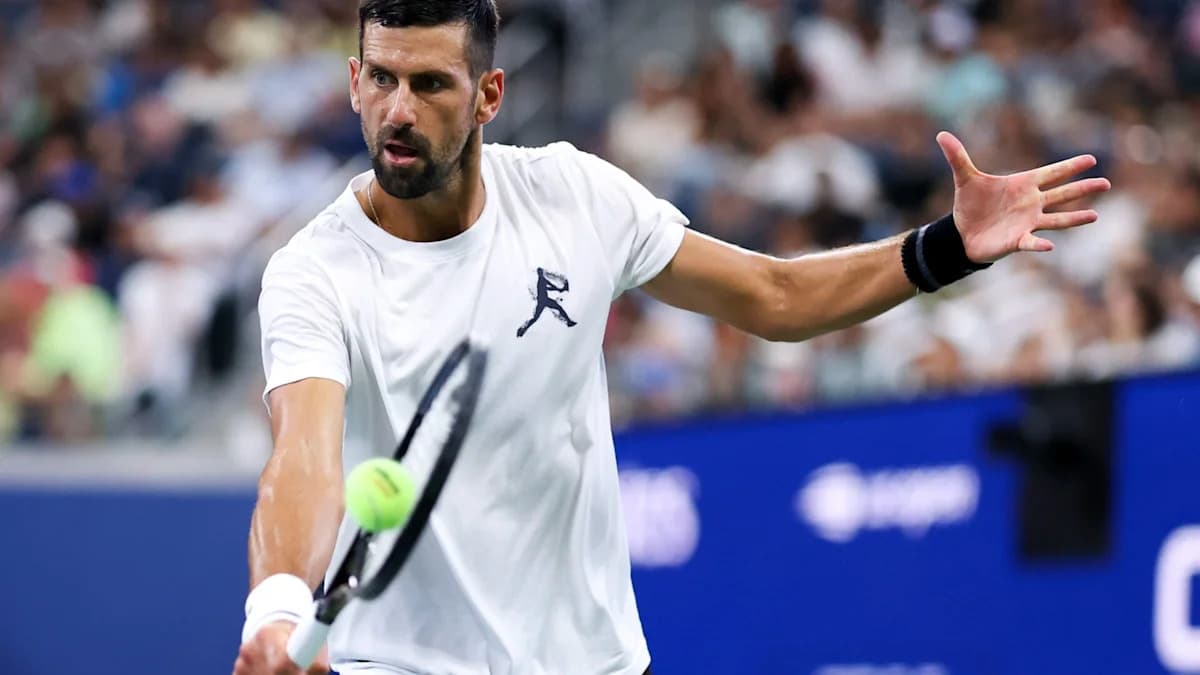
Approaching the three-hour mark under the lights of Arthur Ashe Stadium, Djokovic walked briskly to the corner of the court, bent over the towel bin and vomited. Not once. Not for the last time. It was the most visible sign of a body in open revolt.
Four hours and 36 minutes after they began, the 24-time grand slam champion left the court in tears, beaten 7-6 (5), 5-7, 4-6, 6-2, 6-1 by Mariano Navone in the first round. A record-extending 84th grand slam appearance ended as one of the most harrowing nights of his career.
A giant brought low
This is only the third time Djokovic has lost in the opening round of a major. The last time came at the 2006 Australian Open, when he was 18 and still learning how to live at this level. He is 39 now. The defeat lands differently.
What shocked most was not the scoreline but how early the distress arrived. Barely 15 minutes into the match, having broken for 2-0 in the first set, Djokovic already looked lost in the New York humidity. He struggled to consolidate the break. He bent over between points. The night-time conditions were supposed to be kinder. They were anything but.
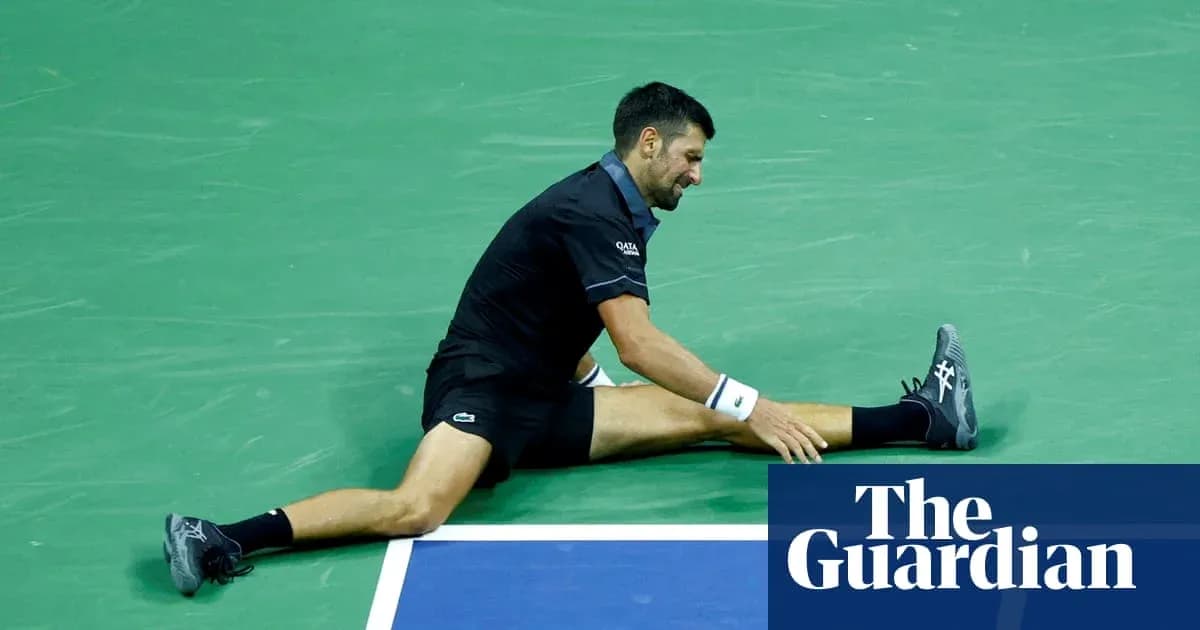
Across five sets he drifted in and out of a daze. He panted from behind the baseline. He vomited. He fought for balance. He battled cramps. The sight of one of the sport’s great physical specimens stumbling and gasping on one of its grandest stages turned the contest into a grim watch. By the end, he had nothing left.
This was not an isolated episode. Only weeks ago in Cincinnati, Djokovic had laboured in similar evening humidity against another Argentinian, Thiago Agustín Tirante, and lost in three sets while his opponent coped comfortably with the conditions.
After that defeat, Djokovic pointed to a specific health issue exacerbated by heat and humidity. He repeated the explanation in New York.
“I think it was obvious that [it was] an awful feeling on the court for me,” he said. “It is something that I’ve been carrying, unfortunately, pretty much every match this year. You know, vomiting, throwing up, serious issue there, and then my whole body starts to collapse, basically cramping and pain, and the back just gave up in the end, and shoulder, and I couldn’t close it out, break up in the fourth, but just struggled all the way since the fourth game of the match. And again, don’t want to take too much out of his win. Congrats to him; he’s a nice guy, fighter, but you know, I didn’t enjoy myself.”
Navone’s night of a lifetime
On paper, this looked like a gentle start for Djokovic. Mariano Navone, 25, is a gritty competitor who has climbed back into the top 50 after flirting with a slide out of the top 100, but his best work has come on clay. Hard courts, under lights in New York, against the man he idolised? The script seemed written.
Then the match began to twist.
At 4-3 in the first set, Djokovic was coughing and spluttering behind the baseline, repeatedly bending over between points. Rain forced the tournament to close the Arthur Ashe roof, trapping the humidity inside. From that moment, the contrast between the two men sharpened.
Navone looked fresh, unbothered by the heavy air. Djokovic sat with ice cloths draped over him, seeking any relief. At 5-4, the doctor handed him pills. His serve, remarkably, stayed sharp for long stretches, buying him time and keeping him in a match his body wanted to abandon.
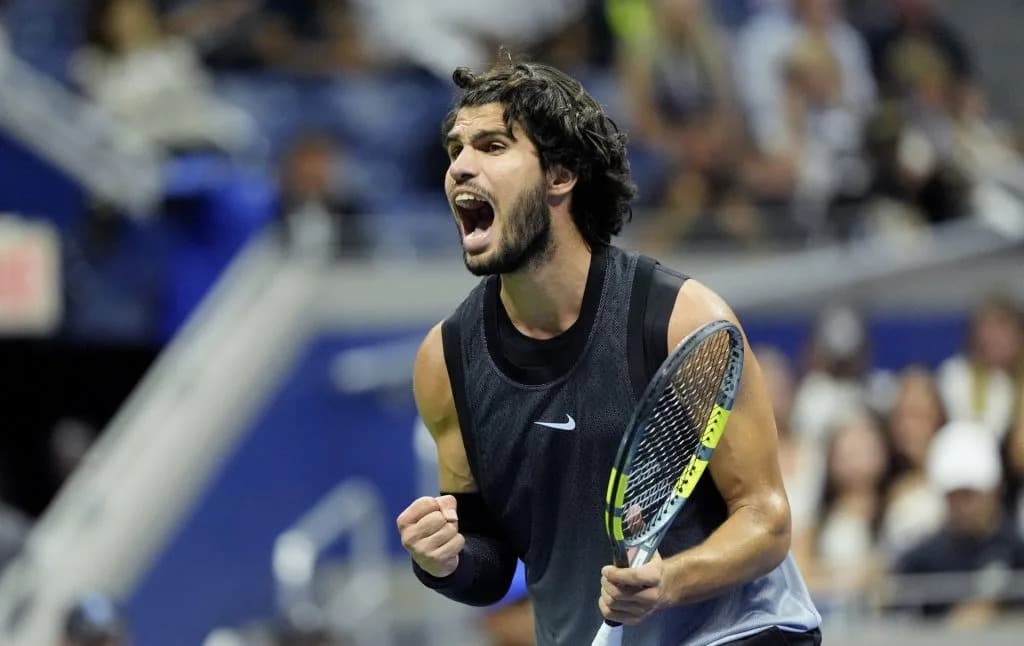
Across the net, Navone was living out a teenage dream. The Argentinian has long adored Djokovic. After the draw came out, fans dug up old tweets from a 13-year-old Navone, his X timeline filled with messages of support for the Serb. His parents had not intended to come to New York this year; once they saw the draw, they scrapped a Caribbean holiday and flew to watch their son face his hero.
He did not freeze. He hunted down every ball, held his length off both wings, and dragged rallies into the kind of bruising exchanges Djokovic, in this state, simply could not survive. It was not spectacular shot-making that broke the champion down. It was relentlessness.
A lead, then a collapse
For all the suffering, Djokovic still found a way to fight his way into control. His serve remained a weapon. His competitive instinct refused to yield. He clawed his way to a two-sets-to-one lead and even earned a break in the fourth. In a career defined by escapes, this began to look like another.
Then the legs went.
By the fourth set his movement dulled and his first serve lost its bite. The cramps he had been staving off finally took hold. Navone sensed it and tightened the screws, making him play, making him stretch, making him suffer.
The scoreline of the final two sets – 6-2, 6-1 – tells the rest. Djokovic’s body, already pushed past its limit, simply stopped answering the call. What remained was a proud champion reduced to survival mode, then to resignation.
When it ended, just around midnight, Djokovic walked off Arthur Ashe in tears. Navone had his career-defining win. Djokovic had another stark reminder that, at this age, at this intensity, even the greatest can be betrayed by their own body.
The question now is not about his legacy; that is secure. It is about how often nights like this can be endured, and how many more times he is willing to walk into this kind of storm.