
Novak Djokovic's Shocking US Open Exit: A Historic Upset
NEW YORK — Arthur Ashe Stadium has seen Novak Djokovic at his most ruthless, his most relentless, his most inevitable. On Monday night, it saw something else entirely.
It saw him broken.
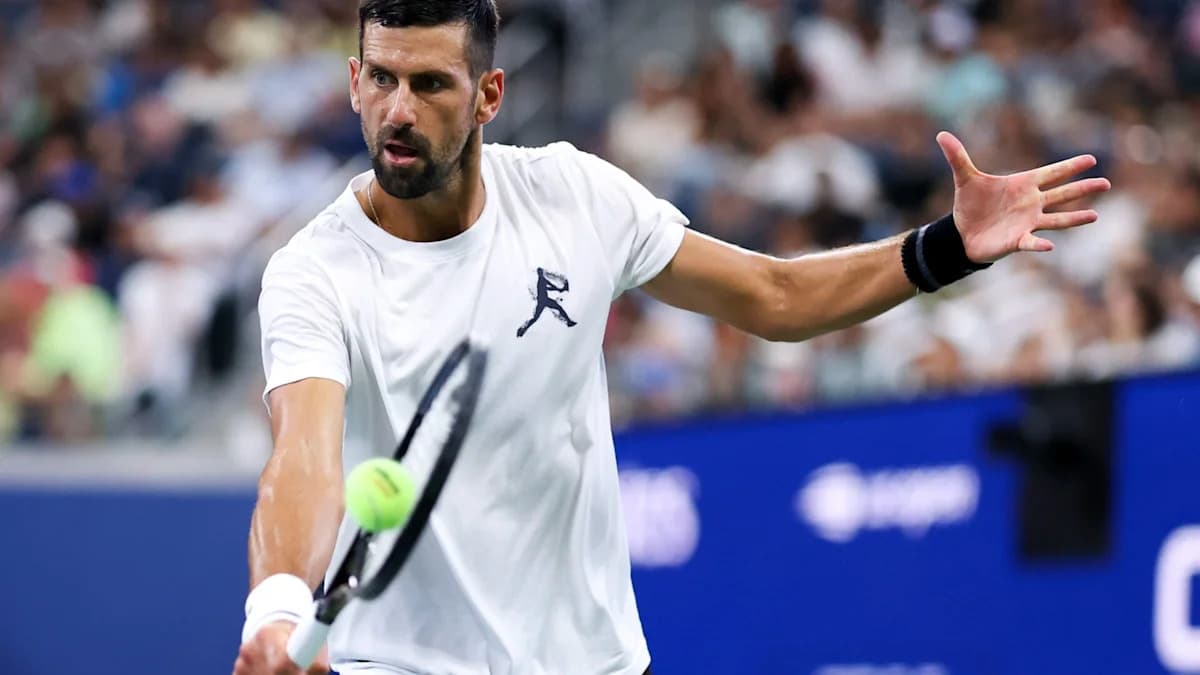
At 39, chasing that historic 25th Grand Slam title, Djokovic walked into the US Open with a familiar aura: a four-time champion, the greatest major winner in the men’s game, and still, on paper, as dangerous as anyone in the draw. He walked out after the first round, beaten in five sets by Mariano Navone — 7-6(5), 5-7, 4-6, 6-2, 6-1 — and looking every bit like a man whose body had finally called his bluff.
This wasn’t just an upset. It was a rupture in the story he’s been writing for nearly two decades.
A streak snapped and a giant staggered
The numbers alone are jarring. Djokovic hadn’t lost in the first round of a Grand Slam since the 2006 Australian Open. He’d won 78 straight opening matches at majors. At the US Open, he was perfect through the first two rounds, 37-0 before this night.
All of that went in four hours and 36 minutes, ending on a meek, floating return that Navone swatted away. Djokovic didn’t even move for the reply. He just watched it go, then watched the stadium react to someone else.
For long stretches, he barely resembled the player who lifted this trophy in 2023. He moved slowly. He slumped in his chair. He took pills. He vomited. He drifted through changeovers like a man trying to buy time from a body that had already made up its mind.
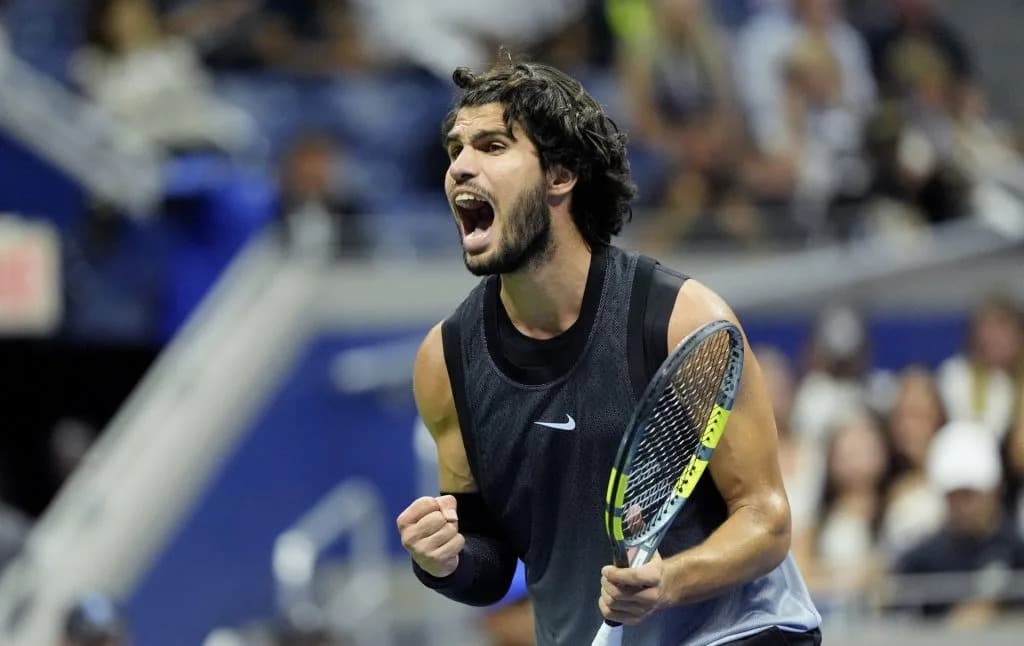
Navone, ranked No. 49 and one of 11 Argentine men in the draw, saw all of it. He felt the weight of the moment and the name across the net.
“(It) was very tough for me because you are playing with the ‘GOAT’ on this court,” he said on court afterward. “For sure it’s the best thing I’ve had on court. This is an amazing court and the biggest stage. It’s amazing, the way we play. I mean, five sets. … I’m very happy. I don’t know. What can I say?"
From cruise control to chaos
For half an hour, the script looked familiar. Djokovic raced out to 3-0, then 4-1 in the opening set. He dictated rallies, took the ball early, and looked ready to swat aside a debutant on Ashe with the kind of ruthless efficiency that has defined his career.
Then the errors arrived. And they didn’t stop.
Djokovic’s level dipped sharply. Forehands flew long. Backhands died in the net. He piled up unforced errors “seemingly on every return,” as if each point asked a little more of a body that had nothing extra to give.
Navone sensed the crack and drove into it. He broke twice to erase the early deficit, then hammered an ace to level at 4-4 and seized the momentum. The tiebreak belonged to him too, Djokovic’s misery sealed when he dumped yet another return into the net.
One set gone. The streak wobbling.
A fight on fumes
The second set turned into a nervy arm-wrestle. Ten games, no breaks. Djokovic hung on, Navone refused to back off. Then the fourth seed summoned one of those bursts that have defined his greatness, ripping through eight straight points to steal the set and level the match.
He somehow found more in the third. Djokovic broke late, dragged himself through the final two games, and even turned to the Ashe crowd, urging them to lift the volume, to drag him with them. For a moment, it felt like the old pattern: the underdog fades, Djokovic tightens the screws, the inevitable outcome looms.
But the cost of those surges was brutal. The rallies were long, often stretching beyond 20 shots. Navone made him work for everything, probing, absorbing, then striking. Each exchange drained Djokovic further.
By the fourth set, the toll was obvious. Navone secured a vital break and never looked back. Djokovic, who finished with a staggering 70 unforced errors, could no longer mask what his body was screaming.
A body that won’t cooperate
The scenes on Monday echoed what we saw in Cincinnati earlier this month, when Djokovic vomited in his second-round loss to Thiago Agustin Tirante. This time, the issue resurfaced on the biggest stage he knows.
"I think it was obvious that it was an awful feeling on the court for me. It's something that I've been carrying, unfortunately, pretty much every match this year," Djokovic said afterward. "You know, vomiting, throwing up, a serious issue there. Then my whole body, you know, starts to collapse, basically cramping and pain. Yeah, the back just gave up in the end and shoulder, and I couldn't close it out, you know?
"I was a break up in the fourth, but just struggled all the way since the fourth game of the match. Again, I don't want to take too much out of his win. Congrats to him. He's a nice guy, a fighter. But, you know, I didn't enjoy myself."
That admission cuts through the usual post-match platitudes. This wasn’t about rhythm or confidence. It was about a body that, in his words, “starts to collapse.”
He led by a break in the fourth set. In his prime, that’s a death sentence for an opponent. Here, it was just another lead he couldn’t protect.
Navone’s night, and what comes next
For Navone, this is a career-altering victory. In 2024, he already carved his name into the record books by becoming the first man in the Open Era to be seeded in his Grand Slam main-draw debut at the French Open. Now he has something even bigger: a five-set win over Djokovic on Arthur Ashe Stadium.
He will face the winner of Matteo Berrettini vs. Stan Wawrinka in the second round on Sept. 2. Another big name awaits, another big stage, but he will walk into that match as the man who sent Djokovic home on day one.
As for Djokovic, the questions he’s spent a career silencing return with new force. The loss, the vomiting, the cramping, the back and shoulder giving way — they all point to the same uncomfortable issue: how many more times can he ask this much of his body and expect the old answer?
For the first time in a long time at a major, the answer in New York was simple.
Not tonight.