Rafael Nadal's Unfinished Legacy at the Paris Masters
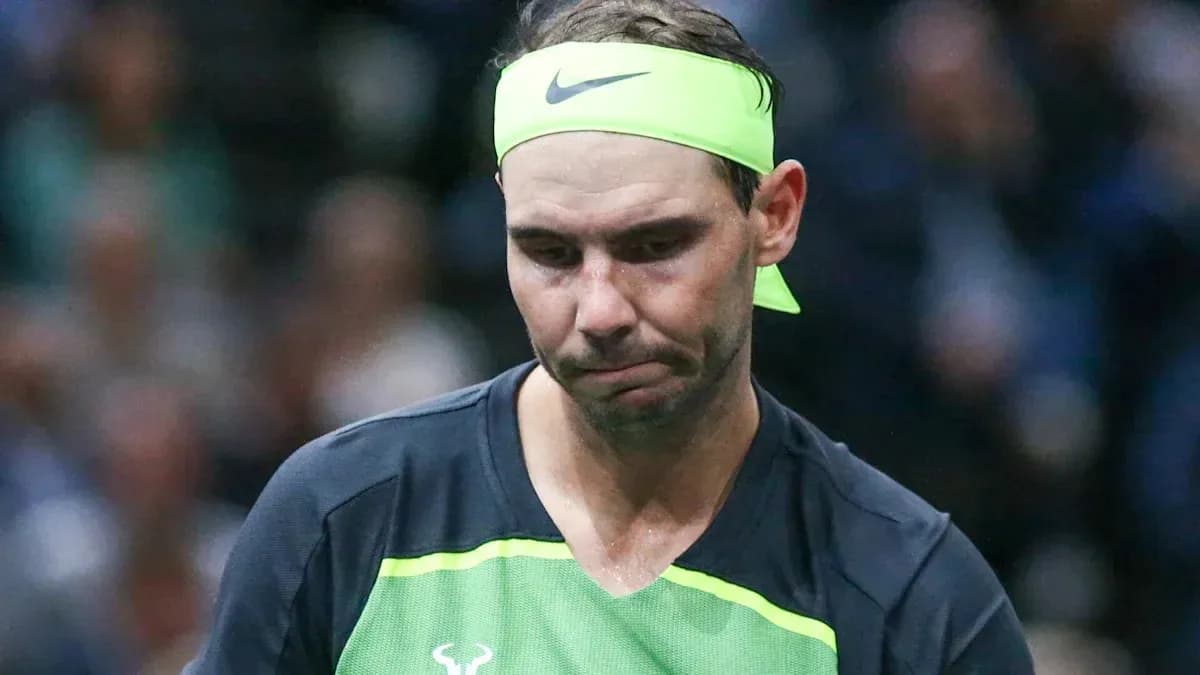
Rafael Nadal built a kingdom in Paris and never quite finished it.
On one side of the city, on the crushed brick of Roland Garros, he became almost mythical: 14 French Open titles, a dynasty that may never be matched. On the other side, indoors at the Paris Masters, the same city turned into one of the few places that refused to bend to his will.
He retired in 2024 with 22 Grand Slam trophies, 36 Masters 1000 crowns and Olympic gold medals in both singles and doubles. Yet the Paris Masters, that late-season indoor stop in the French capital, remained a blank space on his résumé.
A Final in the First Try – and a Brutal Lesson
Nadal’s relationship with the tournament started with a promise that never quite got fulfilled.
In his debut at the Paris Masters, he tore through the draw, dropping just one set on his way to the final. The script looked familiar: young Nadal, relentless, marching towards another title. But the ending was anything but.
Across the net stood unseeded David Nalbandian, a gifted ball-striker who caught fire at exactly the right time. Nalbandian didn’t just beat Nadal. He dismantled him, 6-4, 6-0.
The Argentine himself sounded almost bemused by the ease of it.
"All week I was playing great, and I don't know why the result was so easy," Nalbandian said at the time. "After I broke him, I felt that I was playing better than him. I played more relaxed, started hitting winners almost from everywhere. That gave me confidence."
That would be Nadal’s only final at the Paris Masters. The closest he ever came. The door opened in his first attempt, then slammed shut.
Injuries, Near-Misses and a Tournament That Never Quite Fit
The pattern that followed was cruelly familiar: deep runs, flashes of form, and then a body that refused to cooperate at the crucial moment.
The very next year, Nadal reached the quarter-finals but was forced to retire after losing the first set to Nikolay Davydenko, a right knee injury stopping him before the match could truly take shape.
In 2009, he went one better, advancing to the semi-finals. Waiting for him there was Novak Djokovic, who handled him comfortably and ended another Paris campaign short of the finish line.
Nadal then stepped away from the event for four years. When he returned, the story barely changed. He reached the semi-finals again, only to be halted by compatriot David Ferrer, a player who knew his game as well as anyone and used that knowledge to shut him out of the final.
In 2015, Stan Wawrinka sent him home in the quarter-finals, another powerful hitter thriving in the quick indoor conditions that never quite suited Nadal’s heavy, high-bouncing game.
His next two appearances didn’t even allow for that kind of narrative. Both ended with injury, the late-season toll once again stripping him of a real shot at the title.
Then came 2020, one last serious push. Nadal fought his way to the semi-finals and stood again on the brink of something more. Alexander Zverev stopped him there, denying him another crack at the trophy.
Consistency Without the Crown
For all the frustration, Nadal’s record at the Paris Masters was hardly modest.
He reached at least the quarter-finals in each of his first eight appearances at the tournament. Indoors, at the tail end of long, punishing seasons, he still found ways to contend. The title, though, never came into focus for long enough.
His final appearance in Paris told a different story. In his ninth and last outing at the event, the consistency finally broke. Nadal lost his opening match to Tommy Paul, a quiet, early exit that signalled the end of his chase in the French capital’s second tournament.
He never returned to the Paris Masters before calling time on his career in 2024.
So the record stands: Paris gave him his greatest stage and his most enduring fortress at Roland Garros, yet just a few miles away, on a different surface under a roof, it also gave him one of the few big trophies he never managed to lift.