Roger Federer Inducted into International Tennis Hall of Fame
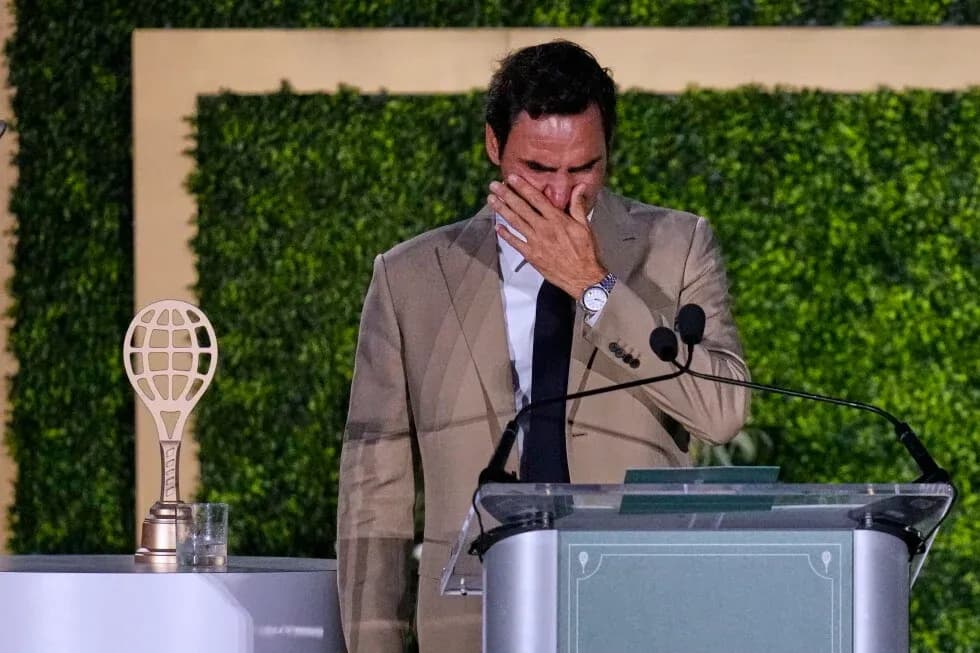
NEWPORT, R.I. — As the sun slid down behind the grandstand at the International Tennis Hall of Fame, Roger Federer walked toward the stage in a tan suit and immediately felt it: this was going to be harder than any final.
He kissed and hugged his wife, Mirka, who had just introduced him as the Hall’s 272nd inductee, then turned to the crowd and exhaled.
“Oh man,” he began, the first man ever to win 20 Grand Slam singles titles suddenly sounding less like the “Swiss Maestro” and more like a husband and father overwhelmed by the moment. “This is very high level and a tough act to follow.”
He tried to deflect the emotion with a joke, teasing Mirka about whether she had been “practicing secretly” for her speech. The smile lingered, but it couldn’t hold back what was coming.
On the grass horseshoe court at the entrance to the Hall, where earlier he had been introduced on a red carpet as the “Swiss Maestro,” Federer admitted to the crowd he “was a little stressed to be honest.” For nearly 30 minutes, the man whose movement once looked like it was drawn in ink across Centre Court fought back tears as often as he once fended off break points.
They came first when he spoke about his childhood idol, Stefan Edberg. Midway through the speech, the voice cracked, the composure slipped, and Federer called them what they were.
“Happy tears,” he said.
The emotion surged again when he turned to his longtime coach Severin Luthi, a constant presence through the years when Federer held the No. 1 ranking for a record 237 consecutive weeks. The partnership that had quietly underpinned so much of his dominance suddenly felt very public, very raw.
Then came the part he knew would undo him.
“Now the Mirka part,” he said, stopping as the words caught. “Oh gosh, this such a mess.”
He tried once more to lean on humor, but the tears took over, fast and sharp, like one of his own return winners.
“I need tissues and sunglasses, everything to protect me right now,” he told the crowd, still battling the emotion that kept rising.
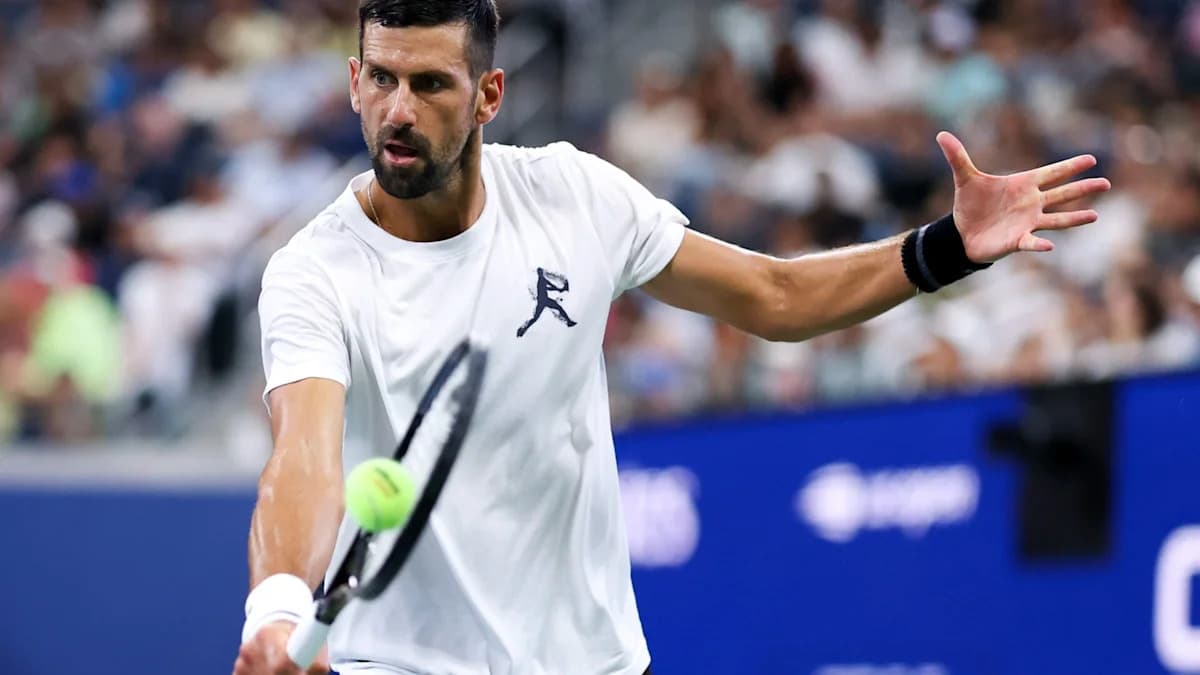
This was not the Federer of the pristine service motion and effortless one-handed backhand, the player who reeled off five straight U.S. Open titles from 2004 to 2008 and reached 10 consecutive Grand Slam finals, winning eight of them. This was the 45-year-old, three weeks removed from his birthday, looking back at the weight of a career that brought him eight Wimbledon titles, six Australian Opens and a long-awaited French Open crown in 2009 to complete the career Grand Slam — a feat achieved by only eight men.
He still finished like a champion.
As the speech drew to a close, Federer widened his focus beyond the personal, thanking the ball boys who had chased down his shots throughout his career and urging today’s players to keep stretching the limits of the sport he once redefined.
He spoke of the journey, of how strange and humbling it felt to see his own story woven into the Hall’s history.
“I’m thrilled to have made the journey here,” he said. “It’s amazing to see yourself in a place like this. To immerse yourself in the history of the sport means a lot to me.”
Federer shared the stage with Mary Carillo, the former player turned broadcaster, who entered the Hall as a contributor and is already a member of the Sports Broadcasting Hall of Fame. Presented by Billie Jean King, Carillo stood in front of a cluster of Hall of Famers, clearly moved by the company she was now keeping.
King’s tribute was simple and sharp. “She has earned her spot in sports journalism and she has earned her spot in Newport,” King said.
Carillo, 69, looked around at the faces and the setting that had framed so many tennis stories long before this evening.
“To walk through these gates here in the company of you people, that was beyond my dreams,” she said.
By then, the light in Newport had almost gone. The grass court where Federer once would have glided through a practice session now held a different kind of memory: a champion stripped of the armor, crying openly as his sport welcomed him into its most permanent home.