Serena Williams: Champion Advocating for Women's Health
Serena Williams has spent a career refusing to lose. On Thursday in New York, she explained how nearly losing her own life turned her into something more than a champion.
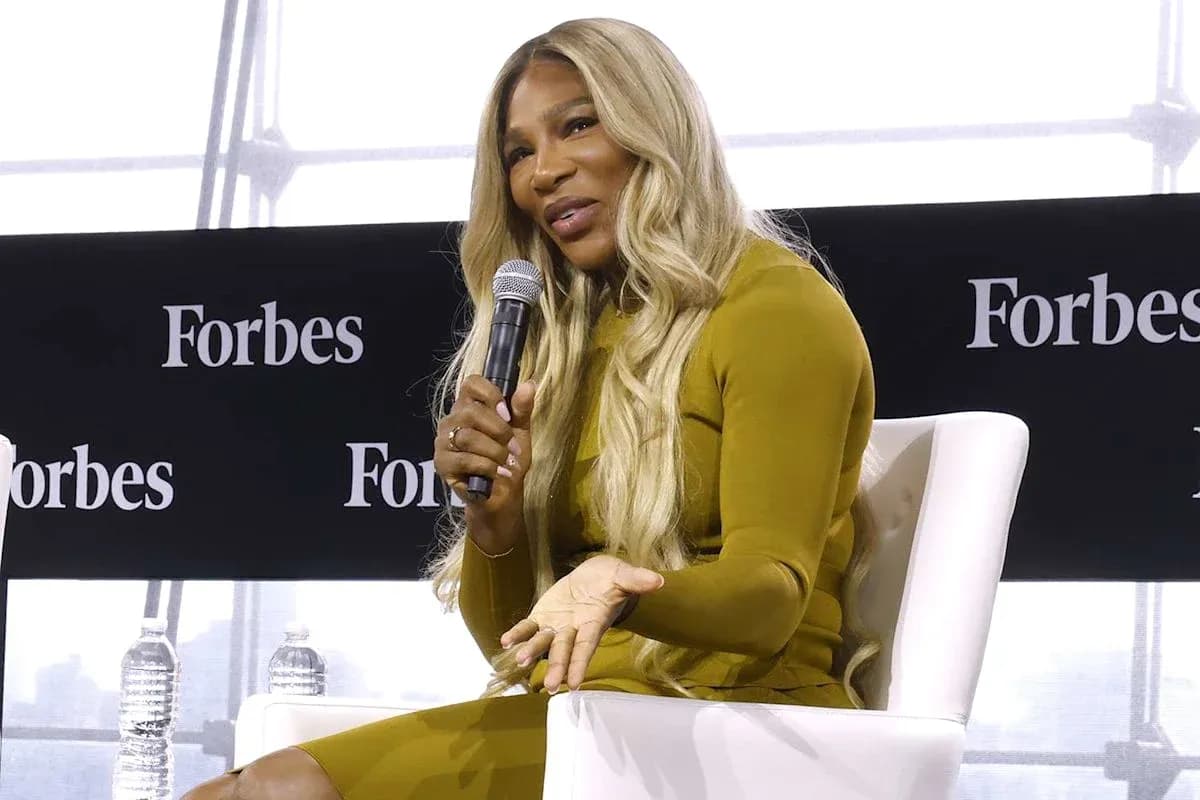
Speaking at the Forbes Power Women's Summit 2026, the 23-time Grand Slam singles winner revisited the trauma that followed the birth of her first daughter and how it forced her to confront a brutal truth about women’s health care.
"When I told my story, I didn't realize how many people could relate," Williams said on stage. At first, she thought it was an issue that mainly affected minority women. Then the responses poured in. Different countries. Different backgrounds. The same fear.
"And then at first I thought it was just a minority problem, but then I realized it's a women's problem."
A Champion Fighting for Her Own Life
Williams’ turning point came in 2017, when she delivered her daughter, Alexis Olympia, via emergency C-section. The birth alone would have been dramatic for anyone. For one of the greatest athletes in history, it became a fight that had nothing to do with rankings or trophies.
After delivery, a coughing fit reopened her surgical wound. Doctors then discovered a large hematoma in her abdomen — a dangerous swelling of clotted blood. What followed was a six-day ordeal that included a pulmonary embolism, with blood clots threatening the arteries in her lungs and forcing multiple surgeries.
She knew something was wrong. She said so. She insisted.
"I knew something was wrong with me and it was super important that I was heard," Williams told the audience. "Thankfully, my doctor listened to me. The nurses did, but I was so fortunate enough to have a doctor that did and literally saved my life."
Many women never get that chance. That reality has stayed with her.
From Personal Crisis to Public Mission
The near-fatal complications dragged Williams into a wider conversation about how the medical system treats women, and which women get the least attention.
"So many women from every single background had a nightmare's tale of their birth, you know?" she said. The stories came from everywhere. Different hospitals. Different cities. The same pattern: pain dismissed, symptoms minimized, danger missed.
Her conclusion was blunt — and laced with a joke that carried a sharp edge.
"I thought, 'Well, gosh, if men were giving birth, they would have sweets [and] like all kinds of medicines,'" she said, laughing. "So it wouldn't be the same problem at all."
That experience pushed her beyond simply sharing her story. It turned her into an advocate determined to open doors for women and underrepresented communities who do not have her platform, her resources, or her access.
Williams became the first entrepreneur-in-residence for the Reckitt Catalyst program, a global social impact and innovation initiative backing female and underrepresented entrepreneurs working on health, hygiene, water, and sanitation solutions.
"What these women are doing is they're really letting us know that women's healthcare is so important, and healthcare in general, because also we're talking about women who take care of the kids, you know, I take care of my kids mostly," she said.
The work is not abstract to her. It is daily life.
Opening Doors, Solving Problems
Williams spoke with the same clarity she once brought to a second serve on break point. For her, this is not a vague mission statement. It is a chain reaction.
"With the program, we're able to actually solve a lot of issues, make, like I said, make those connections that are really vital, that are really important to open so many doors," she explained. "Because every time we open a door, we're solving another problem that's closer to helping us all in this room and helping our kids."
She has been consistent on this front for years. In a 2018 opinion piece for CNN, Williams laid out the basics of what should already exist for women around the world: access to midwives, functioning health facilities, breastfeeding support, skin-to-skin contact, clean water, basic drugs, good nutrition.
Simple steps. Life-or-death impact.
"Yet we are not doing our part. We are not rising to the challenge to help the women of the world," she wrote then.
On Thursday, the urgency behind those words still hung over her message. The statistics haven’t softened. The stories haven’t slowed. But Williams refuses to accept that this is simply how things are.
"Together, we can make this change," she wrote in that same piece. "Together, we can be the change."
A Different Kind of Legacy
Since that harrowing first birth, Williams has expanded both her family and her advocacy. In August 2023, she and her husband, Alexis Ohanian, welcomed their second daughter, Adira River Ohanian.
"Welcome, Adira River Ohanian," Ohanian wrote alongside a family photo at the time, celebrating "a happy & healthy newborn girl and happy & healthy mama" before calling his wife the "GMOAT."
The greatest mother of all time. It was a playful twist on the "GOAT" label she carried through her tennis career, but it also underlined the stakes of the story she told in New York.
Serena Williams once dominated a sport built on individual brilliance. Now she’s aiming at something much bigger: a system that too often fails the very people who bring life into the world.
The trophies are already in the cabinet. The question now is how much change she can force in a field where the margins are far more unforgiving than any final set.