Stan Wawrinka's Emotional Farewell at the US Open
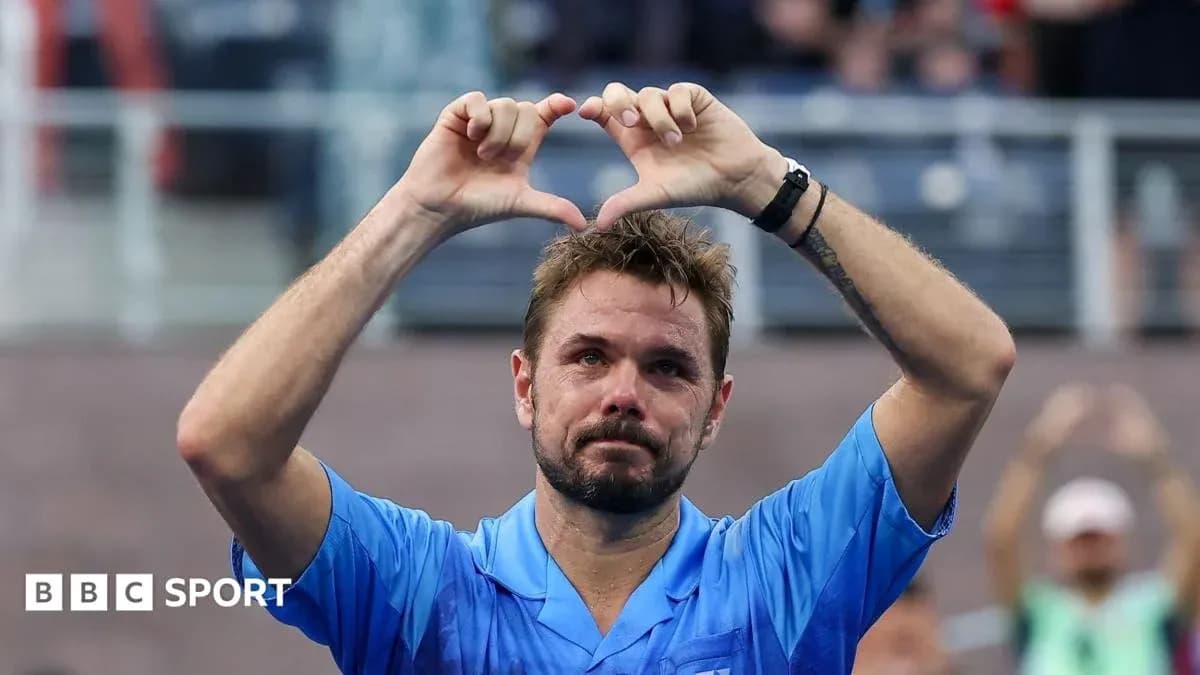
Stan Wawrinka walked off Grandstand for the last time at a major with his eyes glistening, his heart on his sleeve and 8,000 people on their feet. The scoreline said straight-sets defeat to Matteo Berrettini. The scene said something very different.
This was a farewell.
A late wildcard, a fitting stage
He was never meant to be here. Not this fortnight, not on this court, not like this.
Initially, US Open organisers passed over the 2016 champion when they handed out wildcards. Wawrinka went home, back to the Swiss mountains, his New York story seemingly closed. Then Patrick Kypson withdrew. The phone rang on Wednesday. Suddenly, there was one more trip across the Atlantic to make.
He rearranged everything. At 41, with his retirement already announced for the end of the season, he wasn’t coming for a tune‑up. He was coming to say goodbye to a place that had defined one of the great late blooms in modern tennis.
The fans understood. They arrived early, queued long, filled every inch of Grandstand. They weren’t just there for a first‑round match. They were there for the last Grand Slam chapter of Stan Wawrinka.
Chances missed, heart on display
For a while, he threatened to turn the nostalgia piece into a full‑blown upset.
Wawrinka carved out set point in the first set, then three more in the second. The backhand still ripped, the competitive fire still burned, and Berrettini, a Wimbledon finalist in 2021, had to dig deep to stay level. Each time, the Italian held firm. Each time, the opportunity slipped away.
When those chances vanished, so did the match. Berrettini, 15 years younger and sensing his opening, ran away with the third set. The veteran’s legs slowed. The scoreboard accelerated. The result felt inevitable long before the final ball.
But this night was never going to be defined by a score.
Berrettini knew it. As the handshake ended and the applause rose, he stepped back and let the moment belong to Wawrinka.
A champion’s goodbye
What followed was pure connection between player and place.
Wawrinka lifted his hands, shaping his fingers into hearts, then pressed his palm to his chest. The crowd responded with a roar that rolled around the stadium, a sound reserved for those who have given the sport everything.
He asked for more noise. They obliged. He hit balls into the stands, souvenirs from a career that had already given them a lifetime of memories.
“One of the reasons I played until 41 was to live these moments,” he told them, voice heavy with emotion. This was the arena where he had stunned Novak Djokovic a decade earlier, where he had completed his set of three majors after the Australian Open in 2014 and Roland Garros in 2015. To finish here mattered to him. You could hear it. You could see it.
“I’m very grateful for this wildcard. It was very important for me to finish here, where I won a Grand Slam 10 years ago. I want to thank you all for all these years.”
From the court, he received a photo montage of that 2016 triumph, presented by chief executive Craig Tiley. From the stands, he received something even more valuable: a collective acknowledgement of what he had represented for two decades.
Legacy in the roar
Wawrinka has always been celebrated for that one‑handed backhand, a shot carved from granite and imagination, and for a competitive streak that refused to bow to the sport’s giants. He spent his career crashing gates that were supposed to be locked by the Big Three. He leaves with three majors and a reputation as one of the toughest big‑match players of his era.
Afterwards, he called himself “super grateful” for the send‑off and reflected on what the ovation really meant.
“It’s showed me that I did the right thing all those 20 years by always trying to fight, always showing up, always trying to do my best, and always trying to push myself to the limits,” he said. “This is what for me was the most important thing – what I get from the fans when I play.”
On a late summer night in New York, they gave it back to him in full. The rankings will move on. The draws will be filled by new names. But the echo of that farewell, and the memory of a 41‑year‑old champion drinking in one last Grand Slam ovation, will linger at Flushing Meadows long after he has gone.