Stan Wawrinka's Last US Open: A Farewell to a Tennis Legend
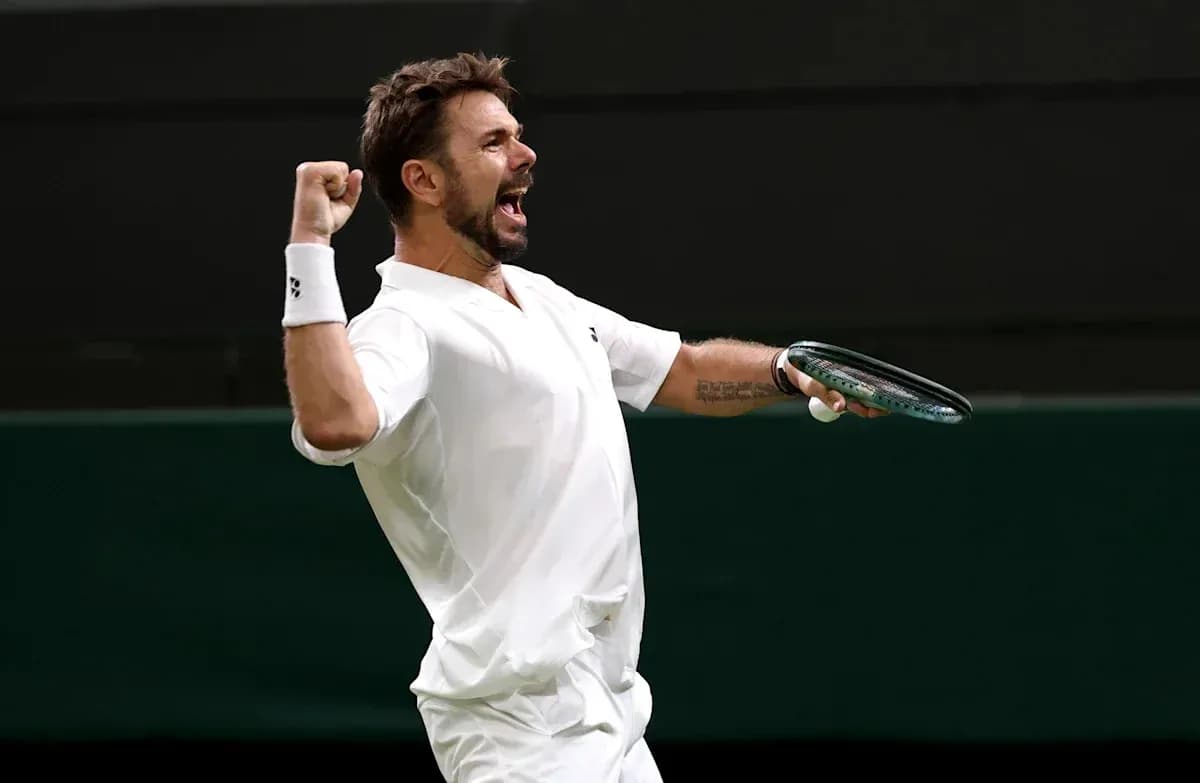
Stan Wawrinka will walk into the 2026 US Open with something more than a wild card and a wave. He will walk into a farewell. A decade on from the night he tore through Flushing Meadows to win his third Grand Slam title, the one‑handed Swiss shot‑maker is finally getting the goodbye his career has earned.
For many, Wawrinka was always the man in the shadow of the era’s giants. For others, he quietly became the beating heart of men’s tennis in the second half of the Big Four years. For one fan in particular, he became a constant: an 18‑year thread running from high school to adulthood, stitched into memories of long drives, late‑night matches and early‑morning alarms.
The first sighting came in the California desert. Indian Wells, 2008. Back when the tournament was still called the Pacific Life Open, a teenager and his father drove out to see what all the fuss was about. The first men’s match they watched? Stanislas Wawrinka against a brash, elastic 20‑year‑old who had just cracked open the hierarchy by winning the Australian Open.
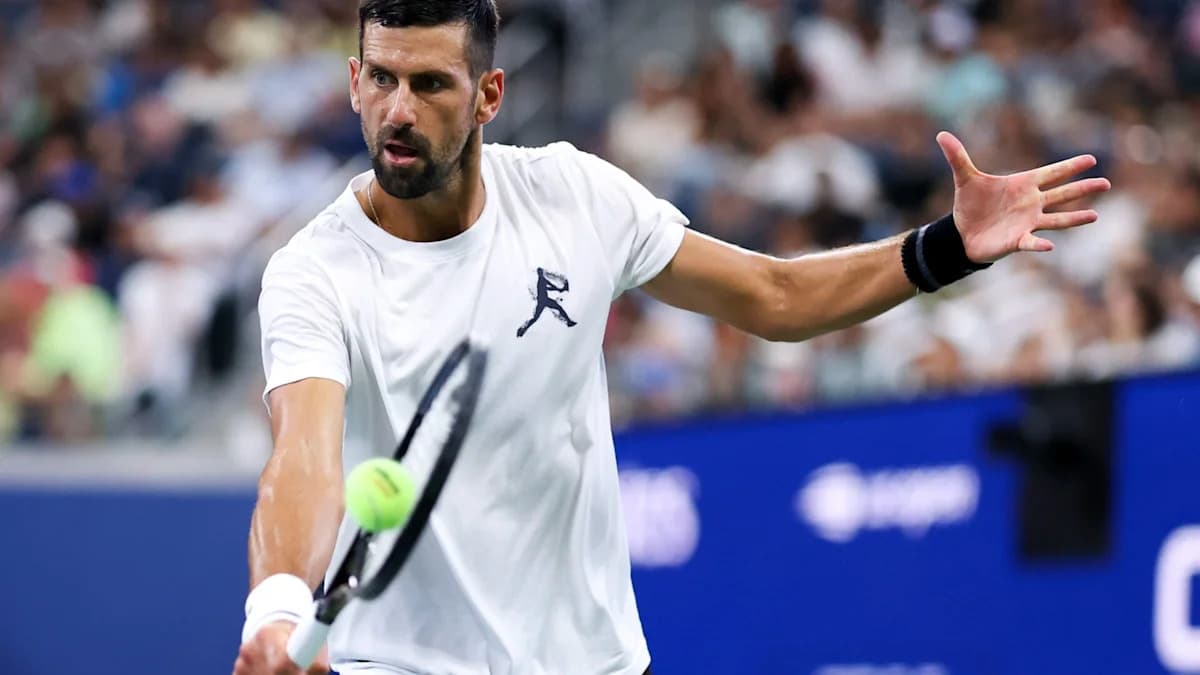
Novak Djokovic.
Djokovic won that quarterfinal 7-6, 6-2. At the time it felt like a footnote on the Serb’s rise. It turned into a prologue. Their rivalry would stretch across continents and surfaces, and in its fiercest moments Wawrinka would become something very rare in that age: a man who could walk into a major final against Djokovic, Nadal or Federer and make the outcome feel genuinely uncertain.
That became Wawrinka’s legacy. Not the interloper who snatched a single slam and disappeared, but the enduring disruptor. Juan Martin del Potro lit up New York in 2009 and claimed the US Open once. Wawrinka kept coming back. Australian Open champion in 2014. French Open champion in 2015. US Open champion in 2016. Three majors, all won against the weight of history and expectation.
At his peak, he was not just effective. He was devastating. There were plenty of elegant one‑handed backhands on tour, but none struck with the same violence, the same crack of intent, as Wawrinka’s. The stroke did not glide; it detonated. Fans bought his Yonex racquet not just as equipment, but as a souvenir of a particular moment in tennis – a reminder of Melbourne 2014, when he finally broke through.
His contribution to Swiss tennis runs deeper than those solo triumphs. Before the Grand Slams came the gold. In Beijing in 2008, Wawrinka stood alongside Roger Federer and helped deliver Olympic doubles gold for Switzerland. In 2014, he helped drag his country to a Davis Cup title, a landmark achievement in a nation already spoiled by Federer’s genius.
The personal milestones stacked up alongside the trophies. The first major, that 2014 Australian Open, arrived for one fan during a year abroad in Leeds. A student in Kirkstall, half‑awake and half‑asleep, watching Wawrinka take down an injured Rafael Nadal in four sets. At the time it felt like a bolt from the blue, a glorious one‑off. Then came Roland Garros in 2015, then New York in 2016, and the pattern became clear: when Wawrinka reached the sharp end of a slam, he did not play like a tourist.
Now the clock is running down. At the 2026 US Open, Wawrinka will open against Matteo Berrettini, a former Wimbledon finalist whose own career has been repeatedly interrupted by injury. It is a popcorn match, a meeting of two men who know the fragility of momentum and the brutality of the calendar.
If Wawrinka finds a way through – and at this stage, that is a sizeable if – the draw offers a familiar spectre. Djokovic likely waits in the second round, the same Djokovic he stunned at Roland Garros in 2015 and outslugged in New York a year later. The same opponent who framed the beginning of this story in Indian Wells almost two decades ago. Tennis has a way of looping back on itself.
What lingers, though, is not just the prospect of one last run. It is the strange emptiness that follows when a player like this steps away. A large slice of one fan’s tennis life has been filtered through Wawrinka: the early fascination, the late‑night finals, the sense that somewhere out there a backhand could still rip through the screen.
In club sport, the badge softens the blow. Tottenham Hotspur will still be there next season, with or without Harry Kane or Moussa Dembélé. New names appear – Flavio Cobolli, Sandro Tonali, Savio – and the cycle continues. The shirt remains.
Tennis offers no such cushion. When a player retires, that’s it. No transfer, no testimonial season in a lower league. They may reappear in a coaching box, or on a commentary gantry, but the version that mattered – the one bouncing on the baseline, racquet twirling, eyes locked on the next point – is gone. Even Juan Carlos Ferrero, once a fixture, now exists mostly as a memory and a mentor.
So the sport moves on. The tour keeps rolling. You either ride the new wave or you get swallowed by nostalgia.
For now, though, there is still one more entrance to Arthur Ashe, one more roar, one more chance for that backhand to light up the night. Stanislas Wawrinka will step into his last US Open with the arena, and a generation of fans, ready to say what they have been thinking for years.
Go get them, Stan.