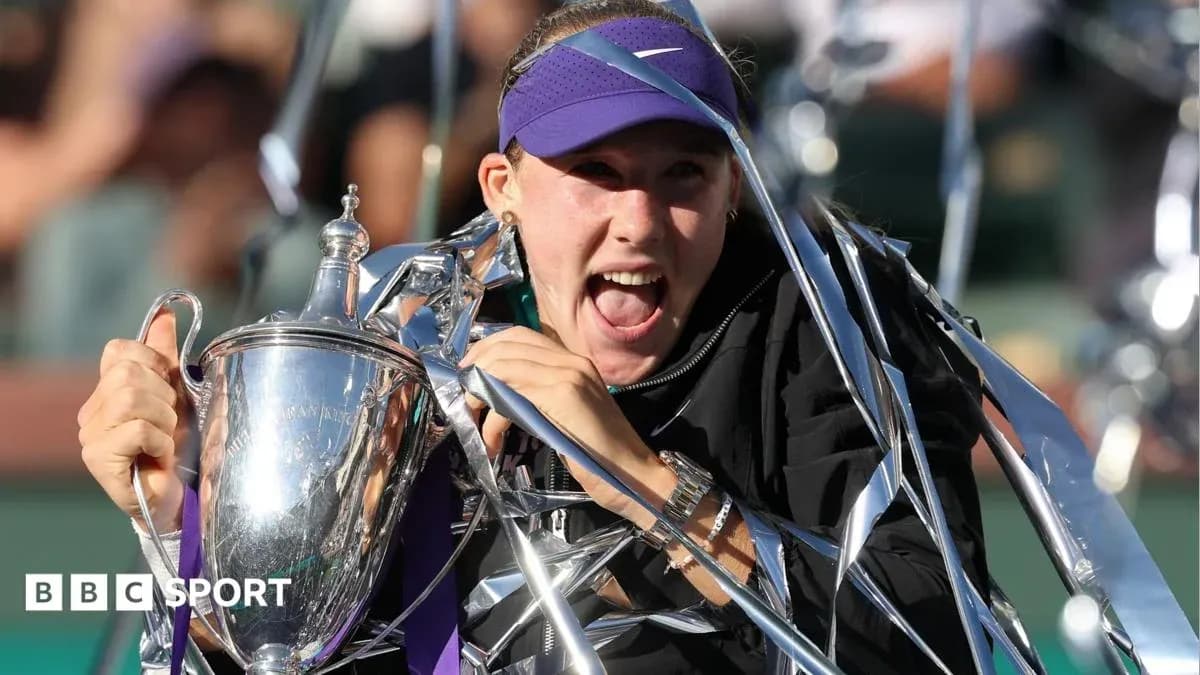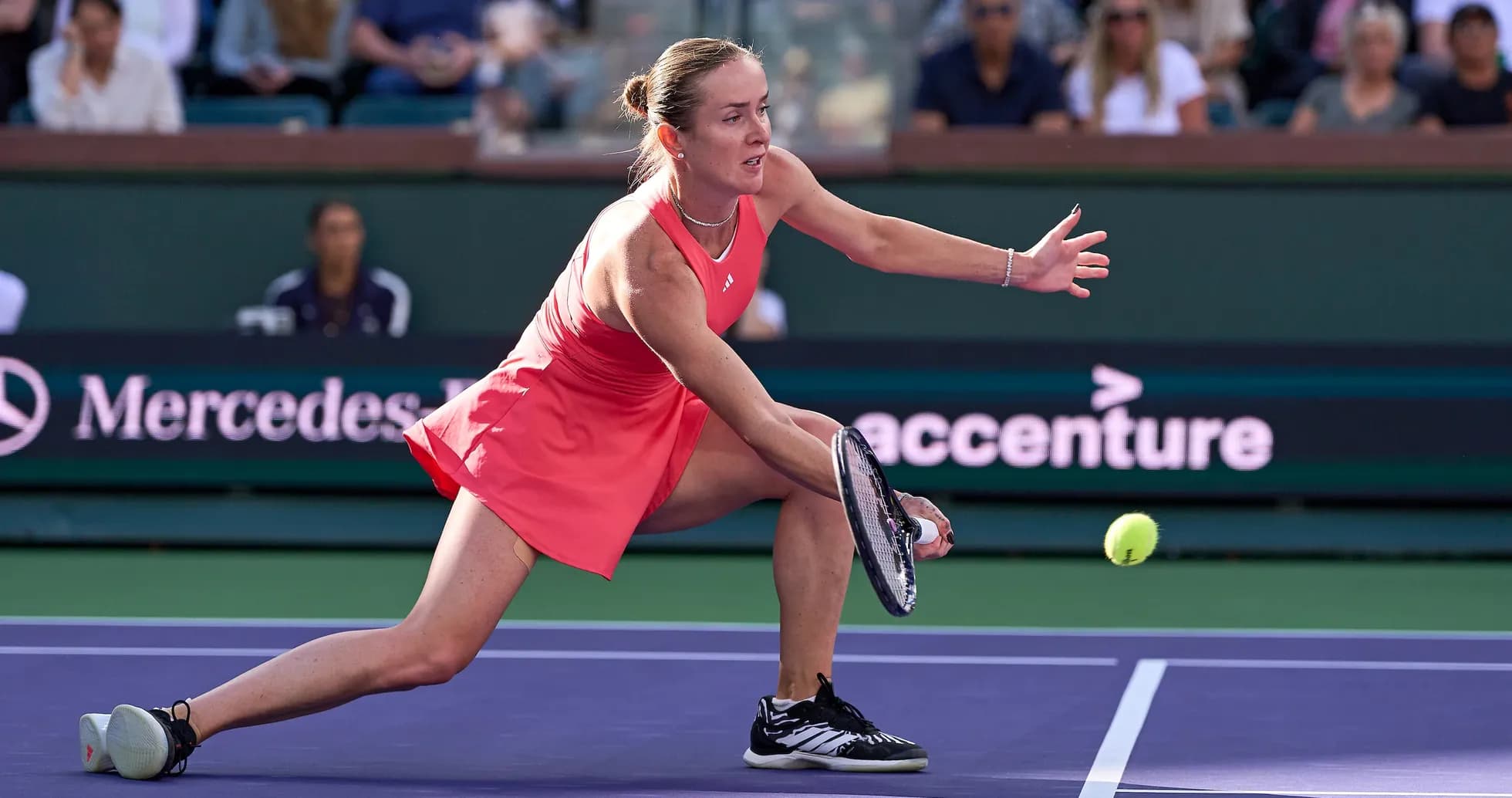
Svitolina and Andreeva Reach WTA Finals Semifinals
INDIAN WELLS, Calif. — For a few tense minutes on Wednesday, it felt like Elina Svitolina’s return to the season-ending stage might be brief and joyless. She had already been outplayed by Mirra Andreeva. Karolina Muchova had taken the opening set. The numbers were brutal: Muchova was 32-0 this year after winning the first set.
Then Svitolina dug in.
She dropped only four games across the next two sets, ripped through Muchova 3-6, 6-2, 6-2, and walked off court with something she hadn’t had 24 hours earlier — a live shot at the semifinals.
That was only the start.
Svitolina flips the script on Sabalenka
To reach the weekend, Svitolina still had to solve a problem that had haunted her for four years: Aryna Sabalenka. Five straight defeats. Three of them on hard courts. Not a single win since Strasbourg 2020.
The pattern looked depressingly familiar when Sabalenka broke in the opening game of their showdown. Svitolina was chasing again. This time, she refused to stay behind.
She clawed back the break, steadied behind her second serve at 3-3, and stared down two break points that threatened to swing the set away from her. Those points changed the mood. Svitolina held, surged through the next two games, and pocketed the opener 6-3.
Sabalenka hit back with authority, taking the second set 6-3 by the same scoreline and reasserting her power off the return. Momentum tilted. The stadium knew this script too.
Svitolina tore it up.
She struck first in the decider, breaking early, then again for 5-1 as Sabalenka’s resistance cracked. Serving for the match, there was no hesitation, no wobble. The 2018 champion closed out a 6-3, 3-6, 6-1 victory, converting six of eight break points and finally landing a first hard‑court win over the reigning powerhouse across the net.
From 0-1 in the group to 2-1 and through to the semifinals. From four years without a win over Sabalenka to a place among the final four at the WTA Finals, and doing it in her first appearance at the event since 2019 — and for the first time after losing her opening match.
Her reward: a semifinal against Group 1 winner Linda Noskova.
Andreeva storms through Group 2
If Svitolina’s path was about survival and response, Mirra Andreeva’s week has been about domination.
She walked into her WTA Finals debut and promptly dismantled the player who would later join her in the semifinals. Against Svitolina, Andreeva saved all six break points she faced, held her nerve through a tight first set, then sprinted away. Seven straight games. A 6-4, 6-0 statement. She even flipped the result of their Australian Open meeting earlier in the year.
Then came Sabalenka.
The world watched Sabalenka jump out to a 4-1 lead in the opening set, flexing the kind of power that usually crushes resistance. Instead, it lit a fuse. Andreeva turned anger into acceleration. She started serving bigger, freeing up her groundstrokes, and from that point the match belonged to her.
She won the final 11 games. She captured 45 of the last 55 points. Another 6-4, 6-0 scoreline, and with it a place in the semifinals after just 62 minutes on court. She also became the first player ever to win a 6-0 set in each of her first two WTA Finals matches.
By the time she walked out on Friday against late replacement Diana Schnaider, her place at the top of Group 2 was already secure. The edge didn’t dull her. It sharpened her.
Muchova’s withdrawal brought in second alternate Schnaider at the last moment. Andreeva treated the match like a tune‑up, not a dead rubber. She needed only 55 minutes to roll 6-2, 6-1, never dropping her level, never offering a route back. Schnaider managed seven winners but sprayed 32 unforced errors and won only three of 15 points on her second serve. Andreeva finished group play 3-0, without losing a set.
Next, she faces Jessica Pegula for the first time in the semifinals. A new opponent, a bigger stage, the same fearless teenager walking in with a perfect week behind her.
Two routes, one destination
The numbers tell one story. Andreeva: three matches, three wins, three straight‑sets beatdowns. Svitolina: one early defeat, two gritty three‑set comebacks, one long‑awaited win over Sabalenka.
The feel tells another.
Andreeva has blown the draw open with ruthless, almost clinical efficiency. She’s turned deficits into streaks, anger into weapons, and made elite opponents look rushed and uncomfortable. Every match has tightened her grip on the tournament.
Svitolina has done it the hard way, clawing her way back from the brink against Muchova, then from a mental block against Sabalenka. She has leaned on experience, on resilience, on the knowledge that at the WTA Finals, one bad day doesn’t have to be the end.
“I think this is the sweet thing about the WTA Finals, because even if you lose the first match, you’re still not out,” she said after turning her campaign around. “You have a couple of more matches and interesting, I think, situations.”
Those “situations” now look like this: Andreeva vs. Pegula. Svitolina vs. Noskova. One teenager who hasn’t dropped a set. One former champion who refused to go quietly.
Indian Wells has its final four. The question now is whose story has one more chapter left to write.