Taylor Fritz's US Open Collapse: A Missed Opportunity
Taylor Fritz sank into his hands as his last backhand flew long, the ball landing somewhere near the back wall of Arthur Ashe Stadium. The sound said it all: a gasp from the crowd, a groan from the player, and then that heavy New York silence that follows a collapse.
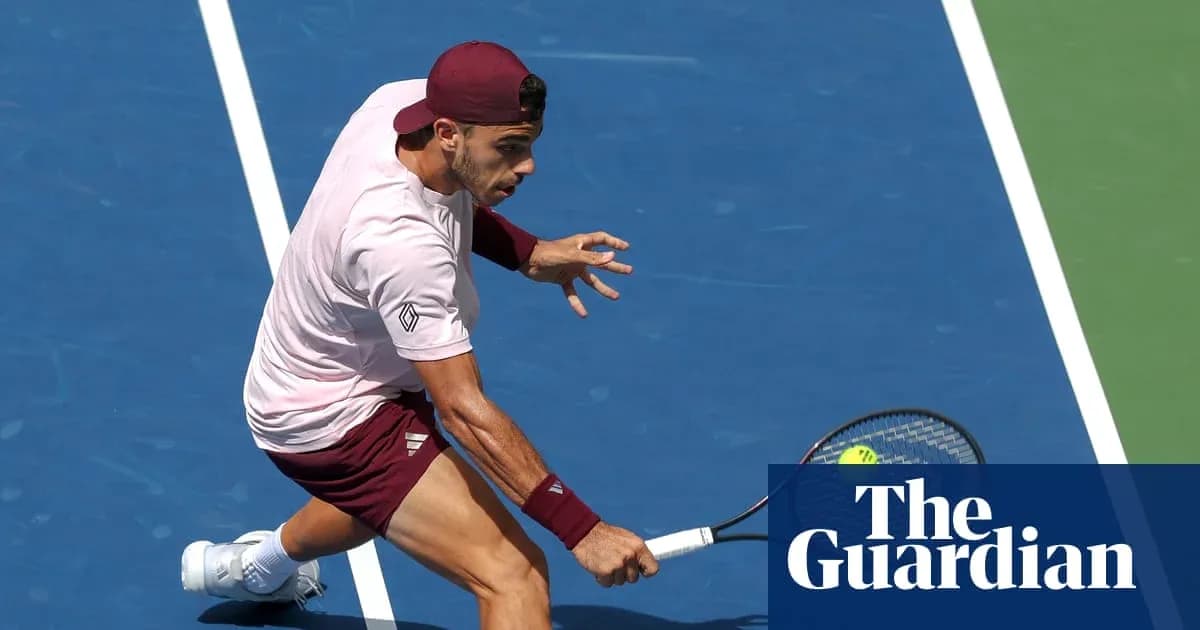
For two sets and a break, this was his match, his moment, his tournament to seize. He led Francisco Cerundolo 6-3, 6-4 and broke to open the third. He had the court, the scoreboard and the crowd. He had the draw, too.
Then he lost his focus. And with it, he lost the match.
Cerundolo, stubborn and fearless, turned a one‑sided afternoon into a five‑set epic, clawing his way to a 3-6, 4-6, 6-3, 6-4, 6-4 win that sent Fritz out of the US Open in the third round and sent a jolt through the rest of the men’s field.
A door flung open, then slammed shut
This defeat cuts deeper than a routine early exit at a home slam. The context makes it brutal.
Fritz, once up to No 4 in the world, has been the standard-bearer for American men. He reached the US Open final in 2024, the first home finalist since Andy Roddick in 2006, and backed it up with quarter-final runs in 2023 and 2025, both halted by Novak Djokovic. He has spent years forcing every last ounce out of his game, grinding through his own physical limitations to stay in the orbit of the sport’s giants.
Usually, there has been a clear ceiling: an all-time great on the other side of the net.
Not this time.
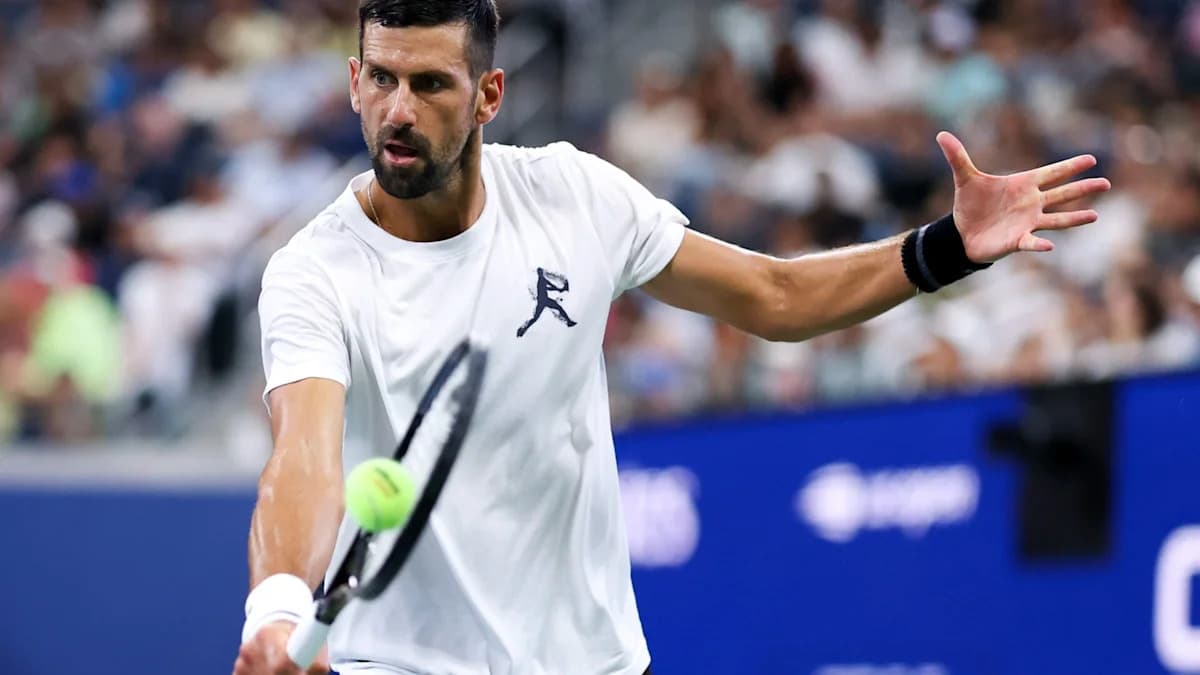
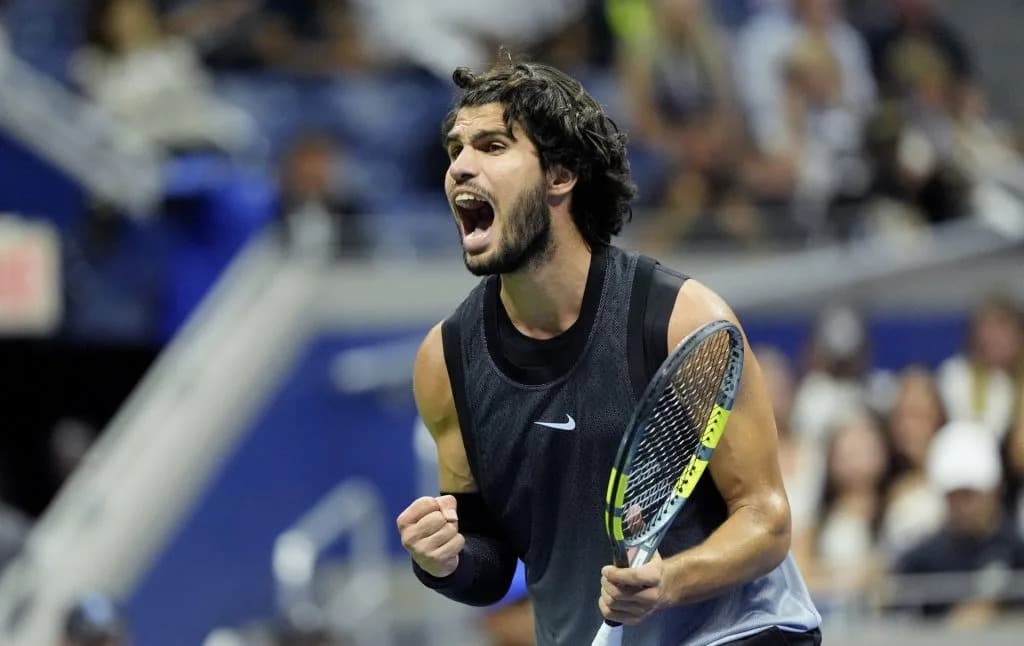
This US Open has blown wide open. Jannik Sinner, world No 1 and four-time major champion, is out injured. Djokovic, now 39, was bundled out in the first round. Carlos Alcaraz, the defending champion and owner of seven grand slam titles, is feeling his way back after four months off.
The usual roadblocks have vanished or weakened. The draw is not just manageable; it’s inviting. For Fritz, this was the rare slam where the path did not obviously run through a legend in peak form. He knew it. Everyone did.
That’s what made those chances in the fifth set so suffocating. Serving at 4-3 down, Cerundolo faced three break points. Fritz stood a point away, three times, from serving for the match at 5-3. Three points from the fourth round. Three points from keeping the dream alive in a tournament that seemed to be bending toward a first-time champion.
He missed all three.
Cerundolo held, then closed, and Fritz was left with nothing but questions.
“I don’t even know what to say,” he admitted afterwards. “I don’t really want to talk to anybody, see anybody. I kind of just need to get out for a couple days and then just get back to work. I don’t know how I let that happen today.”
A nation’s chance – and burden
The loss lands hard not just on Fritz but on American tennis as a whole.
Seven American men started the day still alive in the singles draw: Ben Shelton, Fritz, Frances Tiafoe, Learner Tien, Tommy Paul, Alex Michelsen and Michael Zheng. In the bottom half, where Friday’s results locked in the last 16, an American man features in each of the four fourth-round matches.
The opportunity is obvious. So is the weight of it.
No American man has won a grand slam singles title since Roddick’s 2003 US Open triumph. Generations have come and gone under that shadow. This tournament, stripped of its usual dominant forces, offers the best shot in years at snapping that drought.
Fritz’s defeat is a flashing warning sign to the rest of the pack. When the draw opens, the pressure doesn’t ease. It multiplies. The coming week will not just expose forehands and backhands; it will expose nerve.
Keys’ collapse mirrors the mood
The theme of squandered leads did not belong to Fritz alone. Across the grounds, another American unravelled in a way that will sting for a long time.
Two days after one of the most stirring comebacks of her career, saving five match points against Anna Bondar, Madison Keys suffered a collapse every bit as dramatic in reverse. She led Zheng Qinwen 5-0 in the final set of their third-round match. On home soil. In control. Cruising.
She lost 1-6, 7-6 (3), 7-5.
What began as a clinic turned into a crisis of confidence in real time. Games slipped away, then points, then the belief that she could still hit through the tension.
“I think she started playing better; I started playing poorly,” Keys said. “Then I felt like I couldn’t play tennis any more, and it just was – it just felt like it was a much bigger deal than just playing a tennis match all of a sudden.”
Keys, the 2025 Australian Open champion, did not try to dress it up. She spoke like a player who has seen this coming.
“I just feel like I’ve been struggling for a while now and I feel like I was able to kind of play through it for a bit,” she said. “I’m sure everyone could kind of see that I was struggling a little bit, but inside it felt probably even bigger than that. Some weeks are easier than others, and this week is obviously one of the harder ones just because you care so much. Yeah, I’m going to have to make some changes.”
For an established major winner to talk like that, in New York, tells its own story. The home slam amplifies everything: the hope, the scrutiny, the doubt.
Zheng’s reminder: stay on the ride
On the other side of the net, Zheng’s comeback offered a different lens on the same chaos.
The 23-year-old arrived in New York as an Olympic gold medallist and former top-10 player whose ranking had slipped after elbow surgery. She had to slog through qualifying just to make the main draw. A year ago, she was one of the rising forces in the sport; this summer, she has been fighting just to reclaim a foothold.
Beating Keys from 0-5 down in the third could mark a turning point.
“Tennis sometimes feels like a rollercoaster,” Zheng said. “You see many times that people have a match point, but at the end [their opponent] makes a comeback. Like today was just happening. So this also gives me a lesson that in a tennis match you always have to be there. It doesn’t matter if you are winning or losing, you have a match point or you don’t have a match point – you just need to be concentrated for every single point as long as you can.”
Her words cut straight to the core of what Fritz and Keys lacked when it mattered: presence, point by point, when the mind wants to race ahead to the finish.
Swiatek holds firm as others fall
Not everyone let leads slip.
Iga Swiatek, the world’s most reliable frontrunner in recent seasons, found herself under real threat against Marie Bouzkova. She faced three set points in the second set, the kind of moments that have flipped matches all week.
Swiatek refused to budge. She saved them, edged the tiebreak, and walked off with a 7-6 (3), 7-6 (3) win that was anything but routine. It was a reminder of what separates serial champions from the rest: not perfection, but the ability to hold the line when the match teeters.
Her reward is a fourth-round showdown with Zheng, a contest between a player who almost never loosens her grip and one who just authored one of the comebacks of the tournament.
Elsewhere, Amanda Anisimova’s difficult stretch continued. The American, whose electric summer of 2025 included runs to the finals at Wimbledon and the US Open and a rise to No 3 in the world, went out with little resistance, 6-2, 7-5 to 24th seed Anastasia Potapova. The loss will drop Anisimova out of the top 10 and underlines how quickly momentum can evaporate at the top of the women’s game.
An open draw, and open questions
By the end of a bruising day for the home players, Arthur Ashe felt less like a stage for coronations and more like a mirror, reflecting the mental strain of trying to grab a once-in-a-decade chance.
The men’s draw remains wide open. The drought for American men stretches on. The women’s side continues to churn, with Swiatek holding steady while others wobble.
The opportunity is still there, bigger than ever. The question now is who, in this unsettled, leaderless fortnight, will actually be able to live with it.