Top Tennis Players Halt Public Prize Money Dispute with Grand Slam Events
After nearly a year and a half of conflict, leading tennis players have paused their public fight with Grand Slam organizers to focus on private talks. This shift comes as the players push for better treatment in areas like prize money distribution and player welfare.
Players Push for Fairer Revenue Shares and Welfare Programs
Among those involved are world No. 1s Jannik Sinner and Aryna Sabalenka, who jointly called for enhanced player welfare initiatives, an athlete advisory council, and a share of tournament revenue more comparable to other major events. The Grand Slams responded in August by creating the requested advisory council, marking a win for the players and encouraging them to end public protests and media restrictions as of September 14th.
Focus Shifts to Private Negotiations
The dispute is not over but has moved behind closed doors. The player coalition now has a platform to address remaining issues, mainly increasing prize money and improving player welfare support. Originally, players asked that prize money reach 22% of total tournament revenue by 2030, aligning with ATP and WTA 1000 event standards. The 2026 U.S. Open set a record with a $108 million prize pool, yet this only represented about 18% of its operating income. Other Grand Slams usually allocate 14-16% of revenues to prize funds.
Player welfare remains a pressing concern amid tough playing conditions. Sinner, a vocal advocate, suffered heat-related illness at both the French and Australian Opens this year. Other top players like Novak Djokovic, Casper Ruud, and Lorenzo Musetti have faced similar struggles.
Timeline of Player Actions
- July 31, 2025: Players submit formal demands focusing first on prize money.
- Throughout 2025: Discussions expand to include player welfare and the advisory council.
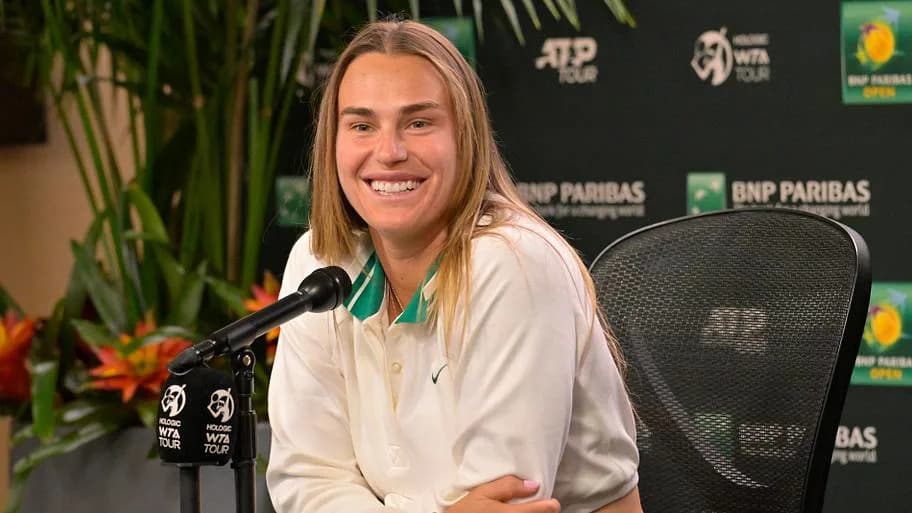
- May 2026: Players limit press conferences to 15 minutes, symbolizing their 15% revenue share; Sabalenka notably cuts her conference short.
- Mid-2026: Threats of boycotts arise but do not materialize; Wimbledon narrowly avoids coordinated player refusals.
- September 2026: Advisory council announced; players stop public protests following the U.S. Open.
Voices from the Tennis World
Carlos Alcaraz, ranked No. 2, initially joined the movement but stepped back before the U.S. Open, emphasizing welfare over revenue share. He spoke about exhausting match schedules, citing a 3:33 AM quarterfinal finish and plans to take longer breaks to manage his health.
"In the future, I'm going to take some breaks, some long breaks. Maybe not four months, but one month, two months, missing some tournaments, because it's impossible to play them all." — Carlos Alcaraz
John McEnroe urged for stronger measures, suggesting boycotts might be necessary. "The players should be partners in the majors," he said, pointing out how little of the revenue they currently receive.
"The fact that they're not causes friction - they're getting such a small part of the revenue. The only way to succeed in doing that, in my opinion, is to boycott one or two of these." — John McEnroe
Advisory Council Set to Represent Players
In late September, a twelve-member advisory council was revealed, equally representing men and women. Both fans and players await to see if this group can deliver the changes many believe tennis needs.