US Open 2023: The Battle Beyond Talent and Athleticism
On paper, talent, athleticism and work rate should carry a tennis player to the sport’s highest peaks. On the Grand Slam stage, they barely get you through the door.
To win one of these things, you need something harder to measure and even harder to fake: the absolute conviction that you belong with the giants. The kind of unwavering belief that doesn’t flinch under the lights of Arthur Ashe Stadium when millions are watching and there is nowhere to hide.
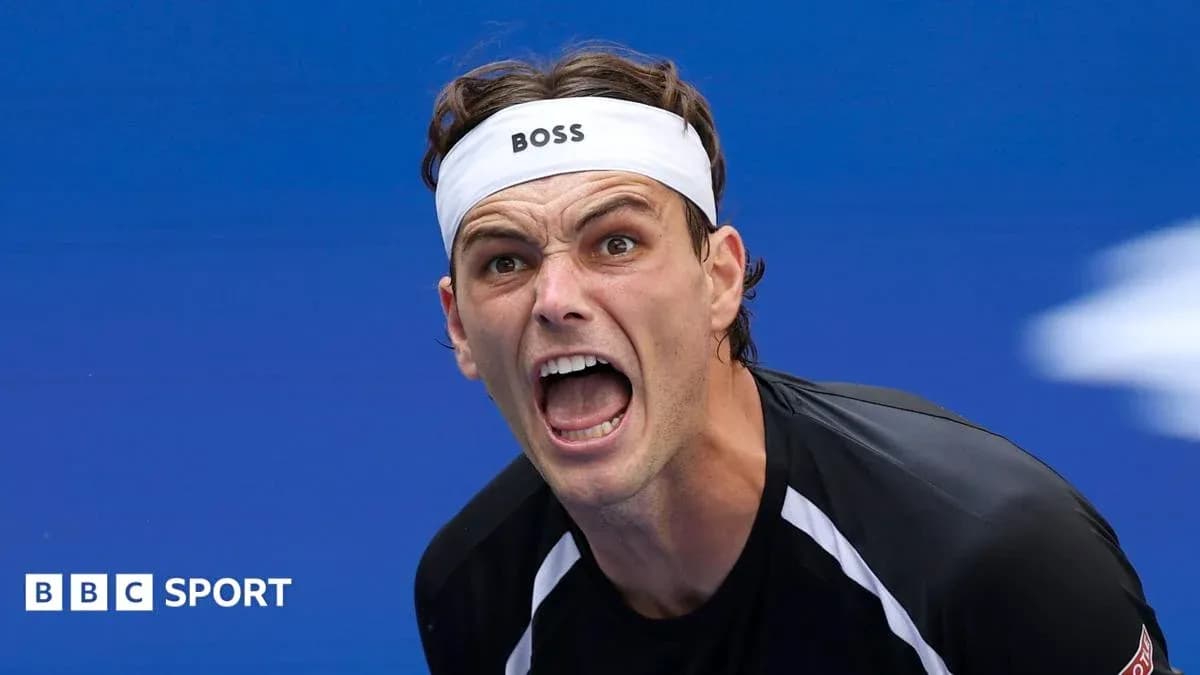
Taylor Fritz has another word for it. Delusion.
The American, a former US Open runner-up and now a fixture in the world’s top 10, knows exactly how steep that climb is. He is also one of the men who, by his own standards, has let a golden chance at this year’s US Open slip through his fingers.
A draw blown wide open
This was supposed to be the year the door opened for the chasing pack.
Jannik Sinner, one half of the sport’s new duopoly, stayed home with injury. Carlos Alcaraz arrived in New York still feeling his way back after a long lay-off. The script almost begged for a new champion, a fresh name on the trophy, a player like Fritz to step through the gap.
Instead, the draw turned into a graveyard for the elite.
Six of the top 10 seeds were gone by the fourth round at Flushing Meadows. Fritz was among the early casualties, letting a two-set lead evaporate against Argentina’s Francisco Cerundolo in the third round, a defeat that will sting deep into the off-season.
By Sunday night, former champion Daniil Medvedev had also been bundled out in the last 16. That left just three top-10 players standing: top seed Alexander Zverev, defending champion Alcaraz and eighth seed Ben Shelton.
“It shows you how even the circuit is, how tight every match is, how difficult it is to win matches,” said 24th seed Cerundolo, who has surfed the chaos better than most. “Anything can happen right now.”
The rankings say one thing. The matches are telling another story entirely.
Living under a two-man shadow
The turbulence in New York comes with a sharp contrast. For all the volatility around them, Sinner and Alcaraz have built something close to a private club at the top of the men’s game.
Between them, they have claimed 10 of the past 11 Grand Slam men’s singles titles. Every major that comes and goes without their name on the trophy feels like an exception rather than a trend.
That kind of dominance turns up the heat on everyone else.
Earlier this year, Fritz told the Guardian he expects to feel an “emptiness” at the end of his career if he never wins a Slam. It was a stark admission from a player in his prime, and it captured the suffocating weight of trying to break through in an era where two young stars have already locked down most of the real estate.
Zverev knows that suffocation well. The world number two finally cracked the code at Roland Garros this year, lifting his first major trophy in Paris. Only then did he reveal what those fortnights had cost him: sleepless nights, no appetite, a body and mind knotted with nerves.
When he finally broke the dam, his tennis loosened. He rode the wave into the Wimbledon final, played with greater freedom there, and still ran into Sinner at full tilt.
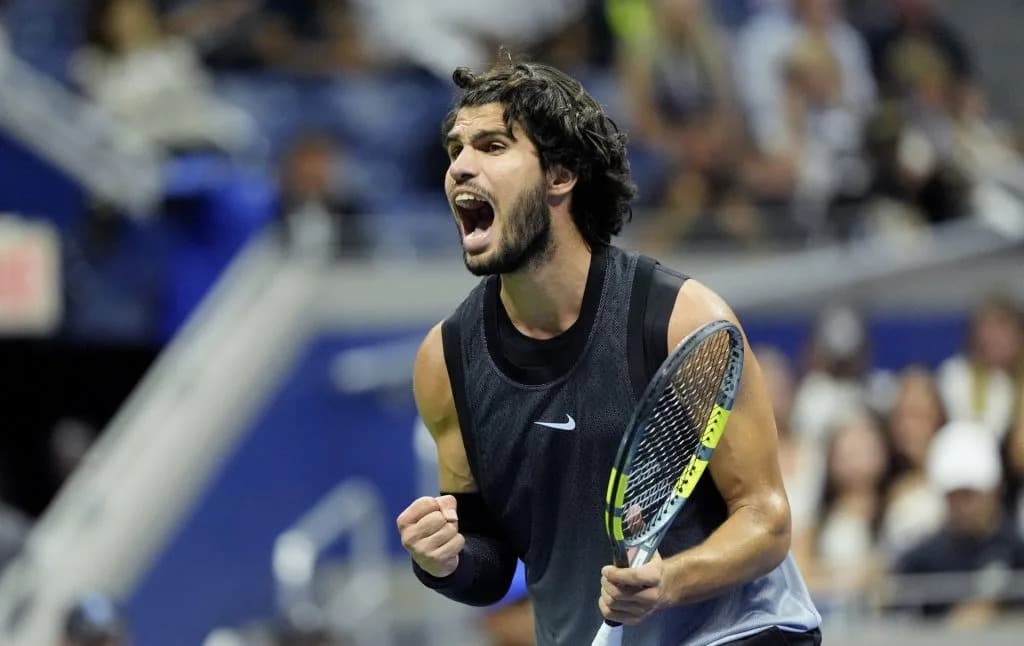
Now, in New York, Zverev is fighting his way through the draw without hitting his top level, but Alcaraz looms like a storm cloud on the horizon. The Spaniard looks sharper with every round, his confidence swelling with each win.
“The two-horse race between Sinner and Alcaraz is not healthy for the tour,” said former Wimbledon champion Pat Cash on BBC Radio 5 Live. “With every win, Alcaraz is becoming more of a favourite. Four months off, no matches and he could win the US Open.”
The rest of the field can feel that. Every time they step on court, they’re not just playing their opponent; they’re playing the shadow of the two men waiting at the business end.
A fragile top 10 and a brutal calendar
Pressure alone, though, doesn’t explain the wreckage of seeds across New York.
Strip Sinner and Alcaraz out of the equation and one argument gains traction: the current top 10 is simply not as robust as it once was. Depth has risen, but the iron-clad, week-in-week-out dominance at the top has thinned.
The schedule has done its damage as well.
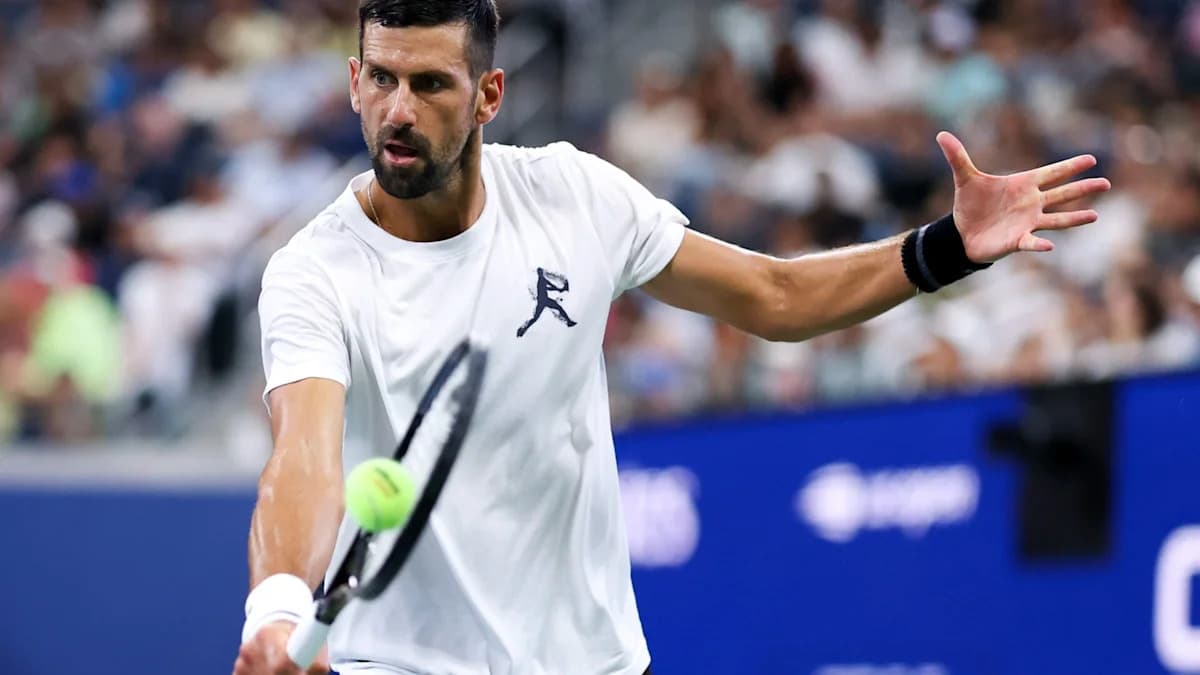
Fourth seed Novak Djokovic, still a giant presence at 37, saw his ageing body betray him in a shock first-round exit. Third seed Felix Auger-Aliassime pointed to dizziness as the key factor in his second-round defeat.
Fifth seed Flavio Cobolli spoke bluntly after his third-round loss, saying he lacked energy and blaming the sheer volume of matches and the draining New York heat.
Cincinnati champion Arthur Fils arrived with momentum and ran straight into former world number three Stefanos Tsitsipas in a brutal opening assignment. Teenager Rafael Jodar, already beyond 50 matches in his first full season, looked spent during his first-round defeat.
“The season is long. I think all the guys who performed well in the preparation tournaments have it more difficult here,” said Belgium’s Alexander Blockx, who knocked out French Open finalist Cobolli. “We’re all human. We’re not robots. Every week is difficult. Especially at a Grand Slam where it gets even more physical.
“Mentally you have to really stay in it.”
The message from the locker room is clear: the margins are thin, the bodies are tired, and reputations mean very little once the ball is in play.
A different kind of fight at the top
The intensity is not confined to the men’s side.
In the women’s game, four players are locked in a knife-edge battle for the number one ranking, adding another layer of tension to every round in New York.
Aryna Sabalenka has occupied top spot for the past two years, a symbol of sustained excellence. Recently, though, her form has dipped, and the gap has narrowed to the point where her position is under serious threat.
Elena Rybakina knows exactly what she needs: a semi-final run guarantees she overtakes Sabalenka. Jessica Pegula and Coco Gauff have an even more straightforward equation. Win the title, and the summit is theirs.
“Looking at the difference between the points in the top 10 compared to the men, you can see how the depth is pretty crazy,” said Pegula. “Everyone has been very consistent and makes it hard to a certain extent [to win a Slam].
“But then you know there’s not one or two super dominant players where you feel like they have to lose in order for you to have a chance.”
On one tour, two young men are threatening to turn Grand Slams into a closed shop. On the other, the door is wide open and the line to walk through it stretches around the block.
Between them sits this US Open, a tournament that has stripped away seeding, exposed fatigue, and reminded everyone that belief — or delusion, if you prefer Fritz’s word — might be the only true currency when the lights go up on the sport’s biggest stage.