U.S. Open's Influencer Problem: A Clash of Culture and Tradition
The Arthur Ashe Stadium lights were already harsh on Monday night. Then another one cut through the dark.
Midway through Naomi Osaka’s match against Anastasia Zakharova, play at the U.S. Open briefly turned into a backdrop. High up in a suite, a cluster of influencers tried to nail content — bright light on, bodies moving, phones raised — until the chair umpire had to step in, repeatedly asking them to be quiet.
The scene, captured on a fan’s phone and posted online, spread fast. More than 1,500 comments poured in, many from long‑time tennis followers who’ve grown tired of what they see as the slow creep of social media spectacle into a sport built on silence, focus, and rhythm.
For Katherine, the fan who filmed the moment, this wasn’t an isolated annoyance. It was the culmination.
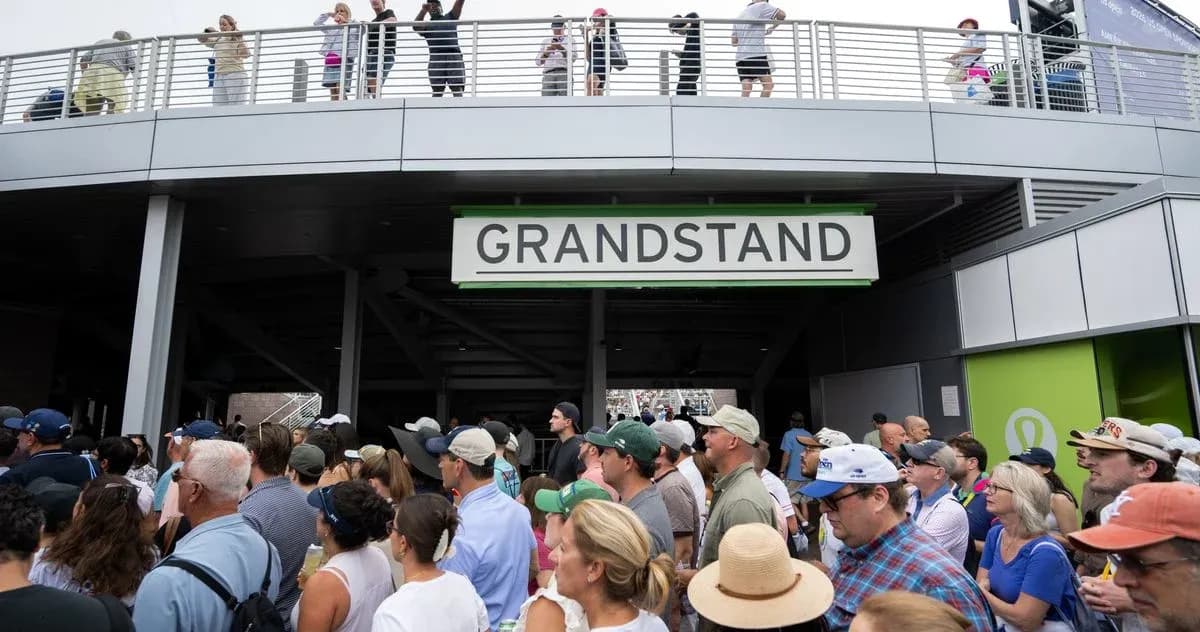
“All around the stadium, there were people — in the middle of serves and in the middle of points — getting up, walking through the crowd down to the closest they could get to the court in their section, and taking pictures, taking videos, using ring lights,” she said. In tennis, you’re supposed to wait. End of a set. Changeover. At least between points. But the U.S. Open relaxed its movement rules for 2024, and on Monday night, the change felt like a floodgate.
From her seat, Katherine watched the umpire turn toward a particularly noisy suite of about a dozen people. He asked them to quiet down several times. They were being filmed by a U.S. Open usher holding a small but piercing light, bright enough to slice across the darkness like a flashbulb from another era.
“It didn’t seem like they were aware that the umpire was talking to them because they weren’t really watching the match,” she said. “I’ve never seen that in the middle of a point. The flash was the craziest thing.”
The video shows Osaka playing while, in the background, one attendee angles for the perfect selfie. That woman, fashion and lifestyle influencer Mriganka Chawla, later stepped into the comments to identify herself and explain what happened.
Chawla wasn’t in the unruly suite that drew the umpire’s ire. She had come to the Open for the first time with her fiancé’s tennis‑obsessed family, as a guest, not on an influencer assignment. At one point she left her seat for an ice‑cream sandwich, spotted a relatively empty patch of stands, and asked an usher to snap a photo “because my man can’t take a photo to save his life.”
She thought she was far enough away not to disturb anyone.
“I was seriously so far away,” she said. “I’m really sorry if I disrupted any playing.”
Once she pushed back in the comments, insisting her flash wasn’t affecting the match, the reaction turned ugly. She says she has received “death threats” alongside a bizarre stream of DMs asking about the selfie light she used — the same one popularized by Alix Earle.
“This is such an influencer thing, and I understand that now, but everybody has really cute photos [from the Open]. I just wanted one cute photo,” Chawla said. “I wish somebody had told me, ‘You can’t do that.’ This is also on me. I should have researched it. I wish there were some guidelines or something.”
Her misstep collided with a larger shift.
The United States Tennis Association has spent the past few years reshaping the U.S. Open into what its CEO recently called “tennis Disneyland.” Night sessions and celebrity sightings have always been part of the New York flavor, but the tournament has leaned harder into off‑court attractions: family‑friendly events, sponsor activations built for Instagram, curated “experiences” that play as well on feeds as they do on the grounds.
Inviting influencers is now a formal part of the strategy. Sportico reported that the USTA issued media credentials to 100 influencers and podcasters this year, double last year’s figure of 50. That tally doesn’t include the creators tucked into corporate suites on brand invitations, ring lights and all.
For many tennis loyalists, the tipping point has arrived. They’re paying more for tickets, queuing longer, and watching newcomers wander in and out of their rows mid‑rally. The suspicion isn’t just that some guests don’t know the etiquette. It’s that some don’t care.
A recent piece in culture magazine the Mercer Edition labeled it the Open’s “influencer problem,” arguing that the sport’s essence — “a level of concentration that can’t be understood until fully observed” — is fundamentally at odds with a content‑first approach. Brands chasing “vanity metrics and corporate satisfaction,” the piece warned, risk trampling the very environment that makes the event worth filming.
Katherine feels that fatigue in the stands.
Over the past two years, she says, the surge in influencer culture at Flushing Meadows has worn down fans who used to embrace the Open’s reputation as the loud, rowdy cousin of Wimbledon. Noise is one thing. A constant churn of selfies, videos, and ring lights while players toss the ball to serve is another.
“Once it’s impacting the play of the game, that’s a breaking point,” she said.
And the irony? After all the uproar, Chawla says the photo that helped ignite it wasn’t even worth the effort.
“It looks like I’m mid-sneeze,” she said, laughing. “Hey, everyone knows I went to the U.S. Open now, so I guess I don’t have to post anything.”
The image didn’t land. The debate will. As the Open leans deeper into its “Disneyland” era, tennis has to decide how much of its silence it’s willing to sell.