Willy Hutchinson Becomes WBC Light-Heavyweight Champion
Willy Hutchinson walked into the AO Arena chasing a childhood promise. He walked out as WBC light-heavyweight champion of the world.
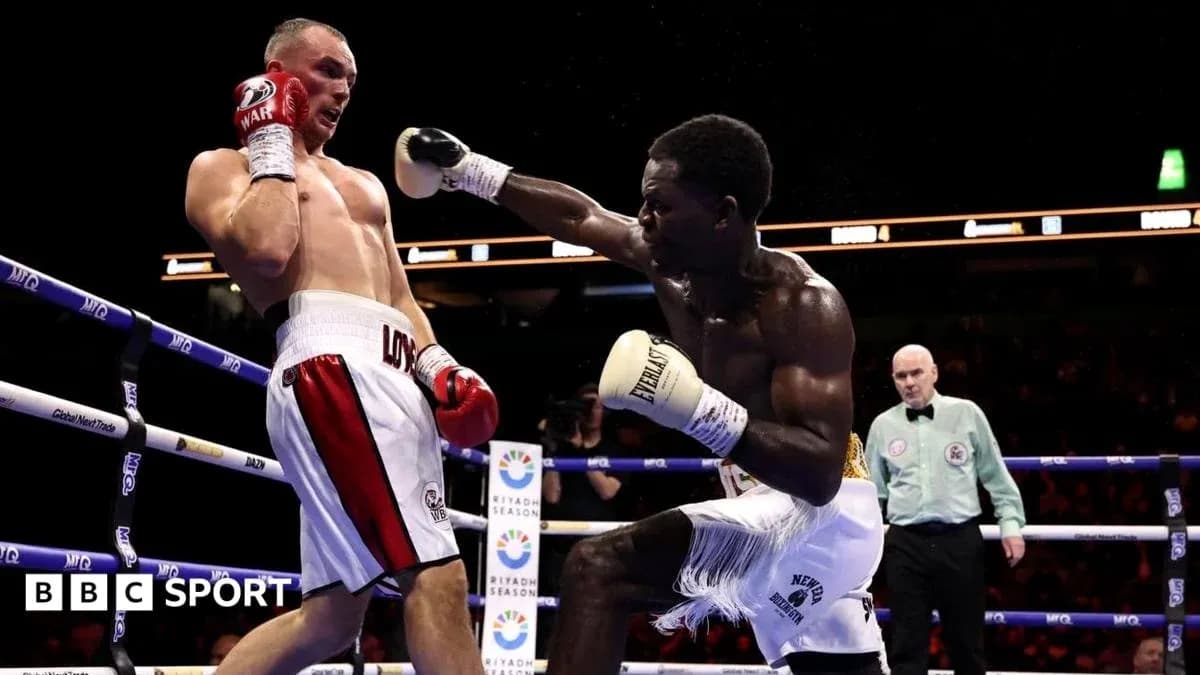
The 28-year-old Scot produced the finest performance of his career to outbox and outthink Joshua Buatsi over 12 tense rounds in Manchester, edging a tight rematch on the cards: 117-112, 115-113, 115-113. Two years after Buatsi had dropped him twice and nicked a split decision, Hutchinson flipped the script and the rivalry.
This time, the kid who once got bullied to the body stood tall.
From scribbled dream to green belt
The belt itself only landed in their laps late. The fight was originally for the interim title, but when American David Benavidez vacated to chase glory at cruiserweight, the WBC’s full gold dropped into play. Suddenly, a grudge rematch became a coronation night for someone.
Hutchinson had talked all week about a note he wrote as a 13-year-old, while his dad worked in Sweden, promising himself he would become a WBC world champion. In Manchester, that scribble turned into leather and metal.
When his hand was raised, the emotion spilled out. He spoke of the coach who “dug me out of a hole” he never thought he’d escape, of a life that could easily have gone another way. For him, this was more than a belt. It was a rescue story with a title attached.
A subdued stage, a fierce fight
The arena told its own tale. The AO, once packed to the rafters for Ricky Hatton’s thunderous nights, had its upper tier closed. Ticket sales were modest, the wider British public never truly gripped by this matchup.
Inside, it felt different.
Manchester picked its side early. Hutchinson, the slick Scot with a point to prove, walked out to a wall of noise. Buatsi, five years older and walking under a cloud of “over the hill” talk, was met with boos as he circled the ring before the first bell. A world title fight in a half-filled arena, but the sound belonged to one man.
The first meeting in 2024 had seen Buatsi stride in as the clear favourite and fight like it. He dug savage hooks into Hutchinson’s body, dropped him twice, and walked away with the decision. He came with the same plan this time. Same target, same whip-crack shots downstairs.
But the man in front of him was not the same.
A different Hutchinson, a dulled Buatsi
Hutchinson has spoken of “maturing” since that first defeat, and you could see it in the way he controlled the ring. The jab was sharper, the feet busier, the choices smarter. When Buatsi tried to close the distance and go to work to the ribs, Hutchinson slid away, pivoted, or met him with stiff, scoring shots.
Buatsi, by contrast, looked like a faded echo of the fighter who had once bullied Hutchinson. The power was still there in flashes, but the ideas were thin. He kept going to the body, but this time he found gloves, arms, and empty air. In the centre of the ring, Hutchinson often toyed with him, switching stances, stitching together rapid triple jabs, and keeping the Londoner reaching.
The pressure that once belonged to Buatsi now flowed from Hutchinson. The Scot dictated the pace, picked his moments, and banked rounds. The fight never threatened to become a classic in the mould of Hatton–Tszyu, but it became something else: a quiet, disciplined dismantling of an old problem.
Manchester noise, Scottish control
The atmosphere swelled as the rounds ticked by. Local favourite Jack Rafferty’s fans drifted out after the co-main event, leaving pockets of empty seats. The energy, though, stayed with Hutchinson. Manchester royalty Bez of the Happy Mondays watched on at ringside as the Scot went through the gears.
After the ninth, Hutchinson’s corner gave him the line every fighter dreams of hearing: “Three rounds and you’re a world champion.” It wasn’t a slogan. It was a calculation.
He fought like he believed them.
Buatsi tried to rally late, stepping forward with more urgency, looking to drag the younger man into a shootout. Hutchinson refused to panic. He clinched when he had to, moved when he needed space, and picked Buatsi off just enough to keep the momentum on his side. No wild exchanges. No reckless gambles. Just a man protecting the work he’d done.
When the final bell rang, there was tension but no outrage. The cards were close, but the right way round. The arena erupted when Hutchinson’s name was called.
A new name on a British roll of honour
With victory, Hutchinson became the eighth British light-heavyweight to hold a version of the world title, and the first since Nathan Cleverly in 2017. It’s a select club, and he has taken the long, hard road to get there.
The night will not go down as one of Manchester’s most famous boxing spectacles. The upper tier was closed, the casual fans stayed away, and the spectacle never quite caught fire. But titles are not handed out for atmosphere. They are earned in nights like this, where a fighter quietly rewrites his own story.
Hutchinson has his green belt now, the one he promised himself in a book as a boy. The question is no longer whether he can become a world champion.
It’s how far this new, matured version of Willy Hutchinson can go while it’s wrapped around his waist.