Zheng Qinwen's Dramatic Comeback at the US Open
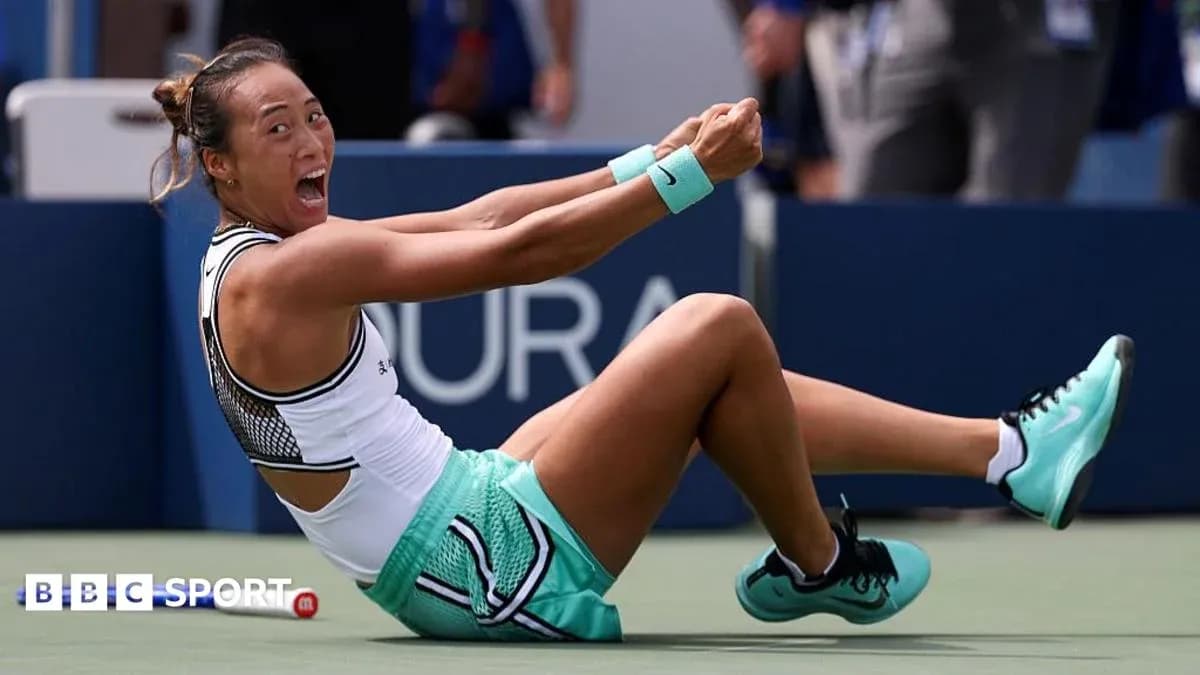
Zheng Qinwen lay flat on the Arthur Ashe court, arms spread, as if trying to hold on to the moment before it slipped away like so many others in the past year.
Moments earlier, she had been a point from going out.
At 5-0 down in the deciding set, facing match point against Madison Keys, the Olympic champion looked finished. The American, a 2025 Australian Open winner and a favourite with the New York crowd, was cruising. She had taken the first set in just 23 minutes, was bullying the rallies, and already had one foot in the fourth round.
Then the match turned into something else entirely.
From the brink to a seven-game surge
Keys led 5-0 in the third set and held match point. The stadium was ready to send her through. Zheng refused to move.
She held. Then she broke. Then she held again. The scoreboard crept from 0-5 to 3-5, then 4-5. The tension rose with every point, every missed chance from Keys, every clenched fist from Zheng.
Seven games in a row. From the edge of defeat to a 1-6 7-6 (7-3) 7-5 victory over the 22nd seed.
“Finally, a bit of luck is on my side,” the 23-year-old said afterwards, still trying to process what she had just done. “I am just telling myself ever give up. Somehow, little by little, it's just happened.”
She called it “a very dramatic match”. That barely covers it.
A comeback built long before match point
This was not just a comeback in a match. It was the latest chapter in a comeback from a year that nearly broke her.
Zheng had to come through qualifying just to reach the main draw in New York, an Olympic champion reduced to grinding through the outer courts. Her ranking had plunged as low as 160 after elbow surgery last year, a stark fall for a player who had once looked like the sport’s next permanent fixture at the top.
The operation in July 2025 was to clear small pieces of bone floating in her elbow, a chronic problem that had slowly eaten away at her game. The timing felt cruel. In 2024 she had reached the Australian Open final, won Olympic gold and made the US Open quarter-finals. Early 2025 only underlined her rise: a run to the last eight at Roland Garros, a climb to a career-high of world No. 4.
Then the pain, the surgery, and nine months away.
Her first Grand Slam back came at the French Open this year. It ended in the first round, a defeat to eventual runner-up Maja Chwalinska. In the press room afterwards, she could not stop the tears. The gap between who she had been and what she could produce now felt brutal.
“After coming back from injury I felt I lost the energy and I forgot how to compete,” she admitted.
That is what made this night in New York feel so raw. At 5-0 down in the third, the old doubts could easily have flooded back. Instead, she chose something else.
Rediscovering the fight
Keys had owned the early stages. The American’s first set was a statement: 1-6 in 23 minutes, heavy hitting, quick points, Zheng struggling to find any rhythm or depth. For a player still rebuilding confidence, it was the worst possible start.
But Zheng stayed in the match. She steadied in the second set, held her serve under pressure, and dragged it into a tie-break. Once there, she played with the clarity that had carried her to Olympic gold, taking it 7-3 to level the match.
The decider looked like it would be a footnote when Keys raced away to that 5-0 lead. The home crowd roared for the American; Zheng had to supply her own noise. Each hold, each return game, each break of serve became an act of defiance.
“Tennis sometimes feels like rollercoaster,” she said. “You see many times people have a match point, but at the end we made a comeback.”
On this night, she was the one strapped into the front seat.
Following a familiar New York path
With the win, Zheng becomes the first qualifier to reach the women’s fourth round at the US Open since Emma Raducanu in 2021. The parallel is obvious and irresistible: a young player arriving through qualifying, gathering momentum, and starting to believe again on the sport’s loudest stage.
Three months ago she was crying in Paris, wondering if the player who had surged to the top of the game in 2024 and early 2025 still existed. Now she is back in the second week of a major, built not on dominance but on stubbornness and survival.
She did not glide into the last 16. She scraped, clawed, and refused to leave.
“Finally, a bit of luck is on my side,” she said, but this was more than luck. It was muscle memory returning under the harshest pressure, the competitive instincts she thought she had “forgotten” roaring back at 0-5 down.
From world No. 4 to qualifier, from surgery to match point down, from tears in Paris to a seven-game surge in New York: Zheng Qinwen is not all the way back yet.
But on this evidence, the rest of the draw will be asking a different question.
How much longer before she is?