Zheng Qinwen Stuns Iga Swiatek at US Open: A Remarkable Comeback
At this US Open, one rule has emerged with brutal clarity: do not, under any circumstances, lead 5-0 against Zheng Qinwen.
Madison Keys found that out first. Iga Swiatek has now felt it in full.
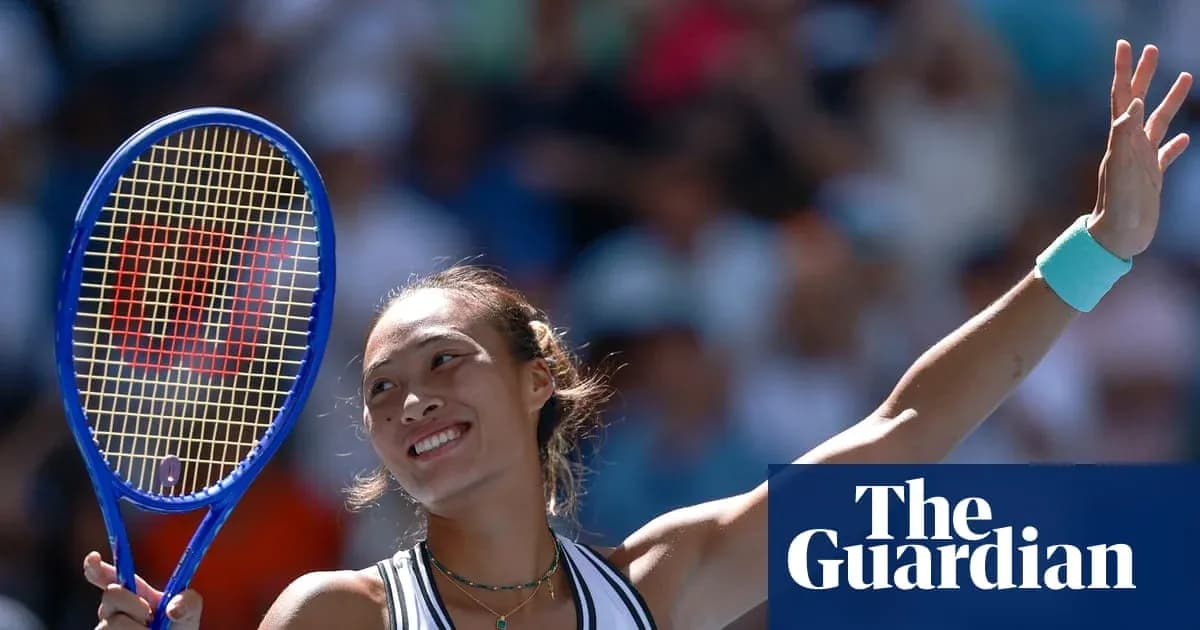
Two days after ripping seven straight games from 0-5 down in a deciding set to stun Keys, Zheng walked back into the fire and did it again – this time against the world’s standard-bearer. Down 5-0 in the opening set to a six-time grand slam champion, Zheng simply shut the door on panic, tightened every screw in her game and reeled off seven games in a row. She never looked back, beating Swiatek 7-5, 6-3 to reach the US Open quarter-finals and to stamp this fortnight with her own improbable signature.
It is a scarcely believable pattern. Winning seven consecutive games from 0-5 down is rare enough. Doing it in back-to-back matches, in consecutive sets, against two major champions? That had never been seen at this level.
Zheng’s explanation was as simple as her tennis was ruthless.
“In one moment, I even forgot the score in the first set at 4-5,” she said. “That shows how I am focused. I guess, to come back 0-5 [again] is not lucky, that’s [what] I can say.”
The scoreboard told one story early. Swiatek, fresh off a confidence-boosting title in Toronto and again looking like the game’s dominant force, raced through the first five games with the authority of a player used to dictating terms. She was stepping in, taking time away, bullying rallies.
Then the match flipped.
The first cracks came as Swiatek tried to close out the set. The forehand, usually a hammer, started to spray. The backhand leaked errors. A routine hold became a scrap, then a missed chance, then a lifeline for Zheng. Once the Chinese No 1 had a foothold, she turned it into a full-scale occupation: heavier returns, deeper drives, a refusal to concede the baseline.
The pressure finally told. Swiatek’s game unravelled into a stream of unforced errors, her timing deserting her just as Zheng’s sharpened.
“I wouldn’t say it had anything to do with mentality. It was more that I started making mistakes from easy balls and Qinwen stopped doing mistakes,” Swiatek said afterwards.
For Zheng, this was more than an upset. It was a statement from a player many had already anointed as one of the sport’s next great forces, only to watch her momentum stall.
Coming into New York, she trailed Swiatek 1-7 in their head-to-head. That lone win, though, carried scars: the semi-final of the 2024 Paris Olympics at Roland Garros, where Swiatek had just completed a hat-trick of French Open titles before Zheng snatched away the gold-medal dream. Zheng went on to claim Olympic gold and, overnight, became one of the most recognisable athletes in China.
Earlier that season she had reached the Australian Open final and climbed to a career-high No 4. Then her body gave way. Elbow surgery halted her rise, the ranking points drained away, and with them the easy confidence of a player used to walking into main draws as a contender.
By June, Zheng had plummeted to No 160. The rhythm vanished. The numbers told the story: an 11-13 record in 2026 coming into the US Open, a year that seemed to be drifting.
So she swallowed her pride and went to qualifying.
Seven matches later, the narrative looks very different. Zheng has fought through the outer courts and the spotlight rounds, piecing her game back together one match at a time. Now she stands in the last eight in New York with one of the most remarkable runs of the tournament and the look of a genuine threat again.
Next up is Elena Rybakina, the second seed, who is edging towards a milestone of her own. The Kazakh is now one win away from becoming world No 1 for the first time after dismantling Naomi Osaka 6-1, 6-4 in just 66 minutes on Louis Armstrong Stadium.
Rybakina was close to flawless. She struck 29 winners against only 17 unforced errors, never truly under siege on serve and facing just one break point, which she snuffed out. Her clean, flat power pinned Osaka behind the baseline and gave the two-time US Open champion no room to breathe.
Osaka needed her very best to live with that level. She did not have it. Struggling with achilles pain and unable to find her usual pop on serve, she never managed to drag Rybakina into the kind of extended exchanges where her own shot-making thrives. The scoreline reflected the gap.
On the other side of the women’s draw, Mirra Andreeva continues her own rapid rise. The fifth seed and reigning French Open champion reached her first US Open quarter-final with a gritty 5-7, 6-4, 6-3 win over Austria’s Anastasia Potapova, another step in a season that keeps accelerating.
The men’s event had its own breakthrough. Alexander Blockx, seeded 28th, booked a maiden grand slam quarter-final with a 6-3, 4-6, 7-5, 7-5 victory over the 24th seed Francisco Cerundolo, edging two tight closing sets to push deeper into a major than ever before.
But this day belonged to Zheng.
From surgery to qualifying, from No 160 back into the heart of a slam, from 0-5 down twice in four days to standing toe-to-toe with the sport’s elite, she has turned Flushing Meadows into the stage of her resurgence. Now the question is no longer whether she can hang with the very best.
It is how far this run, and this reborn version of Zheng Qinwen, can carry her.