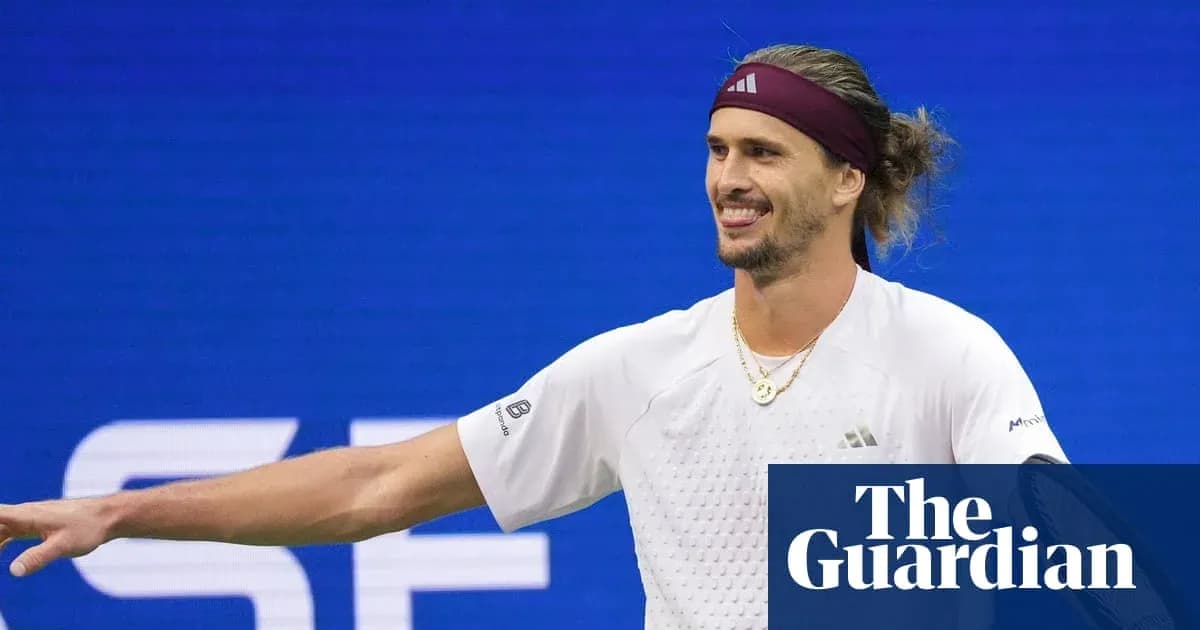
Alexander Zverev Advances to Another Grand Slam Final
On a sleepy semi-final afternoon on Arthur Ashe, tension arrived late. About 107 minutes late.
For most of the day, Alexander Zverev had Karen Khachanov exactly where he wanted him: a set up, a break up, and striding towards another grand slam final with the calm of a man who has spent the season living in these moments. Then, finally, the match bit back.
Khachanov, staring at a straight-sets beating, dug in. He clawed his way into a second-set tie-break, and in that tight, airless passage at 5-6 on his serve, he swung freely. A bold forehand winner erased Zverev’s first set point. At 6-7, he ripped a screaming backhand pass and let out a roar that seemed to echo around the half-interested stadium. For a flicker, the contest looked alive.
Once upon a time, that might have been enough to rattle Zverev. Not this version. Not the one who has already walked through too many big matches this year to be spooked by a short burst from a lower-ranked opponent. He reset, steadied, and shut the door. Again.
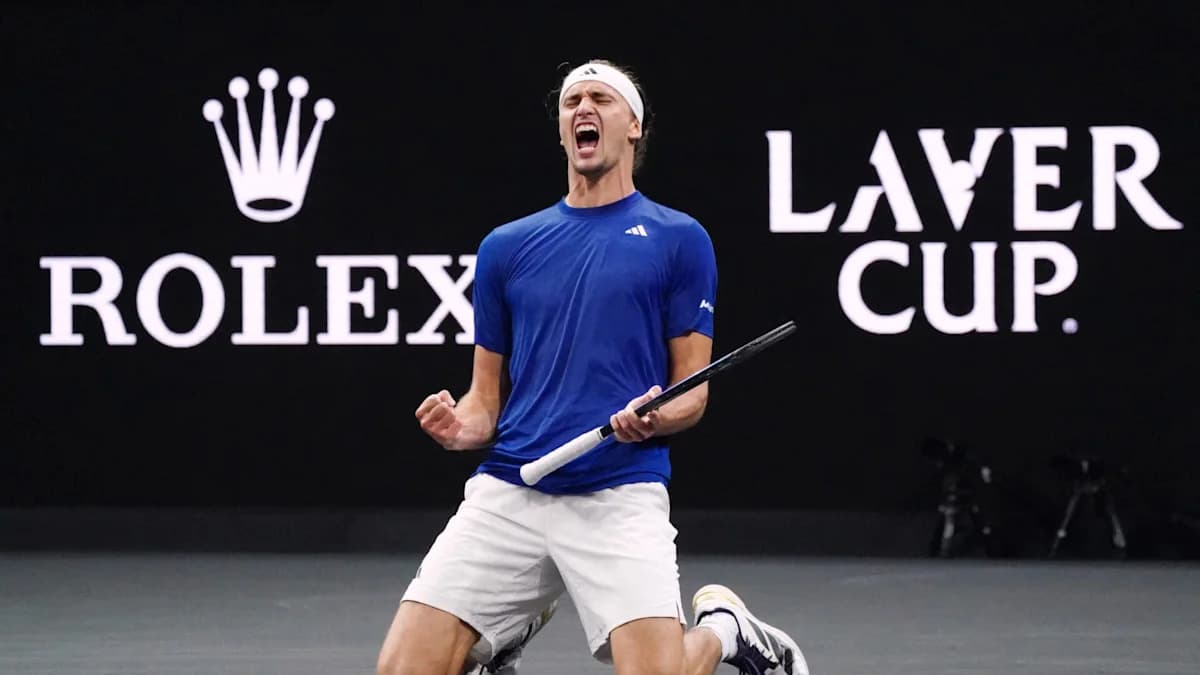
Zverev took the second tie-break as he had taken the first, and then the third in the same, measured way, closing out a 6-3, 7-6 (7), 7-6 (6) win to move within one match of a second grand slam title in his last three majors.
A serial finalist finds his groove
This run has pushed Zverev into new territory. For the first time in his career, he has reached three consecutive grand slam finals. The German backed up his maiden major at Roland Garros with a first Wimbledon final and has now returned to the scene of one of his most painful defeats with a chance to rewrite the story.
It was here, in 2020, that Zverev reached his first grand slam final, only to lose to Dominic Thiem in a wild, five-set match in an empty, Covid-era stadium after leading by two sets and serving for the title. That collapse has shadowed him ever since. On Sunday, he will walk out for his sixth grand slam final with a very different résumé and a far heavier air of inevitability.
On paper, this semi-final always leaned his way. Zverev came in as the second seed, the form player, the man who has turned deep runs into a habit. Yet Khachanov’s current ranking of No 50 does not tell the full story of the opponent across the net.
The 30-year-old Russian has been a fixture near the top of the game for years, peaking at No 8 in the world, winning the Paris Masters in 2018 and taking Olympic silver behind Zverev in Tokyo 2020. He also arrived with a decent record in this particular rivalry: Zverev led their head-to-head 6-3, but Khachanov’s most recent win came just last year in Canada. This was not a mismatch on history alone.
It just felt like one on court.
Serve, solidity, and a forehand that cracked
From the start, Zverev’s serve dictated terms. He landed his spots, controlled the tempo, and rarely looked rushed in his own service games. Khachanov, by contrast, spent much of the afternoon wrestling with a forehand that betrayed him at crucial moments.
The Russian tried to step in, tried to hit through Zverev’s defences, but the shot that needed to hold up simply leaked too many errors. Whenever the second and third sets tightened, whenever the match asked a question, Khachanov’s forehand flinched and Zverev’s baseline consistency held firm.
That was the pattern in both tie-breaks. Khachanov produced flashes – that backhand pass, that fearless forehand under pressure – but Zverev played the bigger points with more clarity. He took the ball early when it mattered, trusted his backhand, trusted his serve, and trusted the weight of his own recent history.
A soft path, but a hard truth
This US Open has unfolded in a way that seems almost designed for Zverev. At Roland Garros, the conversation turned towards him the moment Jannik Sinner crashed out in the second round, Carlos Alcaraz withdrew injured, and Novak Djokovic’s late-career struggles deepened. The question then was simple: who could stop Zverev?
The draw in New York has felt similar. From the top half, his highest-ranked opponents on the way to the final have been No 22 Luciano Darderi and No 28 Alejandro Tabilo. If he lifts the trophy on Sunday, Zverev will have claimed his first two grand slam titles without facing a single top-eight player.
That statistic will follow him. It will be used as a caveat, a qualifier, asterisks waiting in the margins. But the reality is unchanging: a player can only beat the man across the net. After grinding through two tense five-setters in his opening rounds, Zverev has not dropped a set since. He has handled everything put in front of him.
The numbers for the final tilt heavily in his favour too. Against Ben Shelton and Frances Tiafoe, the two Americans vying to face him, Zverev holds a combined 15-1 record. The only loss came to Tiafoe nine years ago, in a very different stage of both careers.
He will walk into that final with every reason to believe.
A semi-final that barely registered
For all that was at stake, this semi-final barely rippled beyond the lines of the court. Zverev is the world No 2. Khachanov is a former semi-finalist here. Yet it is hard to recall many men’s grand slam semi-finals in recent years that have stirred so little noise.
One of the subplots of this tournament has been the fury over ticket resale prices, with fans facing eye-watering sums on secondary markets. There was no such frenzy here. On StubHub, seats for this match were changing hands for as little as $21 (£15.50) before the players even walked out.
Inside Arthur Ashe, the atmosphere matched the market. Pockets of energy, spikes of tension – especially during that second-set tie-break – but nothing close to the fever that usually accompanies a grand slam’s closing weekend.
Zverev won anyway, as he has been doing all year, with a kind of relentless, unspectacular authority. The noise can wait. The questions about his path, his opposition, his place in the game’s hierarchy can wait too.
On Sunday, he gets what every player wants and only a few ever reach: another chance, under the New York lights, to decide a major on his own racket.