Alexander Zverev Claims Second Grand Slam Title at U.S. Open
Alexander Zverev walked into Arthur Ashe Stadium with the weight of expectation on his shoulders and 23,000 people willing him to crack.
He didn’t.
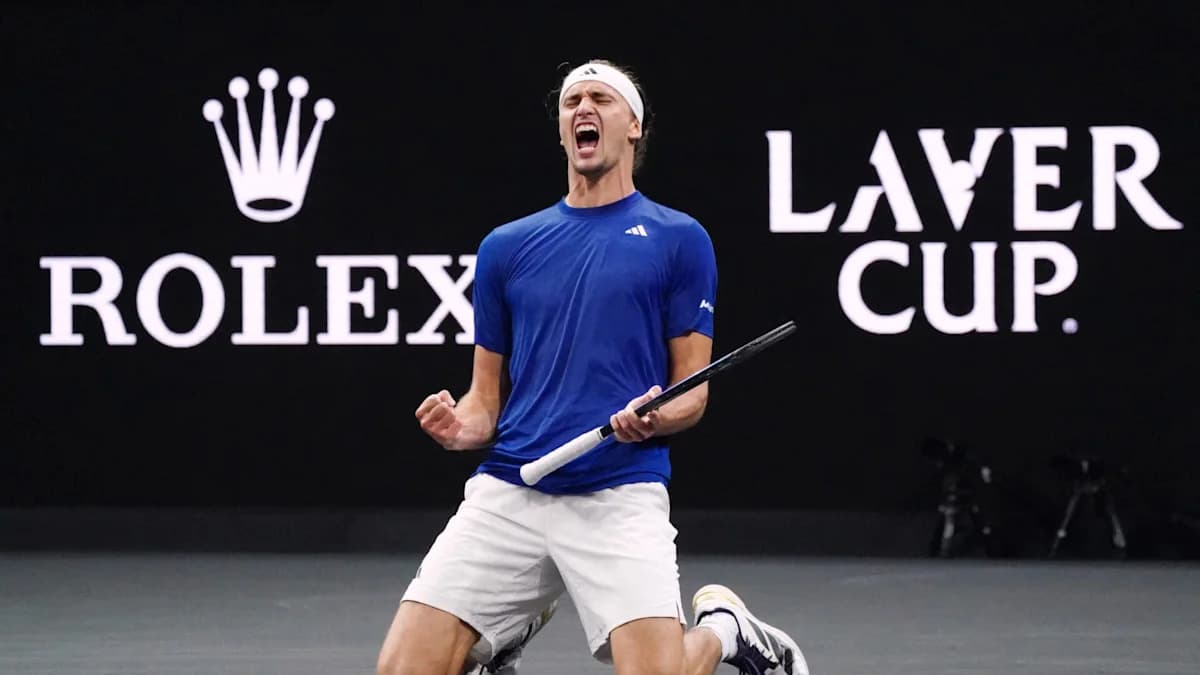
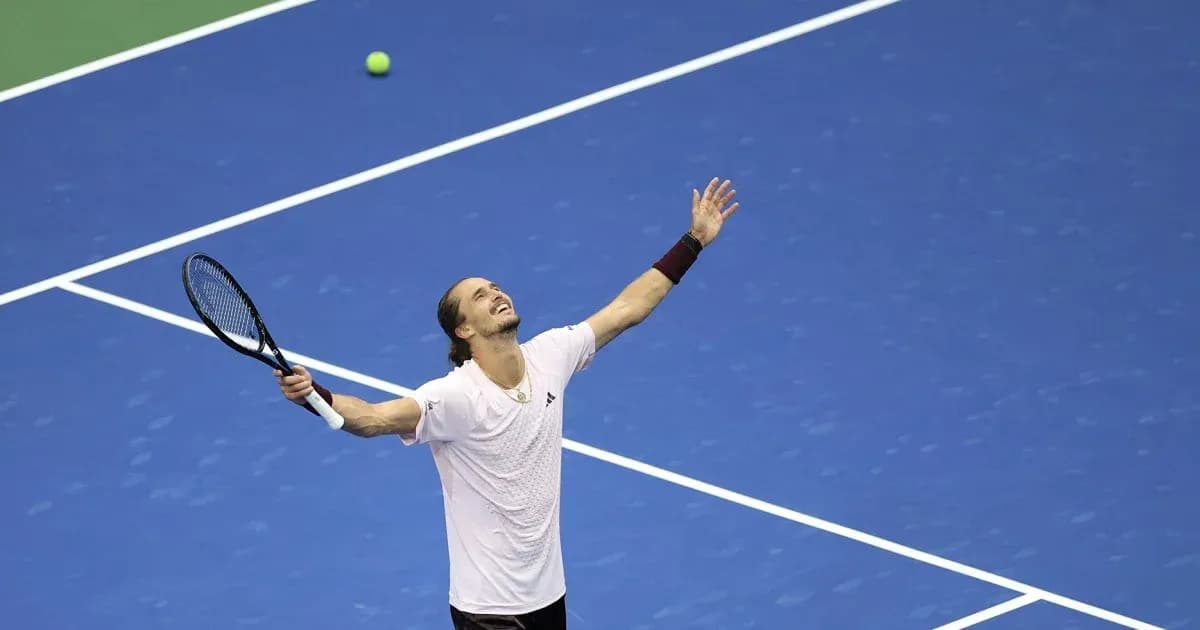
The German stared down Ben Shelton, the New York noise, and two decades of American longing to win the U.S. Open on Sunday night, taking his second Grand Slam title with a 6-3, 7-6 (2), 5-7, 6-2 victory that felt as ruthless as it was composed.
For Shelton, it was supposed to be the coronation. For Zverev, it became confirmation.
Zverev’s moment, years in the making
When Jimmy Connors handed him the Tiffany & Co. trophy and the $5.5 million winner’s check, Zverev looked more relieved than euphoric. This is a man who has lived inside the sharp end of the sport for a decade, who has worn the tag of “future major champion” for so long it almost threatened to become a burden.
Now he has two Grand Slams in the same season, after his Roland Garros triumph in June, and a hard-court major in New York to go with it.
On the podium, the celebration turned personal. Zverev went back to the beginning, to a four-year-old boy diagnosed with diabetes and a mother who refused to let that define him.
“If he wants to be a tennis player, he’ll be a tennis player,” he said, quoting her, before calling her “the most important and strongest person I know.”
The journey from that diagnosis to lifting a U.S. Open trophy on the sport’s loudest stage was written all over his face. The performance that got him there was clinical.
Shelton rides the wave, then hits a wall
Shelton, the 23-year-old American with the thunderbolt serve and a fan base that behaves more like an NBA crowd than a tennis audience, walked into the final as the story of the tournament.
He had outlasted Carlos Alcaraz in a four-hour, 28-minute epic that bled into the early hours of Wednesday morning, then backed it up by overpowering Frances Tiafoe on Friday night. He arrived on Sunday with momentum, belief, and the chance to become the first American man to win the U.S. Open since Andy Roddick in 2003.
Arthur Ashe Stadium responded accordingly. It roared for him. It pleaded for him. It tried to drag him over the line.
Early on, none of it mattered.
Zverev’s opening set was a masterclass in control. He pinned Shelton behind the baseline, smothered his second serve, and refused to be drawn into the kind of chaotic, highlight-reel tennis that had carried the American through the draw. The 6-3 scoreline reflected the gap in experience more than talent.
The second set changed the temperature. Shelton finally found his range on the return, stepping in on Zverev’s serve and uncorking the kind of forehands that have made him must-watch viewing. He began to read the German’s patterns, to anticipate, to attack.
The crowd sensed it and rose with him. Every break point felt like a turning point. Every extended rally became a test of nerve as much as technique.
But when the tiebreak arrived, Zverev shut the door. He tightened his margins, elevated his first serve, and walked through the big points with the calm of a man who has seen this movie too many times to be rattled. Shelton blinked. Zverev didn’t. 7-6 (2), and the American was staring at a two-set mountain.
A late surge, then a final pushback
The match could have slipped away from Shelton right there. Instead, he dug in.
In the third set, the American finally rattled Zverev. He chased down balls he had let go earlier, slapped winners on the run, and played with the abandon that has made him such a compelling figure for a new generation of fans. The deficit seemed to free him.
Zverev, for the first time all night, wobbled. Shelton pounced, stealing the third set 7-5 and dragging the final into a fourth, the stadium now fully alive and desperate for a fifth.
The pressure built. The noise swelled. And then Zverev answered.
Time violation, no derailment
Early in the fourth set, Zverev absorbed a time violation and let the chair umpire know exactly what he thought of it. It was the kind of moment that can tilt a final, a flashpoint that sometimes opens the door for a comeback.
This time, it didn’t.
Zverev reset instantly. He broke for 3-1, slammed that door shut again, and never allowed Shelton back into the set. The German broke once more for 5-2, then served it out with the authority of a player who now understands how to finish these nights, not just reach them.
Shelton, shoulders sagging but still fighting, could only watch as the opportunity slipped away.
A first final, and a wider meaning
For Shelton, this was his first Grand Slam final. It will not be his last.
He handled the moment with perspective that belied his age. On court, he thanked God and framed the entire fortnight — wins and losses — as something bigger than a single scoreline.
“My successes are a gift, the failures are a gift, and being here playing in front of you guys is a gift,” he said.
Up in the stands, his girlfriend Trinity Rodman did her own juggling act. The Washington Spirit forward started in her team’s 3-0 home defeat to the Boston Legacy earlier in the day, then made it to New York to watch Shelton’s biggest match. It was that kind of night: sport bleeding into sport, storylines overlapping.
Shelton carried more than his own hopes. Many fans came to Arthur Ashe dreaming of history on multiple fronts — an American champion, and a second Black man lifting the trophy on a court named for the first, Arthur Ashe, who won here in 1968.
The last time a Black man even reached the final, in 1972, was before Tracie Saundera was born. She made the trip to see Shelton and to feel part of that moment.
“He just plays with so much passion and energy,” she said. “He’s so fun to watch play, and he’s young and enthusiastic. … I’m old. Most of my players are retiring, so it’s good to see some of the young kids coming in and just being powerhouses.”
Junior Pulayya drove up from Florida, following the trail from the University of Florida to New York, convinced Shelton represents something new for American men’s tennis after years of searching for a standard-bearer.
“This gets that new generation of kids that follow tennis, that get involved in tennis, that want to get involved in tennis,” he said. “It does so much just for today, but long term for the sport.”
From Maryland, longtime fan Shameka Littles watched Shelton step onto Arthur Ashe Stadium as the first Black man in more than 50 years to contest this final and tried to imagine the weight of that. She couldn’t — but she understood what it meant for the broader picture.
“To have so many of the top seeds, you know, make it to the semifinals, the quarterfinals — that was exciting in and of itself,” she said. “Hopefully, it just kind of gives, you know, a big boost of energy and excitement for each other.”
A champion established, a contender announced
Zverev leaves Queens as a two-time major champion, with a Roland Garros crown and now a U.S. Open title in the same season, and with the sense that his career has finally caught up to his talent.
Shelton leaves without the trophy, but with something that may last longer: the feeling that American men’s tennis, dormant at the very top for two decades, has found a new face and a new voice.
The drought continues. The hope, clearly, does not.