Zverev Claims U.S. Open Title, Extending American Men's Grand Slam Drought
NEW YORK — The roar came early. The silence lasted much longer.
Arthur Ashe Stadium rose to its feet when Ben Shelton walked out of the tunnel on Sunday, the crowd desperate to witness a long-awaited moment in American men’s tennis. It left with Alexander Zverev holding the trophy instead.
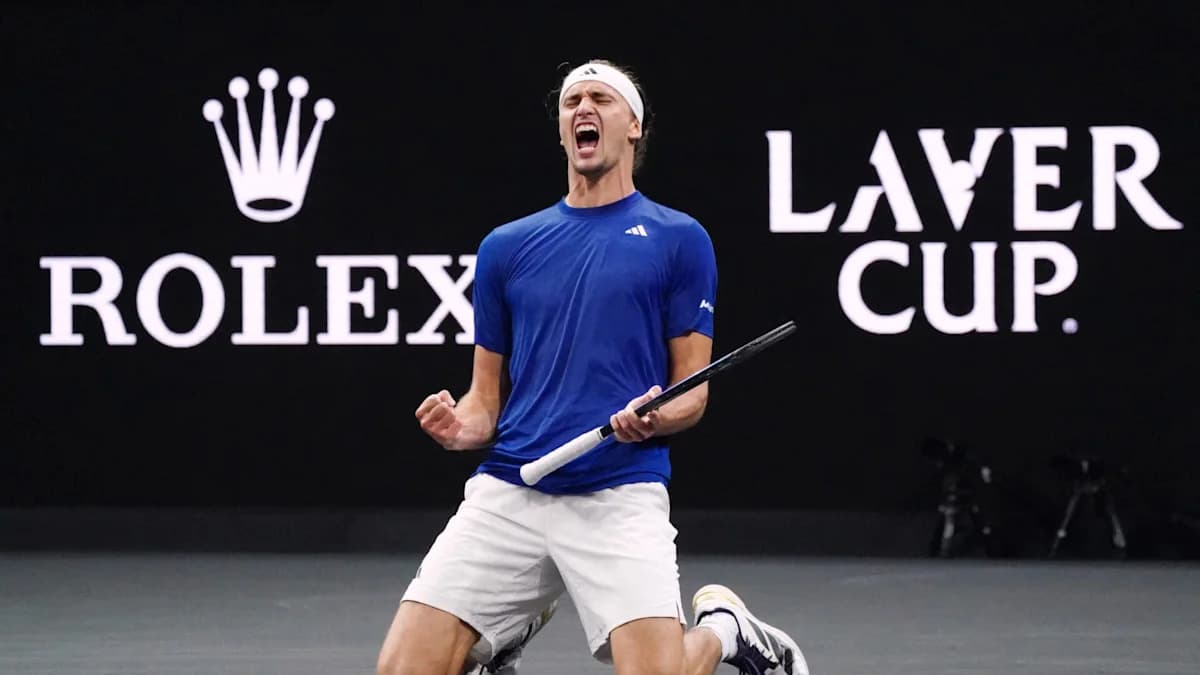
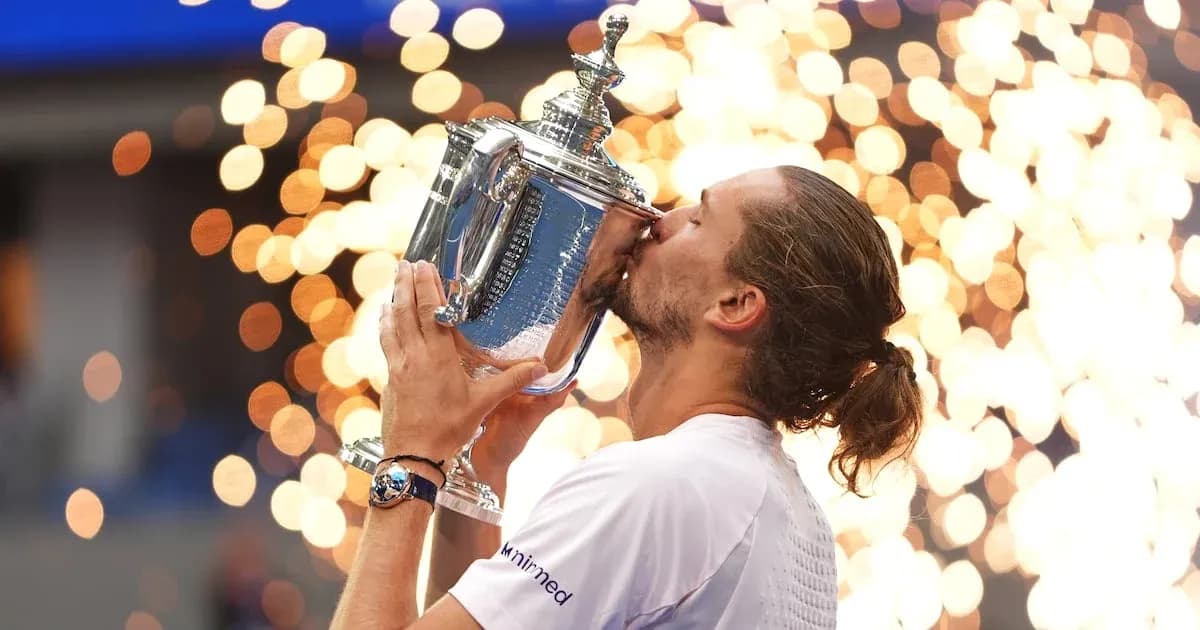
In a final loaded with history and heavy expectation, Zverev beat Shelton 6-3, 7-6 (2), 5-7, 6-2 to claim the U.S. Open title, his second Grand Slam of the season and of his career, and extend a drought that has now stretched more than two decades for American men at the majors.
No American man has lifted a Grand Slam singles trophy since Andy Roddick here in 2003. The wait goes on.
Zverev’s redemption tour reaches New York
This is Zverev’s year, and he is making sure of it.
He finally cracked the Grand Slam code in Paris, winning the French Open after years of near-misses and painful collapses. Now he has come to New York and taken the title that once slipped through his fingers in agonizing fashion.
In 2020, he led Dominic Thiem by two sets in the final and stood two points from the championship before unraveling, becoming the first man since 1949 to lose a U.S. Open final from two sets up. That scar has hovered over him ever since.
Whatever was left of that trauma vanished on Sunday night.
Now the No. 1 seed at a major for the first time, Zverev arrived in New York as the tournament’s top dog when world No. 1 Jannik Sinner pulled out with a knee injury. He had already reached the Wimbledon final this summer, losing to Sinner there, and came into this match as the established heavyweight against a surging American still learning the scale of this stage.
He played like it.
Shelton’s moment, New York’s hope
Shelton carried more than his own ambitions into this final.
The 23-year-old wasn’t just chasing a first Grand Slam title; he was trying to become the first Black man to win the U.S. Open since Arthur Ashe in 1968 and the first American man to win any major since Roddick. The storylines wrapped around him like a flag.
He had already lit up the tournament with his run. He knocked out defending champion Carlos Alcaraz in a five-set quarterfinal that finished at 3:33 a.m., the latest match in U.S. Open history. He stormed through the draw with power, swagger and a game that looks built for the big American hard-court stages.
But on Sunday, the start betrayed him.
Serving first, Shelton opened with two lost points and then dumped in a double fault to hand Zverev an immediate break. The crowd, so loud when he walked in, fell into a stunned hush. The pattern repeated to close the set: another double fault, another gut punch.
Zverev never let that early gift go. He locked down his own serve, protected the break and closed the opening set 6-3 without offering Shelton a single break-point chance.
Silence as a weapon
If Shelton brought the electricity, Zverev brought the mute button.
His deliberate routine before serving — the endless bouncing of the ball, sometimes 10 times, sometimes closer to 20 — stretched each pause into long pockets of enforced quiet. In a stadium primed to roar for the American, those extended silences dulled the edge of the home support.
Tennis etiquette demands that fans quiet down as a player prepares to serve and stay silent through the point. Zverev’s methodical approach turned that rule into a tactical tool. The crowd tried to fight it, cheering when he missed first serves, drawing a rebuke from the chair umpire. Zverev had warned he relished hostile environments. He looked entirely at ease in this one.
Shelton needed noise. Zverev gave him stillness.
A ruthless tiebreak
The second set became Shelton’s best window to swing the match his way. He steadied his serve, found a few heavier forehands, and the crowd sensed a shift. But when the tiebreak arrived, Zverev slammed the door.
Shelton sent Zverev’s first serve long. Then Zverev ripped a passing shot that left the American stranded. A 16-shot rally followed, with Zverev dictating and finishing to surge ahead 3-0.
The German then uncorked a 147 mph serve, followed by another at 124 mph. Both blew straight through Shelton’s defenses. Suddenly it was 5-0, the tension evaporating on one side of the net and rising sharply on the other.
Shelton scraped back to 5-2 and finally got a return in play, but Zverev claimed that point as well, then sealed the tiebreak 7-2 with a 139 mph missile. The set had been tight; the breaker was a beatdown.
Shelton had taken only one set off Zverev in their five previous meetings. Even with the crowd behind him, he now trailed by two sets and stared at a familiar problem: he still had never beaten this opponent. The head-to-head would soon move to 0-6.
A flicker of resistance
Shelton did not fold.
In the third set, he finally began to resemble the player who had bulldozed Alcaraz. The serve bit harder, the forehand jumped off the court, and he played with a little more freedom, a little less tension in the shoulders.
He clawed his way into rallies, took bigger cuts at second-serve returns and forced Zverev to feel the weight of the moment. The German, cruising for so long, suddenly found himself pushed back.
Shelton snatched the third set 7-5, igniting Ashe again. For the first time all night, it felt like the script might crack.
But Zverev has spent this season rewriting his own.
The closer he wasn’t in 2020, he is now
Where the 2020 version of Zverev tightened, this one loosened. He reset, shortened points, and went back to the heavy, deep hitting that had built his lead.
The fourth set belonged to him from the start. He broke Shelton early, then broke him again. Shelton’s forehand, so explosive all fortnight, started to misfire. The double faults that haunted him in the opening set crept back into view.
The scoreboard tilted quickly: 6-2, Zverev, and with it the championship.
For Shelton, the night ended in frustration and applause. For Zverev, it ended with a second major of the year, a completed redemption arc in New York and a firm grip on the season’s narrative.
The American, only 23, will have more chances. His power, charisma and appetite for big stages almost guarantee it. But the crowd that filed out of Arthur Ashe Stadium on Sunday did so still waiting, still wondering when the next American man will finally step up and finish the job.