Alexander Zverev Reaches US Open Final Again
Alexander Zverev is starting to make Grand Slam finals feel like a habit.
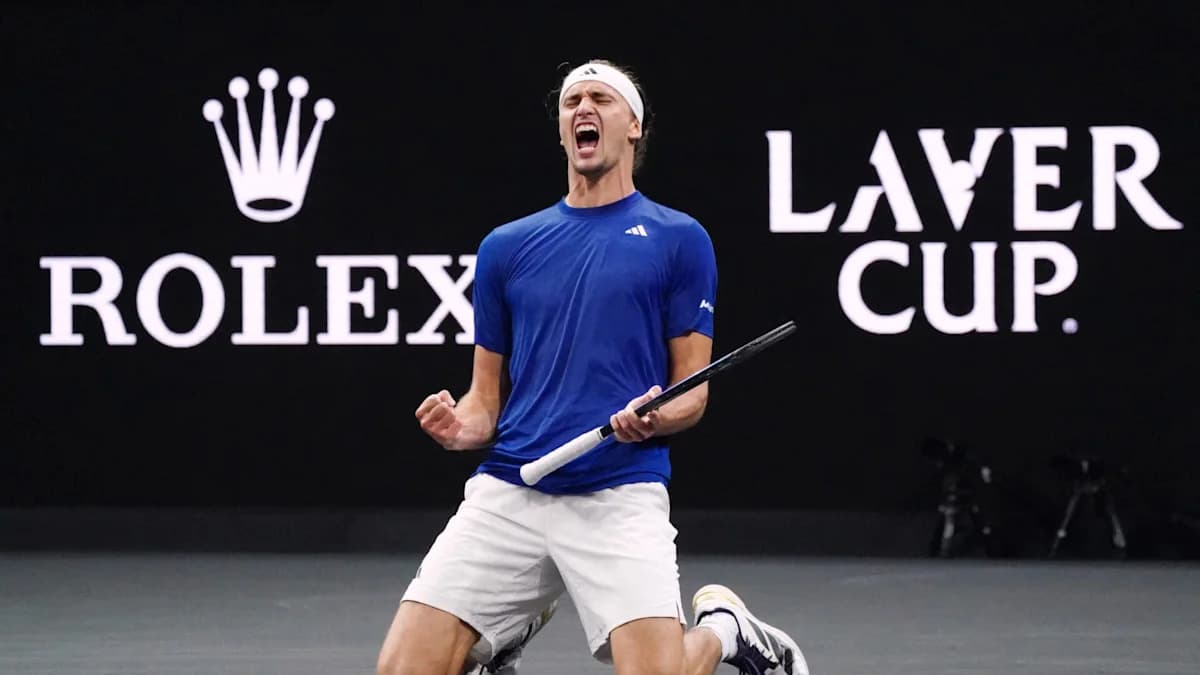
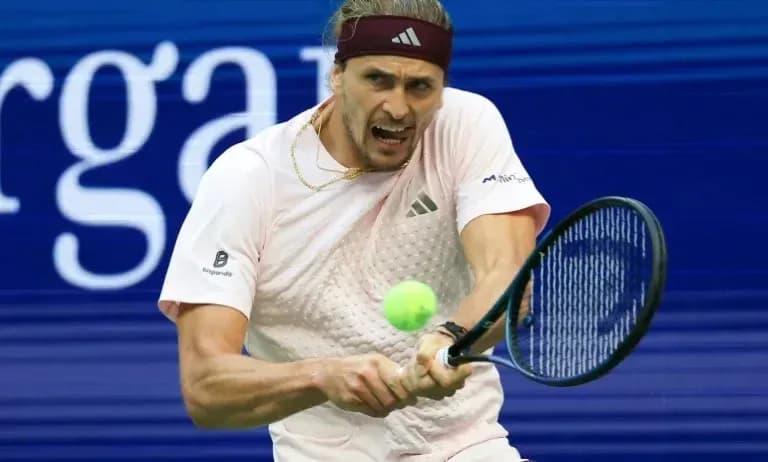
Under the lights in New York, the top seed muscled past Karen Khachanov 6-3, 7-6 (9/7), 7-6 (8/6) on Friday to book his third consecutive major final and another shot at the US Open crown that slipped from his grasp four years ago.
This time, he arrives as the man to beat.
Zverev finds another gear
Zverev’s season has become a three-act epic. French Open champion. Wimbledon runner-up. Now a US Open finalist again, after a performance that was cleaner than the scoreline suggested but far from comfortable.
He needed just under three hours to subdue Khachanov, a dangerous opponent ranked 50 in the world but playing well above that number. Zverev’s serve set the tone early; he grabbed control of the first set with a single break, locked in on his first delivery and refusing to give the Russian a look at any real opening.
The early rounds had hinted at trouble. Zverev spent nine hours and 26 minutes grinding through five-set marathons in the first two rounds, legs heavy, patience tested. Those matches now look more like a brutal warm-up than a warning sign. His game has sharpened with each step, and against Khachanov it hardened into something ruthless.
“Straight-set win, but anything but straightforward in a way,” Zverev said. “He played incredibly well, fought incredibly well.”
He wasn’t being polite. The scorecard backed him up.
Khachanov swings back
The second set changed the mood. Khachanov, who lost to Zverev in the Tokyo Olympic gold medal match in 2021, refused to play the role of supporting act.
He couldn’t touch Zverev early, but when he finally threaded a passing shot by the German to start the fourth game, he allowed himself a grin. Three points later, a forehand winner brought up his first break point of the match. Zverev blinked, double faulted, and suddenly the Russian had a foothold.
From there, the rallies stretched, the ball striking grew heavier, and the match tightened into a contest of nerve.
The tiebreaker became a test of nerve. Zverev earned two set points; Khachanov ripped them away with a thumping forehand and a backhand down the line that drew gasps from the crowd. Just when it felt like the Russian might turn the night on its head, Zverev steadied, reclaimed control, and dragged the set over the line.
The pressure finally told, but only just.
Edged in the details
The third set turned into a stalemate. No breaks. No let-up. Both men holding serve with a kind of grim determination that belongs on the second Friday of a Slam.
Neither player carved out a single break point. It was that tight.
So it came down, again, to a tiebreak. Khachanov surged to a 6-4 lead and two set points, the prospect of a fourth set suddenly very real. Then his forehand deserted him at the worst possible moment. Two errors wiped away both chances.
Zverev, sensing the door had opened a crack, kicked it in. His 15th ace dragged him to match point, and when Khachanov sent yet another forehand long, the German finally allowed himself to exhale.
“Second and third set I think it's more than obvious that they could have gone both ways,” Zverev said. “I just played a few points better here and there, and I'm happy with the win.”
A few points better. That’s often all that separates a finalist from a footnote.
The American dream vs. the German mission
Waiting for Zverev on Sunday will be the survivor of an all-American semi-final: eighth seed Ben Shelton or 11th seed Frances Tiafoe.
Shelton arrives on a wave of adrenaline after toppling defending champion and seven-time Grand Slam winner Carlos Alcaraz in a wild, five-set quarter-final that ended at 3:34 am — the latest finish in US Open history. It was the biggest win of his young career and has him one match away from a first major final.
Tiafoe stands on the same brink. Both men are chasing not just personal history, but a piece of national redemption. No American man has lifted a Grand Slam singles trophy since Andy Roddick won this title in 2003. Twenty-three years of waiting. Twenty-three years of near misses and what-ifs.
Shelton holds the narrow edge in their rivalry, though even that is finely poised. They have split two previous US Open meetings: Shelton winning their 2023 quarter-final, Tiafoe striking back in the third round a year later. Sunday will decide who gets the shot at ending that long, uncomfortable drought.
Zverev knows exactly what he’s walking into: a stadium roaring for the home hope and a narrative begging for a Hollywood finish.
He sounded almost amused by it.
He predicted an “absolutely epic” clash between Shelton and Tiafoe, then added with a smile: “Hopefully I can not make the American dream come true on Sunday.”
Four years ago, he came agonizingly close to this trophy, losing in five sets to Dominic Thiem in a final he once led by two sets. That scar hasn’t faded. It has hardened into purpose.
A day of remembrance, a night of ambition
The tennis played out against a poignant backdrop. On the 25th anniversary of the September 11 attacks that brought down the World Trade Center’s twin towers, both the day and night sessions paused for somber national anthem ceremonies. The crowd stood, quiet and reflective, before the noise and tension of elite sport returned.
The women step into that same arena on Saturday, where Elena Rybakina will try to halt Aryna Sabalenka’s charge toward a third straight US Open title. Rybakina has already ended Sabalenka’s near two-year reign at world No 1 by reaching the semi-finals; now she has the chance to deny her another piece of history.
Zverev’s task is just as stark. One match, one shot at a second major, and one more chance to finally leave New York not with regret, but with the trophy that has chased him ever since 2020.