Alexander Zverev Claims Second Grand Slam Title at US Open
Alexander Zverev walked into Arthur Ashe Stadium as the villain of the piece and walked out a two-time Grand Slam champion, having silenced both Ben Shelton and a crowd desperate for a homegrown hero.
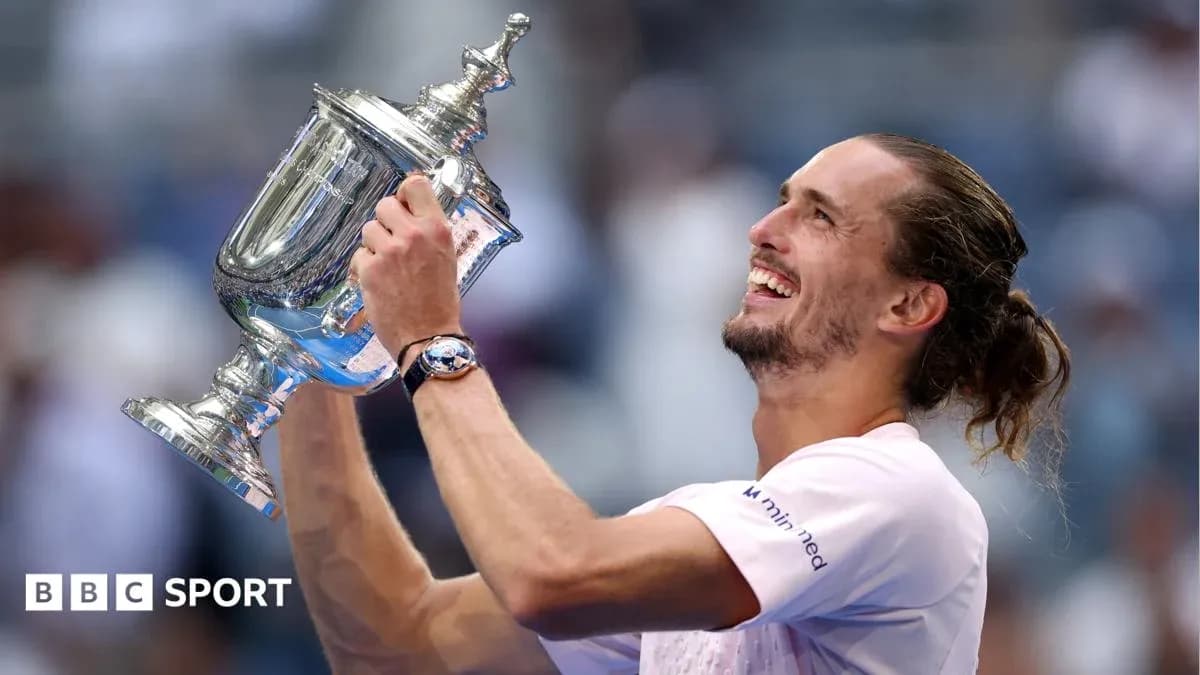
The German top seed, already liberated by his long-awaited breakthrough at Roland Garros earlier this year, added the US Open to his collection with a 6-3 7-6 (7-2) 5-7 6-2 win over Shelton in New York. It was ruthless, occasionally rocky, but ultimately the performance of a man who finally knows how to close the biggest doors when they open.
The veteran against the rising roar
This was billed as Shelton’s night. The big-serving, big-grinning American, an eighth seed in his first major final, chasing the title no US man has claimed since Andy Roddick in 2003. A packed Arthur Ashe, more than 24,000 strong, came ready to roar him over the line.
They barely had time to settle before Zverev struck.
Shelton double-faulted on break point in the very first game. Against Zverev, that kind of early gift usually comes with a bill attached. The German grabbed the initiative and refused to let it go, leaning on his first serve and repeatedly probing the American’s weaker backhand wing in baseline rallies.
Shelton coughed up another double fault on set point. One set gone, the air already thinning for the home hope.
Zverev had arrived in New York with doubts swirling. Three previous major finals, three defeats. A career that flirted with underachievement. At the start of the season, very few would have put him down as the man to win two Slams in a year dominated by Jannik Sinner and Carlos Alcaraz.
But the landscape shifted. Alcaraz missed the French Open and Wimbledon. Sinner was ruled out of the US Open. Between them they had hoarded every major in 2024 and 2025. Their absence did not guarantee anything, but it did leave a gap. Zverev, at 29, finally stepped through it.
Tie-break steel, old scars erased
The second set followed a familiar script. Zverev squeezed, Shelton swung. The American found more rhythm on serve, but Zverev kept reading the patterns, dragging him into longer exchanges where the German’s experience told.
He earned just one break point in the set and couldn’t convert, yet never looked rattled. The set slid into a tie-break, and this time Zverev’s scar tissue worked for him, not against him.
In the 2020 US Open final he had lost from two sets up, his nerve disintegrating on the biggest stage. Here, the same arena, a different man. He played the breaker with complete clarity, striking cleanly, taking the ball early, and racing through it 7-2. Shelton’s shoulders dipped. Zverev’s posture hardened.
Two sets up again in New York. This time, he held his nerve.
Shelton’s surge, the crowd’s belief
The match finally caught fire in the third.
Shelton, who had been swinging freely all fortnight, began to land more of his trademark haymakers. He started to apply real pressure to Zverev’s serve for the first time, stepping in on second serves, ripping returns, and feeding off a crowd that badly needed a reason to believe.
The American carved out break points. Zverev fended off the first two, but the third proved too much. Shelton broke, the stadium erupted, and for a moment it felt like the kind of night where momentum can swallow experience whole.
Shelton rode that wave to the set, 7-5, and suddenly the final had a different complexion. Zverev had been cruising. Now he had to confront the ghosts of 2020 all over again.
He didn’t blink.
Zverev shuts the door
The fourth set was where the champion’s composure told.
Zverev quickly reasserted himself, striking early in the set to break and quieten the noise. Shelton’s surge stalled; the American’s forehand, so explosive, began to spray again under the weight of the moment. Zverev went back to the plan that had served him so well in their previous five meetings, all won in straight sets: heavy serving, relentless depth, and surgical attacks on the backhand.
Shelton’s resistance faded. The German’s authority grew. What had briefly looked like a classic comeback began to resemble a lesson in how to close a major final.
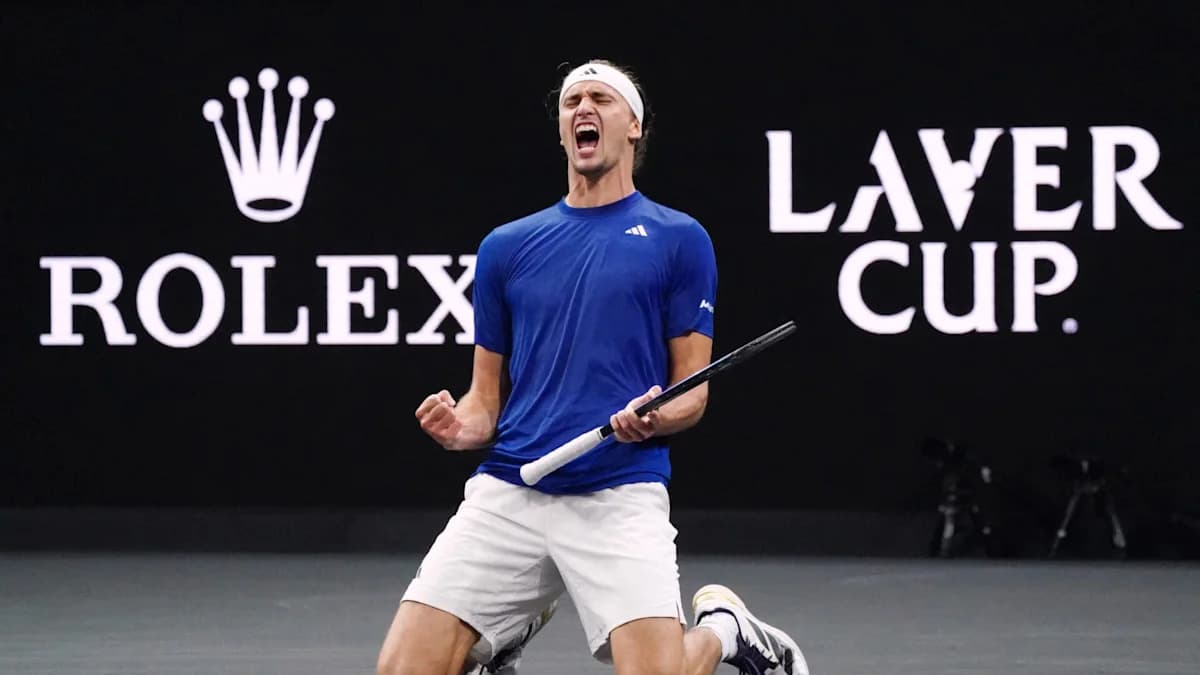
On championship point, Shelton sent a return long. Zverev didn’t react at first. For a heartbeat he looked almost confused, as if the idea of being a multiple Grand Slam champion needed a second to land. Then his team signalled. The scoreboard confirmed it. The smile broke out, broad and slightly disbelieving.
From scraping through early rounds in a string of late-night marathons against unseeded and lower-ranked opponents, often looking below his best, Zverev had climbed steadily through the fortnight. He did not face a top-20 player until Shelton. When the biggest test finally came, he played like a man who had been waiting his whole career for this exact window.
Addressing his box, led by his father Alexander Sr and brother Mischa, Zverev framed the night as the payoff for a lifetime’s grind: thirty years without a family Grand Slam title, then two in three months, the culmination of years of work, suffering and pain.
For Shelton, this was a harsh introduction to the sharpest edge of the sport. For Zverev, it felt like something else entirely: not a one-off, not a redemption story neatly tied, but the start of an era where his name is no longer the nearly man’s, but the benchmark others must chase.