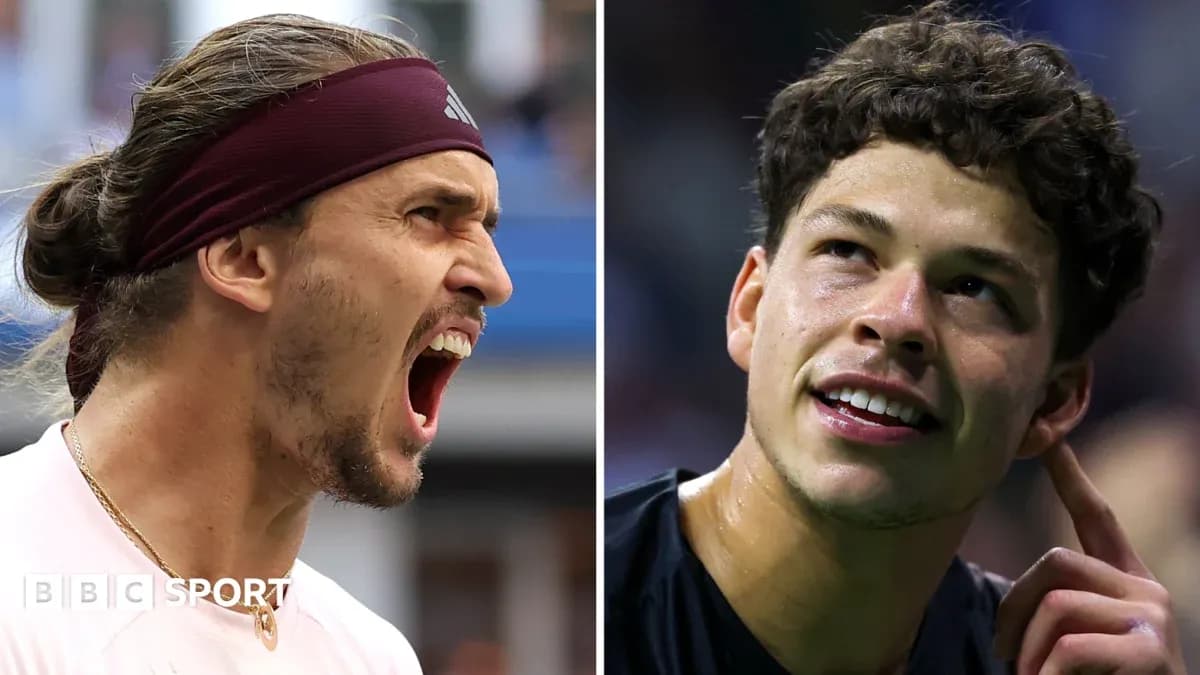
Zverev vs Shelton: A Historic US Open Final Showdown
Alexander Zverev and Ben Shelton will walk into Sunday’s US Open final knowing this season has already changed their careers. One of them will leave with the trophy. Both arrive with a sense of vindication.
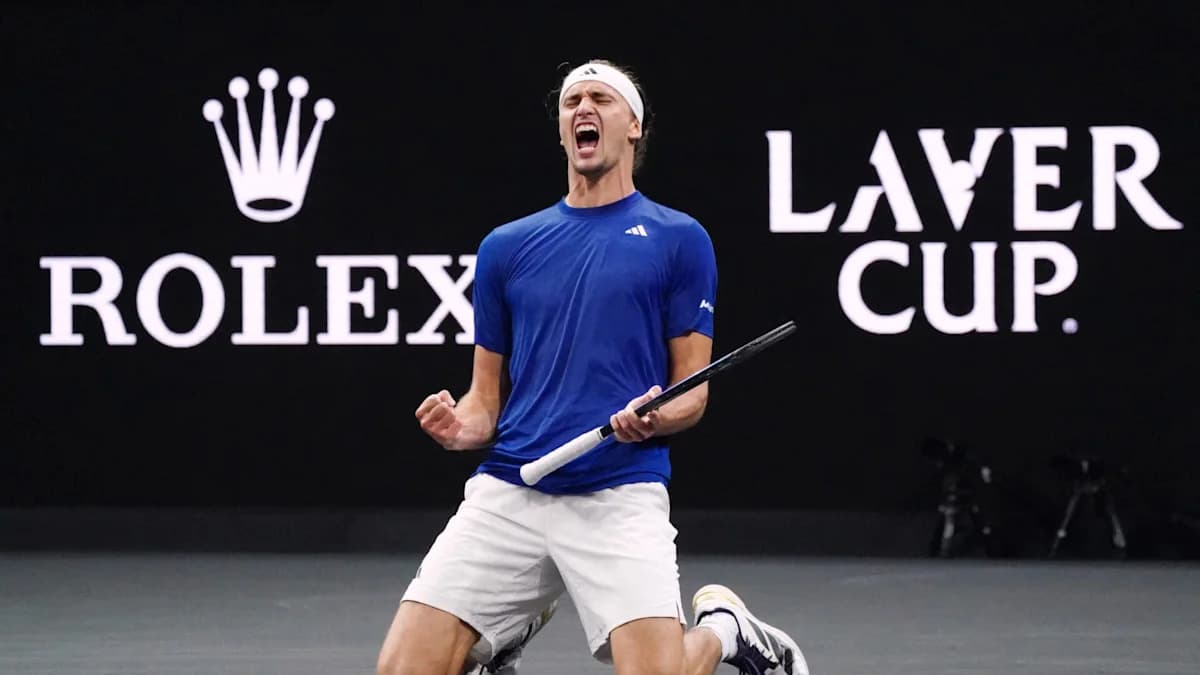
Zverev, the top seed, has finally broken through the glass ceiling many thought might hold forever. The French Open title at Roland Garros dragged him out of the long shadow cast by Jannik Sinner and Carlos Alcaraz. Now he stands one win from a second major of the year, and of his life, in a season that was never supposed to belong to him.
Across the net will be Shelton, the American eighth seed who has turned promise into proof. He has taken out elite opponents, handled the chaos of New York’s night sessions and shown he can live with the very best on the biggest courts. This is no cameo. This is a statement run.
Zverev’s second chance in New York
Four years ago, Zverev walked off Arthur Ashe Stadium shattered. He had led Dominic Thiem by two sets in the 2020 US Open final and watched the title slip away. The loss cut deep, and for a long time you could see the scar tissue in the way he played the latter stages of majors — tight, tentative, as if he half-expected something to go wrong.
Those doubts have finally been driven out. The 29-year-old’s win over Flavio Cobolli in the Roland Garros final delivered the Grand Slam that had eluded him through three previous defeats in major finals. A runner-up finish to Sinner at Wimbledon underlined that it was no one-off. Now he has reached a third straight Slam final, something that once seemed reserved for the “Sincaraz” duopoly.
At the start of the year, anyone backing Zverev to win two majors in 2026 would have been taking a long shot. Not now. With Alcaraz missing the French Open and Wimbledon, and Sinner sidelined from the US Open, the door finally creaked open. Zverev barged through.
Asked whether he believed he could end the season with more majors than Sinner and Alcaraz, he didn’t hesitate.
“I believed in it. I believed that it's possible. I think not many of you guys did,” he said. “I think the question was always: Is Carlos and Jannik going to play all four Grand Slam finals between each other again? Of course, it was a very legit question with how the last two years went. I'm happy with how this year went so far, but I've got another big match on Sunday.”
That last line is the one that matters now. His route through New York has not been flawless. He slogged through the early rounds in a series of late-night marathons, often below his best, and has yet to face a top-20 opponent in this tournament. The level has risen as the fortnight has gone on, but Shelton represents a sharp climb in difficulty.
Still, Zverev arrives as a slight favourite. He owns a 5-0 record over Shelton and knows how to handle the rhythm of a Slam final. The burden is clear: avoid another Ashe Stadium heartbreak.
Shelton, the noise, and the weight of history
Shelton, by contrast, is stepping into uncharted territory — and enjoying every step.
“For me, this whole tournament has been uncharted territory,” he said. “I'm in positions I've never been in before. I've beaten guys I've never beaten before.”
Now comes the biggest hurdle of all. To lift the trophy, Shelton must beat Zverev for the first time and snap a 23-year wait for a home men’s singles champion at the US Open, dating back to Andy Roddick in 2003. The stakes run even deeper. At 23, he could become the first black American man to win a Grand Slam singles title since Arthur Ashe in 1975.
The magnitude of that possibility has not been lost on those watching. When a reporter told him after his semi-final win over Frances Tiafoe that there was a lot of history on the line, Shelton grinned and replied: “Is there?” The smile couldn’t hide the moment. He knows.
Former world number four James Blake spelled it out.
“Having another black American in the final leaves you wondering how many kids and adults are watching that maybe wouldn't have been otherwise,” he told BBC Sport. “They are going to be inspired to hear Ben's story and see someone that looks like them out there playing and competing in a sport that has historically been dominated by the sense of a country club white sport.”
Shelton will walk into a cauldron of noise, backed by a partisan 24,000-strong crowd desperate to see an American lift the trophy again. That support can fuel him. It can also suffocate. The occasion has crushed more experienced players than him.
A new Ben Shelton
Shelton’s tennis has grown up this year. The serve has always been a weapon — a thunderous lefty delivery that has topped 140mph over the past fortnight and can blow holes through even the best returners. What has changed is everything around it.
The American has rounded out his game, sharpening his defensive skills and shoring up the weaker backhand wing. He is no longer just a highlight-reel shot-maker. He is willing to grind, to suffer in rallies, to trust his legs and lungs.
“Ben has been trending in the right direction throughout this year. I think four titles on different surfaces is evidence of it,” said his father and coach, Bryan Shelton. “He's willing to suffer a little bit in the rallies, go deeper and really use his athleticism.”
Those four titles tell their own story: Dallas on indoor hard courts, Munich on clay, Stuttgart on grass, and the Canadian Open on outdoor hard. Different surfaces, same aggression, same belief. The versatility has fed into this New York run.
The watershed moment came in the quarter-finals. Shelton had never beaten a top-three opponent until he ran into Alcaraz, the seven-time major champion playing his first tournament in almost five months. In an epic that ended at 3:34am, Shelton outlasted him. That win changed the tone of his tournament — and perhaps his career.
The collision
So it comes to this: Zverev, the man who spent years wondering if his time had passed, against Shelton, the home hope charging through barriers with a grin and a 140mph serve.
Zverev brings scars and experience, a rebuilt belief and the knowledge of how it feels when a Slam final slips away. Shelton brings momentum, a city behind him and the chance to rewrite American tennis history in a single night.
One is chasing confirmation that his place among the sport’s elite is permanent. The other is trying to crash that club’s front door off its hinges.
On Sunday, only one of them gets to walk out of Arthur Ashe Stadium as the man who owned this season’s final Grand Slam.