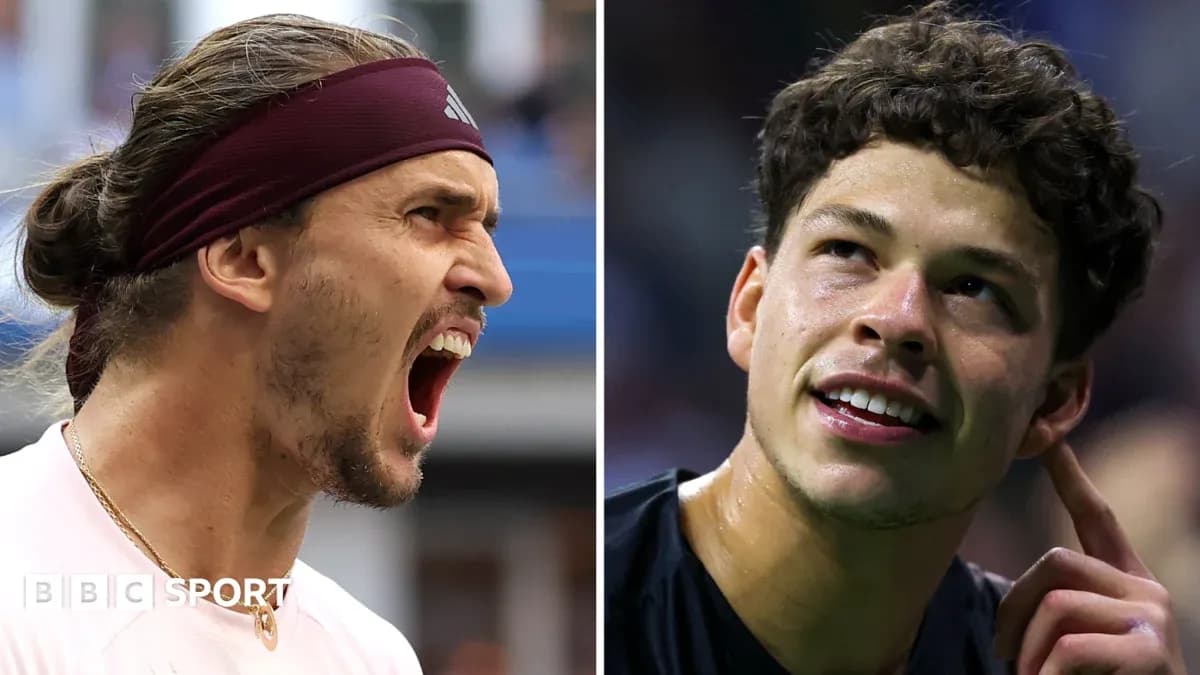
Zverev vs Shelton: US Open Final Showdown
Alexander Zverev and Ben Shelton will walk into Sunday’s US Open final already having changed the shape of their seasons. One of them will walk out having changed the shape of his career.
For Zverev, this feels like a reckoning long delayed. For Shelton, it feels like the start of something entirely new.
Zverev steps out of the shadows
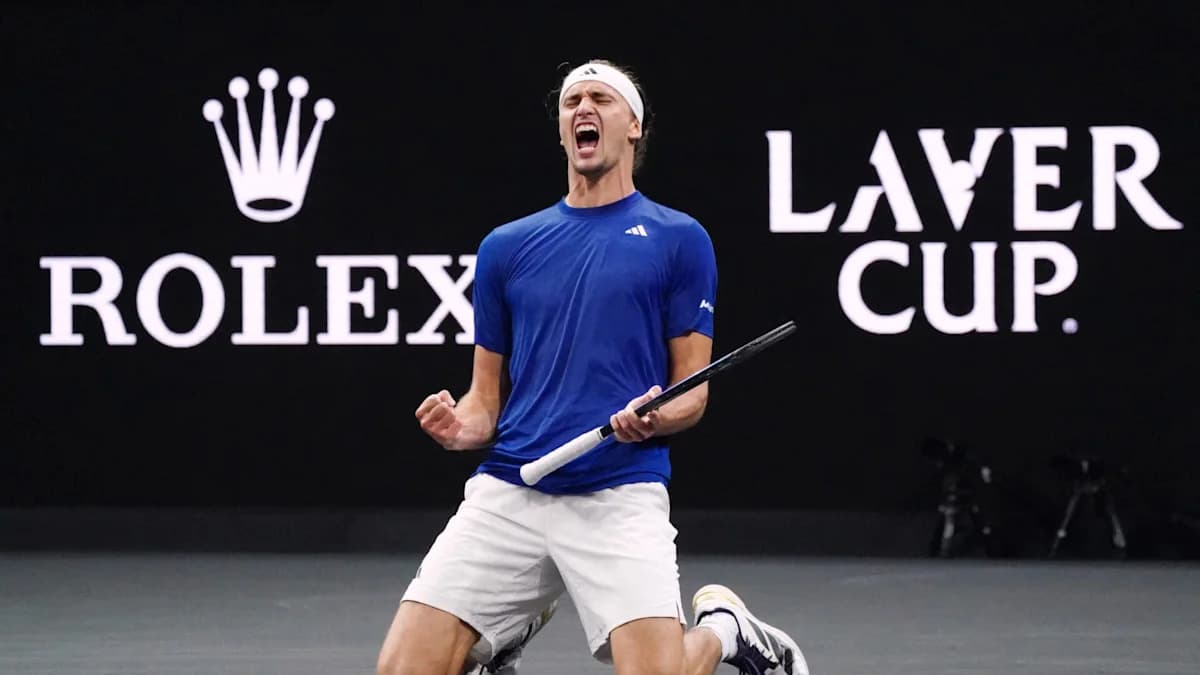
At the start of 2026, the idea of Alexander Zverev winning two Grand Slam titles in a single year belonged more to wishful thinking than hard prediction. Three major finals lost, a generation led by Jannik Sinner and Carlos Alcaraz pulling away, and the scars of that 2020 US Open collapse against Dominic Thiem still raw.
Now he stands one win away from doubling his lifetime major tally in the space of a single season.
The French Open champion arrives in New York as the top seed and a narrow favourite, a status that would have sounded fanciful in the age of ‘Sincaraz’, when Sinner and Alcaraz hoarded every Slam in 2024 and 2025. Their injuries this year – Alcaraz missing Roland Garros and Wimbledon, Sinner absent from the US Open – cracked the door open.
Zverev has barged through it.
“I believed in it. I believed that it's possible. I think not many of you guys did,” he said when asked if he thought he could finish 2026 with more majors than the two men who have defined the era. The question, he knows, had always been whether Sinner and Alcaraz would simply keep playing each other in every Slam final. This season, he has forced his way into that conversation.
His run in New York has not always been pretty. He slogged through the early rounds in late-night marathons, often looking flat and a little frayed, yet he kept moving forward. He has not faced a top-20 opponent over the fortnight, a quirk of the draw he has quietly exploited while playing himself into form.
The mental block that once seemed to haunt him at the majors lifted in Paris, when he finally closed out Italy’s Flavio Cobolli to win Roland Garros. A runner-up finish to Sinner at Wimbledon underlined his consistency. Now, in his third consecutive Grand Slam final and second at Flushing Meadows, he has the chance to erase the memory of that two-set lead squandered to Thiem.
This time, he carries himself like a man who believes his time is now, not one who fears it has already passed.
Shelton brings the noise – and the history
Across the net will stand a player who has never beaten him. Ben Shelton trails 0-5 in their head-to-head. On Sunday, he must solve Zverev for the first time if he is to become the first American man in 23 years to win a Grand Slam singles title.
The numbers are stark. The moment is bigger.
Shelton, the eighth seed, has turned this US Open into a statement of arrival. He has shown he can live with the very best and beat them, knocking off top names on the way to his first major final. His win over Alcaraz in the quarter-finals, the seven-time Grand Slam champion’s first event in almost five months, was the kind of match that changes how a locker room looks at you. It finished at 3:34am, the sort of epic that burns into a tournament’s memory.
“For me, this whole tournament has been uncharted territory,” Shelton admitted. “I'm in positions I've never been in before. I've beaten guys I've never beaten before.”
Now he walks into a stadium that will feel like his own. A partisan crowd of 24,000 at Flushing Meadows will roar for the 23-year-old as he chases not just a title, but a slice of American sporting history.
Shelton is trying to become the first home men’s champion at the US Open since Andy Roddick in 2003. He is also chasing something even more profound: the chance to be the first black American man to win a Grand Slam singles title since Arthur Ashe in 1975.
When a reporter framed his semi-final win over Frances Tiafoe as carrying “a lot of history”, Shelton’s reaction was a grin and a light “Is there?” He knows exactly what is at stake, but he has chosen to wear it lightly.
Former world number four James Blake does not. For him, a Shelton victory would echo far beyond the trophy ceremony.
“Having another black American in the final leaves you wondering how many kids and adults are watching that maybe wouldn't have been otherwise,” Blake told BBC Sport. “They are going to be inspired to hear Ben's story and see someone that looks like them out there playing and competing in a sport that has historically been dominated by the sense of a country club white sport.”
A new version of Shelton
Shelton’s tennis has grown as quickly as his profile.
Everyone knew about the serve. This fortnight it has regularly thundered past 140mph, a weapon that can blow open games in a heartbeat. What has changed is everything that happens once the ball comes back.
He has rounded out his game, sharpening his defence and bolstering a backhand that once lagged behind the rest of his arsenal. The result is a player no longer reliant on highlight-reel winners, but one prepared to grind, to absorb, to suffer in long rallies.
“Ben has been trending in the right direction throughout this year. I think four titles on different surfaces is evidence of it,” said his father and coach, Bryan Shelton. “He's willing to suffer a little bit in the rallies, go deeper and really use his athleticism.”
Those four titles tell their own story: Dallas on indoor hard, Munich on clay, Stuttgart on grass, the Canadian Open on outdoor hard. This is not a player who only thrives on one surface or in one set of conditions. This is a contender learning to win everywhere.
The question now is whether that evolution is enough to crack a man who has had his number from the start.
Collision course in New York
Zverev has not yet faced a test like Shelton in this tournament. Shelton, for all his momentum, has not yet carried the full weight of a home Slam final into a match of this magnitude.
Both know the stakes. For Zverev, a second major in a season that began with doubts would redraw the landscape at the top of the men’s game and confirm that the ‘Sincaraz’ era now has a third pillar. For Shelton, one night under the New York lights could turn promise into legacy and shift the sport’s demographics in ways that cannot be measured on a scoreboard.
One man chasing vindication. One chasing history.
By Sunday night, only one of them will have it.