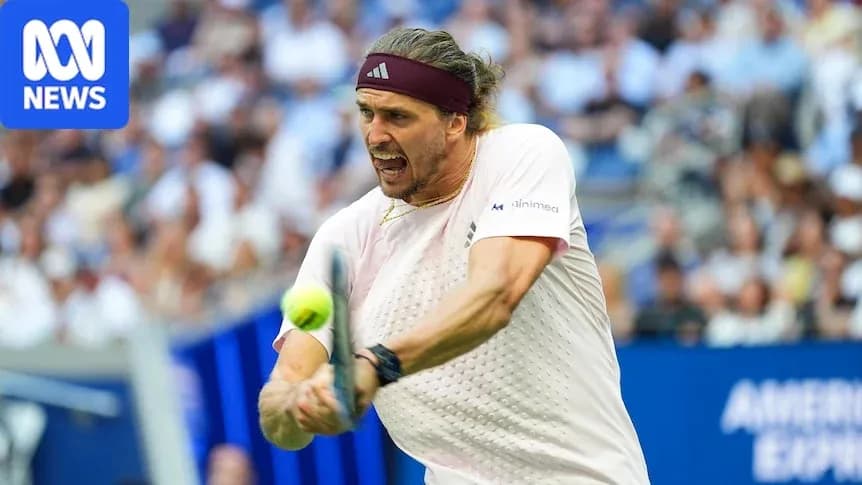
Alexander Zverev's Journey to the US Open Final
Alexander Zverev knows all about waiting. About carrying the label, about hearing the same question every time a major rolled around: when will it be your turn?
This season, the answer finally arrived. And now, at the US Open, he’s intent on making sure American men keep waiting.
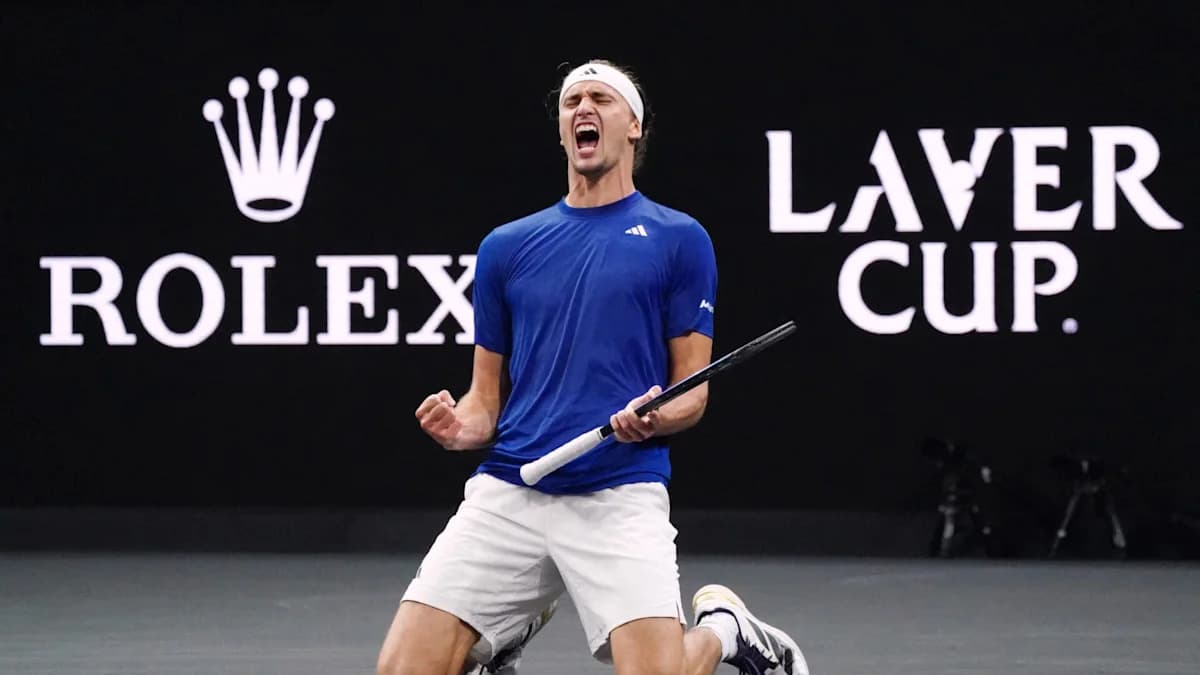
The world No.1 marched into another grand slam final with a 6-3, 7-6 (9-7), 7-6 (8-6) win over Karen Khachanov in a bruising, occasionally scrappy, but ultimately ruthless semifinal performance at Flushing Meadows. It puts him one match away from a second major title of the year, and one step closer to turning 2024 into his personal takeover.
On Monday morning (AEST), Zverev will face either No.8 seed Ben Shelton or No.11 Frances Tiafoe — two homegrown showmen chasing the chance to become the first American man in a grand slam final since 2009, and the first US major champion since Andy Roddick lifted this very trophy in 2003.
“Hopefully I can not make the American dream come true,” Zverev said, half-smiling, fully serious.
From nearly man to serial contender
For years, Zverev sat at the top of the “best player without a major” list. That burden disappeared in Paris. His breakthrough at Roland Garros, followed by a run to the Wimbledon final — where he lost to Jannik Sinner — has rewritten his reputation in the space of a summer.
He is now 24-2 in grand slam matches this season. Those aren’t the numbers of a nearly man. Those are the numbers of a player who has finally worked out how to live with the pressure.
“Sometimes just things go your way and I feel like I've had a lot of struggles at the major level,” Zverev said. “I was so close so many times and maybe this year God has said that this is going to be your year and just enjoy the time on the court.”
Enjoyment is one thing. Exorcism is another. This tournament still carries a scar for him.
In 2020, Zverev led Dominic Thiem by two sets in the final and somehow watched the trophy slip away in a fifth-set tiebreak. Thiem became the first man since 1949 to win the US Open after losing the first two sets. Zverev walked off the court shattered, convinced he had let his best chance vanish.
Four years later, he’s back in the title match, older, harder, and far less forgiving when he gets his nose in front.
No repeat collapse this time
There was no repeat of 2020’s unraveling against Khachanov. Once Zverev pocketed the opening set 6-3, he dug in, played the big points with conviction, and refused to let the match drift.
Khachanov, who arrived in New York with a losing record for the season, had pieced together another unlikely run to a major semifinal — his third, and his second at the US Open. At times he looked like the more dangerous shotmaker, especially after he fell behind by a set and 2-0 in the second. He loosened his shoulders, began to hit through the court, and finally broke Zverev to drag the set level.
From there, the tension cranked up. The second set tiebreak became a test of nerve and lungs. Khachanov erased Zverev’s first two set points, refusing to fold, until a 34-shot rally finally broke the resistance and handed the German a two-set lead.
The pressure should have eased. It didn’t. Khachanov came again.
In the third-set tiebreak, the Russian surged to leads of 3-0 and 5-2, threatening to haul the match into dangerous territory. Zverev’s response was the mark of his new reality at this level: no panic, no theatrics, just a steely climb back, point by point, until he slammed the door shut 8-6.
That win extends his streak to 13 consecutive sets at this US Open — an impressive statistic made even more striking by how this fortnight began.
From early struggles to complete control
As the top seed at a major for the first time — elevated after Sinner’s withdrawal with a knee injury — Zverev looked anything but convincing in the opening rounds. He became the first No.1 seed in history to be dragged to five sets in each of his first two matches at a slam, grinding past Lorenzo Sonego and Quentin Halys and spending nearly nine and a half hours on court before the third round even began.
He admitted he and his team could only laugh at the level he was producing.
“That kind of sense of humour, it helped me,” Zverev said. “Moving forward, I was playing much better tennis. Obviously I have improved a little bit. Otherwise, I wouldn't be in the US Open final.”
The improvement has been obvious. His serve has tightened, the double faults have dried up, and his forehand — long a barometer of his confidence — has held up under sustained pressure. Against Khachanov, he was “solid” in his own understated assessment, but in the context of his history on this court, that solidity felt like a statement.
Khachanov’s level in the final two sets, with his forehand firing and his return game biting, might well have been enough to beat the version of Zverev that staggered through the first week. It wasn’t close to enough against the one standing across the net on semifinal day.
A nation waits, and Zverev stands in the way
The other semifinal — Shelton against Tiafoe, on the 25th anniversary of the 9/11 attacks — carried the emotional weight and the box-office pull. Two American fan favourites, a night session at Arthur Ashe, and the hope of finally ending a 21-year drought in men’s majors.
That hype left Zverev–Khachanov as the undercard in ticket prices, if not in significance. Khachanov was chasing history of his own, aiming to become the lowest-ranked US Open finalist since the ATP rankings began in 1973. Zverev, meanwhile, was hunting something more personal: redemption in a stadium that once broke him.
Now he stands between the US and its first male grand slam champion since Roddick. Between a nation’s nostalgia and a new champion’s cold momentum.
He has waited long enough for his own moment. He has no intention of sharing the stage now.