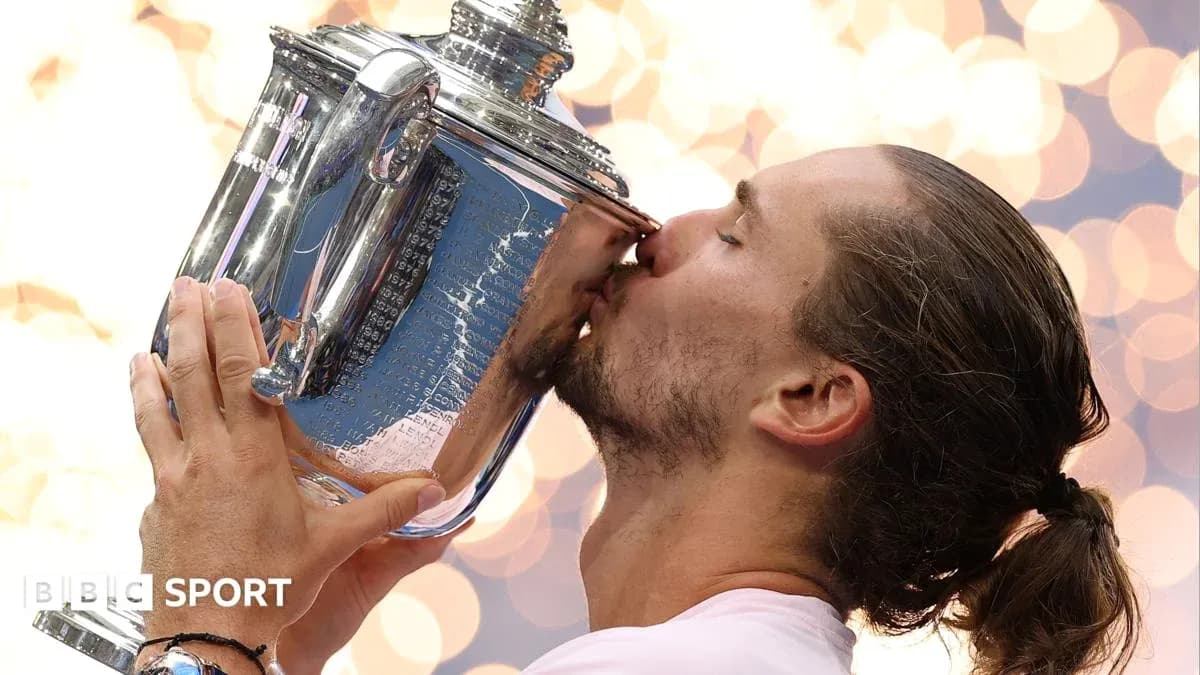
Alexander Zverev Claims First US Open Title in Dramatic Fashion
Alexander Zverev walked to the baseline in Arthur Ashe Stadium with a ghost at his shoulder.
Six years earlier, on this same court, he had served for the US Open title and watched it slip away, point by agonising point, as Dominic Thiem clawed back a two-set deficit and broke his heart in a fifth set. That night left scars you don’t easily see on a scoreboard.
This time, the weight felt different. He wasn’t just the nearly man anymore. He arrived in New York as a Grand Slam champion, the French Open trophy already on his résumé, and the world number two with a season that finally matched the promise that had trailed him for a decade.
Opposite him stood Ben Shelton, the booming left-hander carrying American hopes and the noise of almost 24,000 fans. Every Shelton winner roared. Every Zverev error echoed. The atmosphere tilted heavily towards the home player.
Zverev didn’t blink.
He suffocated the match with discipline and steel, beating Shelton 6-3, 7-6 (7-2), 5-7, 6-2 to claim his first US Open crown. He was so deep in his own tunnel that when he hammered down one last unreturnable serve, he simply walked back to the baseline and prepared for the next point.
Only there was no next point.
“In that moment I was in the zone a lot. I didn't hear noise at all,” he said later. Tennis coaches always preach the mantra: play the next point, forget the score. Zverev took it literally. “At that moment I forgot about the score and it helped me.”
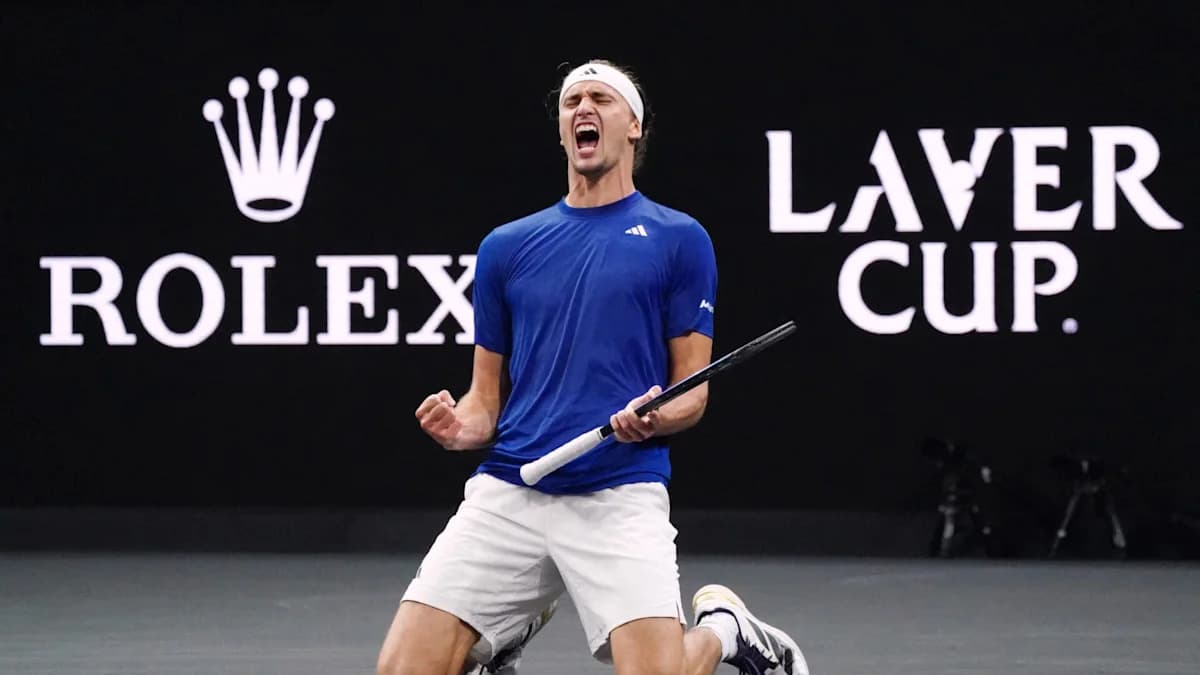
It made for one of the most surreal endings a major final has seen. While the stadium rose to its feet, Zverev stared ahead, expression blank, waiting for the umpire to call the score. His team had to shout to tell him it was over. Then the realisation finally broke through: a broad, slightly disbelieving smile, arms raised above his head, the release six years in the making.
The contrast with 2020 could not have been sharper. Back then, after losing to Thiem, a tearful Zverev stood on this court and said: “I wish one day I can bring the trophy home.” It sounded like a plea as much as a promise.
Now, the wish sits in his hands.
“We went 30 years without winning a Grand Slam title and now we've won two in three months,” he said, a line that spoke not only to German tennis history but to his own long road. “2026 is the outcome of all the years that happened before.” The year has become his vindication.
This time his family was there to see it. His parents had missed his previous final in Flushing Meadows, but his father and coach, Alexander Zverev Sr, watched from the sidelines, living every point. The story, though, runs deeper than forehands and tactics.
Zverev spoke emotionally about his mother, who guided him through his childhood after he was diagnosed with type 1 diabetes. “When doctors tell you that life and sports will be very limited for that child, it takes a very strong mother to say: ‘my son will be whatever he wants to be’,” he said. “My mother is the most important and strongest person I know.”
This is not the fragile Zverev of old. The numbers back it up. Semi-finals at the Australian Open. Final at Wimbledon. Titles at Roland Garros and now the US Open. In a season disrupted by injuries to Jannik Sinner and Carlos Alcaraz, the German has seized the space at the top of the men’s game and refused to let go.
His body has become one of his greatest weapons. “There is no-one as fit as Zverev, he is right up there,” said former Wimbledon champion Marion Bartoli on BBC Radio 5 Live. She placed him in the same physical bracket as Alcaraz, Sinner, and the prime versions of Novak Djokovic and Rafael Nadal. That is elite company, earned the hard way.
New York tested that resilience early. Zverev’s first two matches went to five sets, both stretching into the small hours of the morning. He stood two points from defeat in the opening round, yet clawed his way back, sharpened his game and then, from the third round until the final, did not drop a set.
Against Shelton and a crowd desperate for a home winner, the pressure could have cracked him. It didn’t. He kept his emotions caged, his expression calm, his patterns of play relentless. Even when Shelton snatched the third set and the arena erupted, Zverev’s grip on the match never really loosened.
Former British number one Annabel Croft captured the mood. “I'm so admiring of his strength of character and the zen-like state he's been in since the very beginning of the match,” she said. The ending, she admitted, was unlike anything she had seen: “The most extraordinary thing was - and I don't think I've ever witnessed it - was that he didn't realise he had won. It was so bizarre, but it was like he was in a trance-like state while he was playing.”
A trance, yes, but one forged from pain, failure and stubborn belief.
The player who once collapsed with the finish line in sight now stands as a double Grand Slam champion, the fittest man on tour in the eyes of many, and the most consistent force in a landscape waiting for its next long-term ruler.
The question now is no longer whether Alexander Zverev can win a major.
It’s how many of these nights he intends to own.