Brazilian Grand Prix Highlights: Verstappen's Charge and Mercedes' Fragility
The Brazilian Grand Prix didn’t just light up Interlagos. It stripped the 2026 season bare.
On a day of rain, risk and raw pace, champions wobbled, a debutant clung on, and one midfield star made himself almost impossible to ignore. The title may have been wrapped up, but nothing about this race felt like dead rubber.
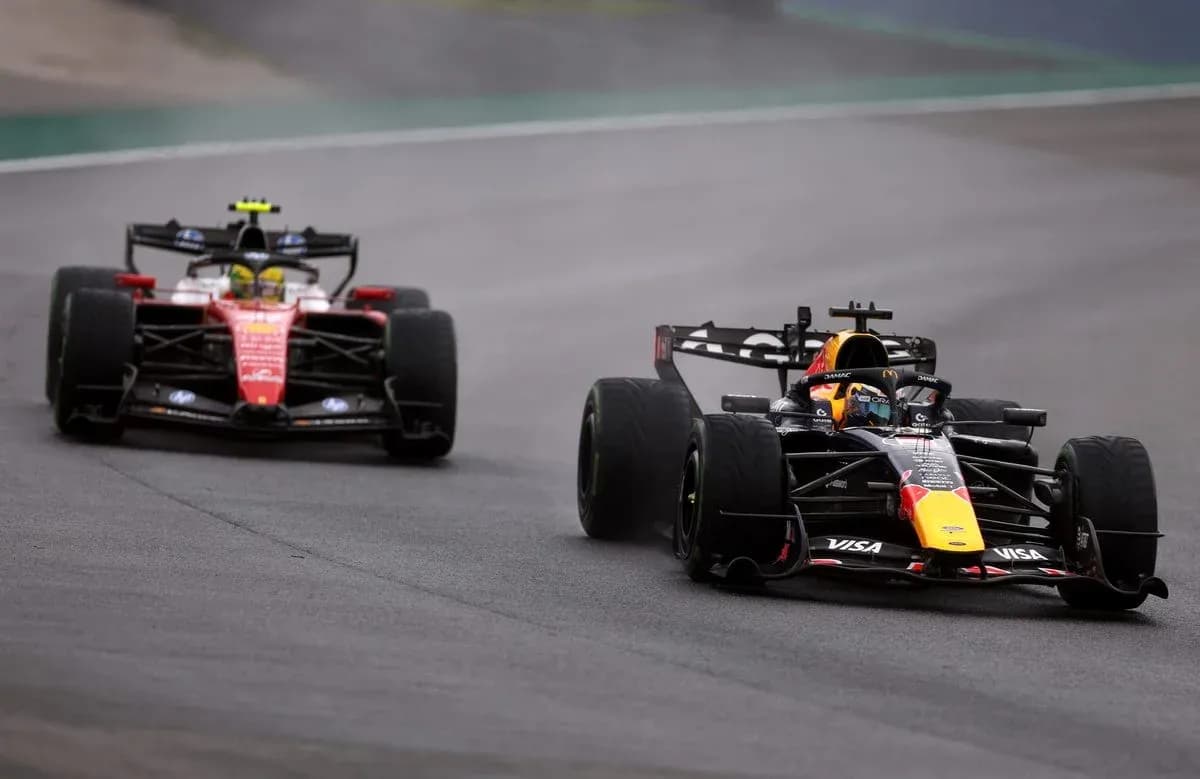
Verstappen’s damage-limited charge that might have been a win
From 21st on the grid to second at the flag. Under normal circumstances, that alone would be the headline.
Max Verstappen climbed through the field like a man chasing a title, not one starting from the back with a car that, by his reckoning, wasn’t even working properly. He was adamant something broke in the aerodynamic window mid-race. The first alarm bell rang when he switched from intermediates to slicks and the car suddenly snapped into high-speed oversteer.
When the rain came back and he bolted the intermediates on again, the RB20B transformed. Night and day, Verstappen said. Same car, different behaviour. For him, that was all the evidence needed: somewhere along the way, performance had gone missing.
Even so, he finished just 14.6s behind Lando Norris. From last.
Could he have beaten Norris with a fully healthy car? Nobody can prove it. But the numbers inside Red Bull hint that his ceiling on Sunday was higher than the result.
Isack Hadjar, in the sister car, was electric for long spells. On the 38 laps where their stints and tyres lined up, Hadjar was quicker on 22 of them. Same compound, same strategy, same conditions. This wasn’t a case of Verstappen cruising or tyre-saving; Hadjar simply had the upper hand at times, especially on the softs.
That takes nothing away from the Frenchman. This was arguably his finest F1 drive so far, and Red Bull boss Laurent Mekies said it was the best race Hadjar has done for the team. A third podium is no fluke.
But Red Bull expects Verstappen to be the sharpest weapon in any conditions. When he isn’t, the engineers start digging. Somewhere in the data lies the answer to how much time he lost – and whether that missing performance was the difference between a heroic recovery drive and one of the great wins of his career.
Mercedes seal the title, but look oddly fragile
Mercedes left Brazil as double world champions. Constructors’ title in the bag, Kimi Antonelli already crowned drivers’ champion. On paper, that’s dominance.
Interlagos told a different story.
Antonelli controlled the opening phase, leading the first 19 laps like a man who has spent years at the front, not a 20-year-old in his first title-winning season. The track dried, the strategy window opened, and that’s where the cracks appeared.
Mercedes kept Antonelli out longer than Norris. Conservative. Safe. And costly.
Norris and McLaren judged the crossover to slicks perfectly. One lap earlier, one lap braver. That single call wiped out Antonelli’s hard-earned lead and flipped the pressure. Suddenly the champion was the hunted, not the hunter, and the mistakes followed. He slipped not just out of the lead but off the podium altogether.
Antonelli was furious with himself. He hinted that something might have been off with the car, but this had echoes of Montreal and Silverstone: moments when turbulence in battle or handling quirks knocked him out of rhythm and he didn’t reset quickly enough.
It’s a reminder of where he is in his career. A world champion, yes. A finished article, no.
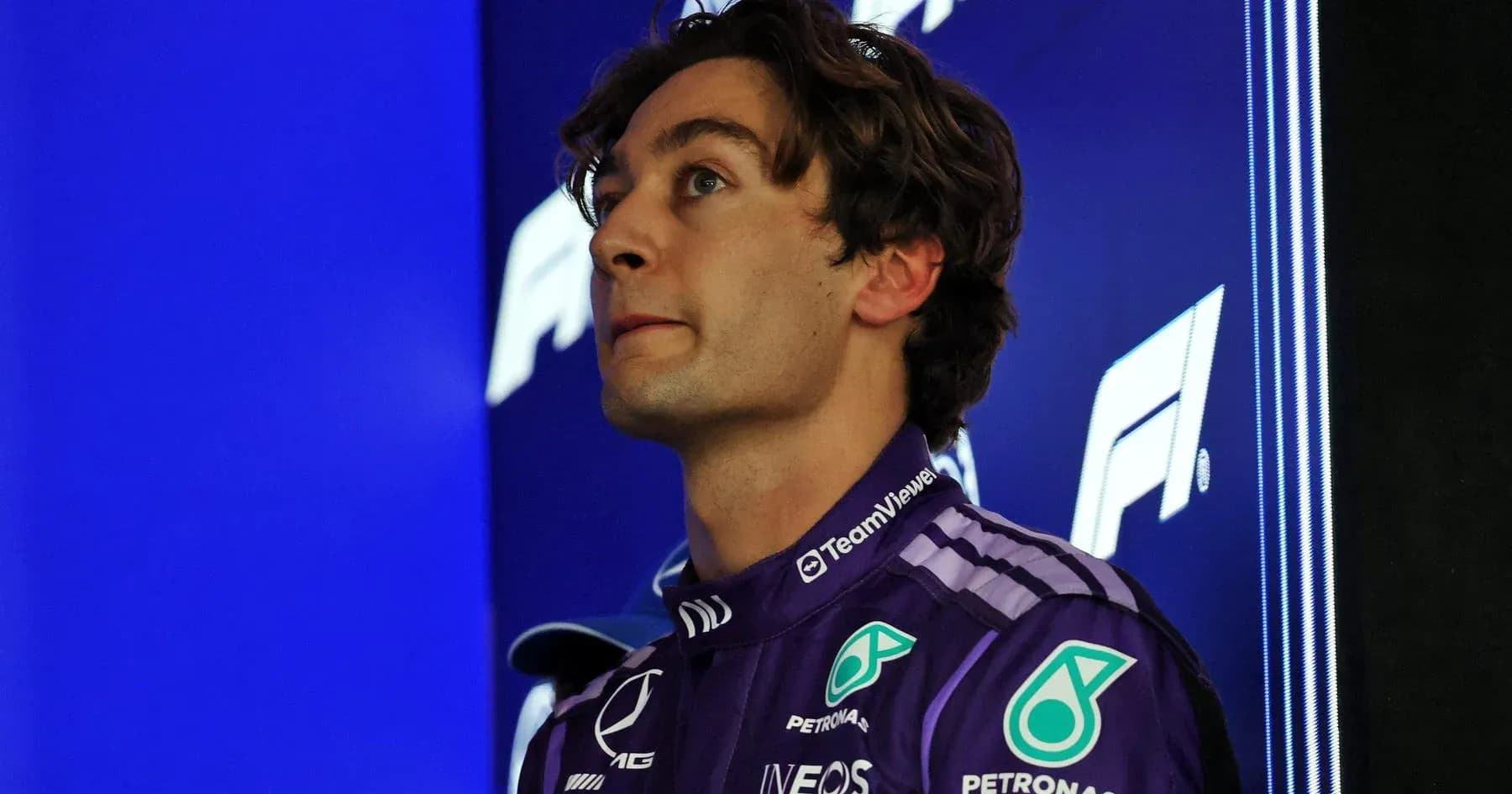
On the other side of the garage, George Russell’s race unravelled even earlier and in more dramatic fashion. Spinning in the pitlane is the kind of error drivers joke about in the simulator. In a soaked Interlagos lane on slicks, it became a very real, very public mistake.
Russell admitted he went high-risk because he smelled an opportunity. He paid for it. The embarrassment was obvious, but his underlying pace wasn’t the problem. On the softs, he was right there with Antonelli and Norris.
He recovered well enough to beat Antonelli on the road, yet the final stint summed up Mercedes’ day. On intermediates, both drivers bled time – around half a second per lap to Norris. Russell reckoned his tyres overheated on the outlap and never came back, sending him into what he called a “negative spiral”.
So Mercedes leave Brazil as champions, but not invincible. Interlagos was a reminder that this empire still has soft spots.
Camara’s brutal debut hints at something better
Rafael Camara could hardly have picked a tougher way to walk into Formula 1.
He got the Haas call at the start of the week. No prior mileage in the car. No experience of the 2026 machinery. Then the forecast turned ugly and stayed there. For a rookie, this was a baptism by monsoon.
The result – 20th, two laps down – looks grim on paper. The reality was more nuanced.
Camara flashed genuine speed in qualifying before it all unravelled. In heavy rain, he was on course to put himself in a strong position and a Q3 appearance on debut wouldn’t have been outlandish. Instead, two offs wrecked his session. The first came on the Reta Oposta, where a cocktail of aquaplaning and wheelspin fired the car into a wild fishtail. The second was a lock-up into Juncao and a heavy hit with the barrier at a corner that caught out plenty of more experienced names.
After that, you could hardly blame him – or Haas – for telling him to stay within his limits at the start of the race. No heroics, just survival.
Once he settled, the pace came. On slicks, across two soft-tyre stints, he was only about a tenth per lap slower than Ollie Bearman on average. Given Bearman’s compromised race and spells in traffic, that comparison has caveats, but it still speaks well of Camara’s underlying speed.
His weakness was clear: intermediates. At the start and again at the end, the gap to Bearman ballooned. Confidence, already dented by the qualifying crashes, never really returned in the wet phases.
But buried inside a tough debut was enough evidence that this wasn’t a driver out of his depth. It was a rookie thrown into the worst possible conditions, finding speed once the chaos calmed. From here, his F1 career doesn’t just have room to improve. It almost has to.
Lawson turns pressure into leverage
Liam Lawson is doing something rare in modern F1: he’s making himself politically awkward to drop.
Five straight weekends as the standout midfielder. In Brazil, he even ran as high as second. Yet, with three rounds left, he still doesn’t have a confirmed seat for 2027.
Red Bull must choose two drivers for Racing Bulls from Lawson, Arvid Lindblad and Nikola Tsolov. On current form, Lawson is making that decision feel less like a choice and more like an obligation.
The situation borders on bizarre. Recent history offers only one real parallel: Sergio Perez losing his Racing Point drive for 2021 despite stellar performances, before Red Bull snapped him up. To move on from Lawson now, after this run, would invite similar scrutiny.
Earlier in the season, this would have been a different conversation. Lindblad, a rookie, was holding his own. Since then, Lawson has pulled clear. Lindblad himself admitted he lost his rhythm after Madrid and Baku. Lawson did the opposite: he used the Austin–Mexico–Brazil triple-header as a platform and turned it into a statement.
Inside the Red Bull camp, the sense is that dropping him now would look needlessly self-inflicted. The expectation is that an extension will be announced before Las Vegas.
He hasn’t just won the midfield fight. He’s won the argument.
Ferrari’s fragile peace and fading pace
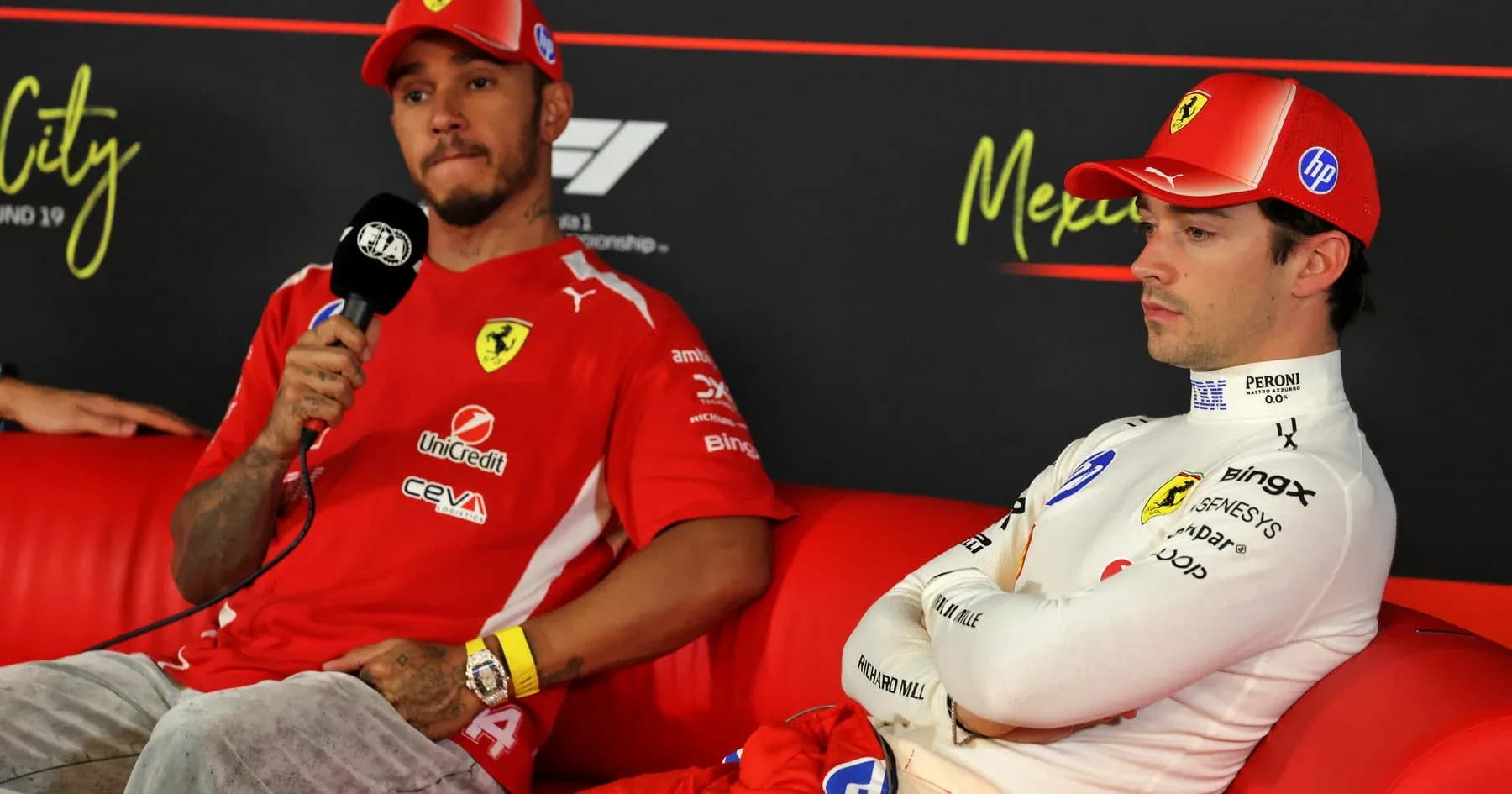
A week after Mexico’s intra-team implosion, Ferrari arrived in Brazil under the microscope. Every wheel-to-wheel moment between Charles Leclerc and Lewis Hamilton was going to be dissected.
They did race each other. They did it cleanly. And that, in a way, was the problem.
This time, it was for scraps.
Fred Vasseur, usually quick with a joke before getting serious, made no attempt to compare Brazil with the Mexico mess. There, Ferrari were fighting for a 1-2. Here, they were slogging in the midfield. The stakes weren’t remotely the same.
Leclerc captured the futility in one line: Hamilton was much faster, so there was no point fighting. In conditions this treacherous, a clumsy collision over nothing would have been catastrophic for a team still dealing with a week of questions about trust and discipline.
Ferrari avoided that. What they couldn’t avoid was the reality that their car simply wasn’t quick enough.
Grid penalties always meant a recovery job, but Verstappen showed what was possible from the back in a truly competitive package. Ferrari didn’t have that. The pace came in fits and starts – occasionally sharp, then suddenly blunt.
Leclerc climbed from 14th to seventh. Hamilton from 20th to ninth. Respectable, but underwhelming in the context of their recent form, especially in the dry. When the opportunity was there to turn chaos into a big result, Ferrari found only damage limitation.
The harmony between their drivers held. The performance did not.
Alpine exposed when the rain falls
Alpine’s weekend at Interlagos was summed up by Pierre Gasly in one brutal line: the car feels “broken” when it rains.
The numbers backed him up. Both cars fell at the first hurdle in qualifying – 17th and 18th – and there was never any real sense of a comeback on Sunday. Franco Colapinto and Gasly finished 13th and 14th, a lap down and anonymous.
This wasn’t one of those chaotic wet races where a midfield team could stumble into a miracle podium, as Alpine once did. The ceiling was lower. But wherever that ceiling was, Alpine never got close.
Managing director Steve Nielsen had already lamented how wasteful the season had been. Brazil added another painful entry to that list. The core issue this time was simple: no wet-weather performance.
Gasly said the car behaved oddly aerodynamically in the rain, as if something fundamental was wrong. On intermediates and full wets, confidence disappeared. The car didn’t respond, didn’t communicate, didn’t give its drivers anything to lean on.
Once the track dried, the picture changed. On fresh tyres, Colapinto in particular looked genuinely quick at times. The car clearly has midfield pace in the dry, especially on softs. But the window is narrow. As soon as the clouds opened again, Alpine vanished.
Whether this was a specific setup misstep amplified by the conditions or a structural weakness in the 2026 car, the result was the same: what started as a promising season has now hit its performance low point.
Intermediates under the microscope
If Brazil proved anything about 2026’s new cars and tyres, it’s that Formula 1 can now race properly in heavy rain again.
Qualifying ran in conditions that would have triggered endless delays in recent years. The new-generation machines coped. So did the drivers. The grand prix itself rolled through multiple phases of wet and dry running without major incident.
That doesn’t mean everyone was happy.
Carlos Sainz was blunt: the current wet tyres, especially the intermediates, aren’t good enough. The grip isn’t there. The warm-up is sluggish. Compared to last year, the drivers feel less bite, less confidence.
The root cause lies in the 2026 rules. Pirelli has been forced to stiffen the construction of the intermediate to withstand the extra loads created by F1’s new straight mode. Stiffer sidewalls are the last thing you want on a rain tyre, but they’re a necessity under the current regulations.
The silver lining is that Pirelli is already deep into development of a new intermediate for 2027, aimed squarely at fixing those warm-up and grip issues. Brazil showed that the sport can run in the wet again. Now it has to fine-tune how.
Aston Martin shine in the corners, suffer on the straights
No miracle from Fernando Alonso this time. No last-lap drama, no snatched points from nowhere.
His chance probably died on lap one.
Following Ollie Bearman through the opening phase, Alonso slid off at Turn 3, aquaplaning onto the runoff and dropping from eighth on the grid to 12th. From there, his race turned into a grind. He fought quicker cars, judged the conditions well and clung to the fringes of the top 10, but the points remained just out of reach. He finished 12th.
The deficit was obvious.
Alonso said he was still missing a lot of straightline speed and couldn’t compensate for it, even in changeable conditions that usually play to his strengths. And yet he found himself dicing with Ferraris early on and even scrapping with Mercedes late in the race.
His conclusion was telling: if the car can fight like that while dragging a power deficit, the Aston Martin chassis must be “phenomenal”.
Nobody in the paddock is shocked by that. The gap between what the green car can do in the corners and what the Honda power unit delivers on the straights has been a season-long storyline. The rain masked some of that, but not all.
What really stung was reliability. Lance Stroll suffered battery issues on both Saturday and Sunday, and Honda still doesn’t know why. Performance is one thing; trust is another. Right now, Aston Martin doesn’t fully have either.
For a team with ambitions of joining the title fight when its new works era matures, Interlagos was another reminder: the chassis might be ready. The rest of the package still isn’t.
And as the season winds down, that question only grows louder – how long can a team this good in the corners wait for the rest of its car to catch up?