Briatore Challenges FIA Ruling on Monaco Podium
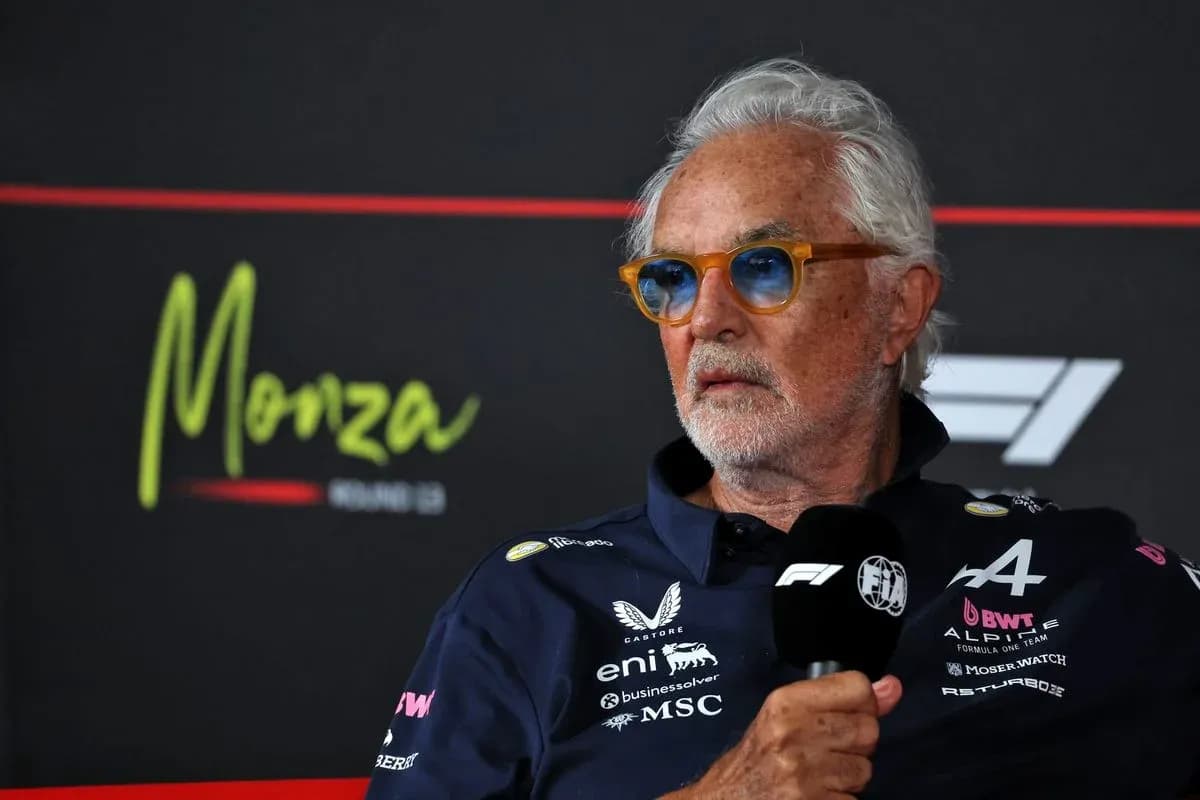
Flavio Briatore walked into Friday’s press conference with a sheet of paper in his hand and a score to settle.
Hours earlier, the FIA’s International Court of Appeal had stripped Alpine and Pierre Gasly of their hard‑won Monaco Grand Prix podium, siding with McLaren and Red Bull in a case that had already dragged on for months. The verdict should have closed the book on Monte Carlo. Instead, Briatore tore it wide open.
Briatore lights the fuse
He didn’t attack the ruling itself. He went after one of the people behind it.
"Filippo Marchino is a judge, he was very nasty during the hearing, was acting as a prosecutor," Briatore said, reading directly from his notes. The words were sharp, personal. Then he aimed for what he claimed was the root of that hostility.
"And after, we found out what is the reason why so nasty, this guy. He is very linked with McLaren."
Briatore called the situation "very unfair". He said Alpine had discovered, only after the hearing, that Marchino had appeared at a McLaren event in 2018 in MSO, Beverly Hills, and that his foundation – One Drop Foundation – had received "two, three McLaren cars" for a charity auction.
He didn’t show the paper he referenced. He didn’t need to. The insinuation was clear: a judge with ties to a rival team had helped decide a case that cost Alpine a Monaco podium.
The charity angle is not in dispute. One Drop, founded by Cirque du Soleil co‑creator Guy Laliberte, did indeed run a 2019 auction in which McLaren contributed items. Laliberte has long‑standing links to McLaren through former team boss Ron Dennis, so the connection is hardly surprising.
But in the high‑stakes, hyper‑suspicious world of Formula 1, Briatore turned that context into a live grenade.
McLaren hit back
The blast reached McLaren within seconds.
Andrea Stella, normally one of the calmer figures in the paddock, bristled. The McLaren team principal didn’t bother to hide his anger at what he saw as a smear on the team’s integrity.
"I find that this conference going in this direction is quite insulting for McLaren, for the reputation of a team that deserves a lot of respect," he said.
"If anybody makes these kind of allegations – which seem quite serious – they are going to have to take the responsibility for what they are saying in a public forum.
"The hearing, the whole International Court of Appeal, was conducted to the highest standards and we should not question this phase like it’s been done."
This was no routine post‑verdict debrief. It was a public confrontation over the credibility of the sport’s judicial process, with Alpine’s most high‑profile figure on one side and McLaren’s boss on the other.
Briatore, though, showed no sign of backing down. He hinted Alpine may not treat the verdict as the final word.
"We’ve been thinking about it," he said when asked about next steps. "Just pass the weekend and after that we think about it. For the moment, I don’t know."
How far can Alpine actually go?
That is the key question. On paper, Alpine has almost nowhere left to turn.
The FIA’s International Court of Appeal is the highest authority in this process. Its decisions cannot be appealed in the usual sense. Once the ICA speaks, the case is supposed to be over.
There is, however, a narrow escape route: a right of review, similar to what exists for stewards’ rulings. To trigger that, a party must present "important new evidence" that was unknown at the outset of the case.
Briatore claims Alpine only discovered the alleged links between Marchino and McLaren after the hearing. "We found out, after the meeting, logically, not before," he said. "We found out this guy was linked with the McLaren team."
Whether that meets the bar for a right of review is far from obvious. The FIA stressed on Friday that ICA judges go through a stringent vetting process before they ever sit on a case.
The court has a roster of 36 top legal figures. For each case, at least eight are shortlisted for a pool, and that list is sent to the teams well in advance. They are invited to raise any "serious and objective" concerns about conflicts of interest or other legitimate grounds for recusal.
Alpine did not object to any of the shortlisted judges at that stage. That silence cleared the way for ICA president Laurent Anselmi of Monaco to select four judges for the hearing.
There is another layer of scrutiny. Under Formula 1’s regulations, any ICA hearing linked to the world championship must include at least one judge who has been elected to the pool by the FIA’s general assembly after being proposed by at least five teams or three manufacturers.
In 2023, Marchino – along with Luigi Fumagalli, who also sat on the Monaco appeal – was nominated at that assembly after being put forward by teams themselves. Any such nominees undergo due diligence by the FIA compliance officer and a review by an ad hoc panel before an eligibility assessment committee signs off.
On top of that, when judges are called for a specific case, they must personally confirm to the FIA secretary general that they are free of conflicts of interest. Only once that is done is the panel finalised, with its composition kept secret from all parties until the day of the hearing.
That is the system Briatore is now challenging in the court of public opinion.
A three‑month fight that won’t die
The Monaco Grand Prix podium dispute has already dragged on for three months. Gasly’s lost third place, Alpine’s sense of injustice, McLaren’s successful appeal – all of it should have faded into the background as the season moved on.
Instead, the fallout has reignited old questions about trust, transparency and influence in Formula 1’s corridors of power.
The verdict is out. The trophy has been reassigned. Yet the paddock now waits again, this time not for a ruling, but to see whether Alpine will try to prise open a door that is almost always locked.
If they push, the saga stretches on. If they don’t, the bitterness lingers.
Either way, Monaco 2024 is not going quietly into the archive.