BRM P351 Returns to Racing: The Revival of a Legend
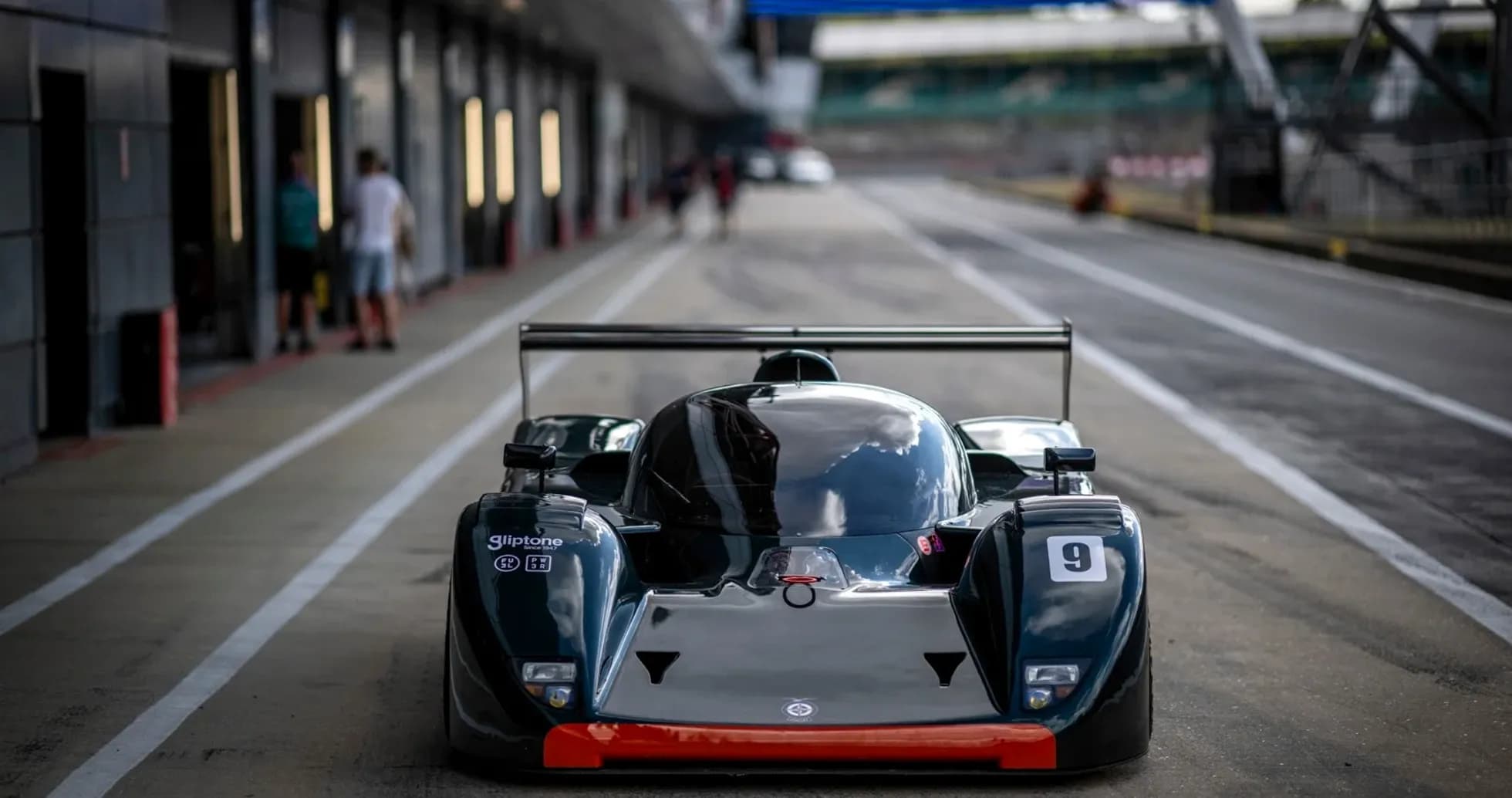
On a grey English weekend at Silverstone, a ghost from motorsport’s recent past rolled back into the light. Low, angular, and defiantly loud, the BRM P351 is back – not as a museum piece, but as a racing car reborn.
This is not just another heritage rebuild. It’s the revival of a bold, almost-forgotten gamble from a marque that once sat at the very top of world motorsport.
From F1 Pioneers to Le Mans Dreamers
British Racing Motors, founded in 1949 by Raymond Mays and Peter Berthon, carries a weighty place in British racing history. Long before today’s global giants, BRM stood as the country’s first Formula 1 team, debuting in 1951 and peaking in 1962 when Graham Hill delivered both the Constructors’ and Drivers’ titles.
But BRM never meant to be confined to a single series. As the decades passed, the name began to appear beyond Grand Prix grids – in endurance racing paddocks, on rally stages, wherever engineering ambition could be stretched a little further.
Out of that mindset came the P351.
The One-Off That Never Got Its Shot
Built as a Group C sports prototype, the BRM P351 was designed for the biggest stages imaginable: the 1992 World Sportscar Championship and, above all, the 24 Hours of Le Mans. On paper, it had everything a modern endurance contender needed: a carbon-composite monocoque, cutting-edge aerodynamics, and a bespoke, naturally aspirated 3.5-litre V12 built in-house.
It was supposed to be BRM’s statement of intent in a brutally competitive era.
Instead, it became a what-if.
At Le Mans, the car’s promise flickered briefly, then disappeared. Transmission trouble forced an early retirement, long before the race could bend to strategy or stamina. Yet in that short window, the P351 showed its teeth. It clocked 216 mph (348 kph) down the Mulsanne Straight – right in the ballpark with the heavy hitters from Peugeot and Toyota.
The speed was real. The result never came.
The car later appeared at Silverstone, but the project never truly caught fire. Group C faded, regulations shifted, and the P351 slipped away from the spotlight.
A Prototype Rewritten, Then Forgotten
The story could have ended there. Instead, it took a detour.
In the mid-to-late 1990s, the car was heavily reworked. Out went the original BRM V12 and closed cockpit. In came a Nissan twin-turbo V6, an open-top layout, and a new identity under Pacific Racing. The rebadged machine, now known as the BRM P301, bore the DNA of the original but not its pure form.
The original concept – a British-built V12 prototype with a closed cockpit and Le Mans dreams – seemed gone for good.
Then, late in 2024, the car found its way back home.
Back in BRM Hands – and Back to Its Roots
Once BRM reclaimed the chassis, the mission was clear: restore the P351 to the specification it carried into endurance racing in the early 1990s. Not a tribute. Not a loose interpretation. The real thing, as it was meant to be.
The team rebuilt the car around its original philosophy. The carbon-composite monocoque remains the backbone, but almost everything critical to performance has been stripped, inspected, and reborn. The in-house 3.5-litre naturally aspirated V12 is back in place, paired with a completely rebuilt transmission – work entrusted to Dawson Racing.
The car now runs on sustainable fuel, a neat twist in the tale of a machine conceived in a very different era. It’s an old warrior tuned to a new world.
BRM didn’t stop at the mechanical heart. The closed cockpit has returned as well. With no surviving roof structure to simply refit, the team turned to surviving original paperwork and period photographs to reverse-engineer the shape. Piece by piece, the silhouette that once sliced down the Mulsanne has been recreated.
Motul, Goodyear, SKF Automotive and others have backed the restoration, lending modern expertise to a project steeped in nostalgia.
Silverstone Reveal – and a Future on Track
The work reached its first public crescendo this past weekend, when the restored P351 was unveiled at Silverstone. For a car that once thundered around the same circuit in anger, it felt like a fitting stage for its second debut.
This is not a ceremonial comeback. BRM has made it clear: the P351 will race again.
The team plans to return the car to active competition, armed with its original-spec V12 and renewed drivetrain, now fed by sustainable fuel. The exact championships and events remain under wraps, but the intent is unmistakable. This isn’t a parade-lap special. It’s being prepared to be driven hard.
A one-off Group C prototype, once sidelined by reliability and circumstance, is being handed a second chance in a very different racing landscape.
Where it lines up, and who straps in behind that closed cockpit, will define the next chapter. The numbers are there. The history is rich. The car is finally ready.
Now it just needs a grid to prove it still belongs.