Cricket Australia's Big Bash Investment Controversy
Cricket Australia’s Big Bash shake-up has hit its first major rebellion, with Cricket NSW warning the move to invite private money into the competition could leave the sport “strategically and financially worse off” in the long run.
The flashpoint is clear: the sale of the Melbourne Renegades is on the table. The battle over who really owns the future of Australian cricket has begun.
A split at the top
On Tuesday, Cricket Australia (CA) confirmed it would seek private investment in its franchise T20 leagues, starting with the Renegades and with a model that could see up to 49 per cent of BBL clubs sold off.
The decision followed months of debate inside Australian cricket. State associations in New South Wales and Queensland had already been flagged as sceptical, if not outright opposed, to the plan.
By Wednesday, that opposition went public.
In a strongly worded statement, Cricket NSW said it was “disappointed” CA had pressed ahead without securing alignment across the game.
“Cricket NSW is disappointed by Cricket Australia's decision to proceed with introducing private investment into the Big Bash leagues without alignment across Australian cricket,” the statement read.
For NSW, this is not a theoretical argument about balance sheets. It’s about control, purpose, and who benefits when the Big Bash makes money.
Grassroots versus external investors
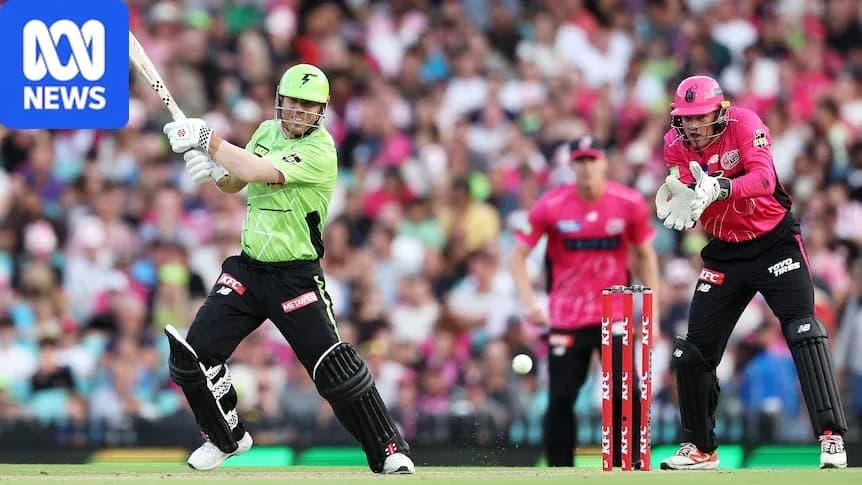
Cricket NSW owns two of the competition’s powerhouse clubs, the Sydney Sixers and Sydney Thunder. Those teams are not just brands on a fixture list; they are, in NSW’s eyes, engines that drive the rest of the game.
“The profits from our successful and healthy Big Bash clubs – the Sydney Sixers and Sydney Thunder – are reinvested into growing participation in cricket,” the statement said.
That reinvestment, they argue, is the lifeblood of the sport in the state: junior programs, community cricket, and the pathways that eventually feed the WBBL, BBL, NSW and Australian teams.
The fear is simple. Bring in external investors, and the flow of money changes direction.
“Yesterday’s announcement threatens this system. The redistribution of profits to external investors reduces our ability to invest in community cricket, creating long-term impacts at all levels,” Cricket NSW said.
Behind that line sits a broader warning: if the grassroots dries up, the pipeline of talent does too.
A process under fire
NSW’s frustration is not just about the destination, but the route taken to get there.
“The Cricket NSW board is also disappointed by the process leading to this decision,” the statement continued.
According to NSW, it had already put forward an alternative pathway to strengthen the Big Bash and had “raised concerns directly with Cricket Australia” while highlighting “significant risks within the proposal, informed by high-quality external advice.”
In other words, this was not a last-minute objection. NSW believes it did the work, offered options, and was ignored.
The language is telling: “custodians of our game.” That’s how Cricket NSW describes its role, alongside CA and the other states. The implication is sharp: custodianship and private ownership do not naturally sit together.
Cricket Australia’s big bet
Cricket Australia, led by chair Mike Baird, insists the move is not a sell-out but a step up.
Baird framed the decision as a calculated push to secure the long-term health of the sport.
“By opening the door to private investment in the Big Bash leagues, Cricket Australia is taking a deliberate step to strengthen and secure the long-term future of the game, accelerate growth and ensuring we can keep investing in community cricket and grassroots participation, domestic and international pathways and the elite level,” he said on Tuesday.
For CA, the Big Bash sits in a global marketplace now. Competing T20 leagues have surged, fuelled by private money and aggressive expansion. Standing still is not an option; that is the argument from Jolimont.
“This is a significant decision that has involved an enormous amount of analysis, discussion and collaboration over many months,” Baird said, thanking those involved and stressing that CA believes this is “the best way to secure cricket's future in this country, strengthen the Big Bash and protect our standing on the global stage.”
The timeline is already sketched out. CA is hopeful the Melbourne Renegades will run out under new ownership by the 2027/28 season.
A fault line that won’t disappear
So the sport finds itself at a crossroads.
On one side, Cricket Australia, convinced that private investment is the key to keeping pace with the rest of the cricketing world, determined to turn the Big Bash into a sharper, more powerful commercial product without, it says, abandoning its grassroots responsibilities.
On the other, a heavyweight state like NSW, wary that once profit leaves the system and flows to external investors, it may never come back in the same way, and that the quiet fields and suburban ovals will pay the price.
This is no minor administrative disagreement. It cuts to the heart of what Australian cricket wants the Big Bash to be: a global entertainment asset or a domestic engine room that funds the game from the bottom up.
The Renegades might be the first club on the block, but the real question now is how many states are willing to stand in the way—and how far Cricket Australia is prepared to go to push this through.