Cricket Australia's Billion-Dollar Opportunity for IPL Owners
Cricket Australia dangles a billion-dollar tag in front of the world’s most aggressive franchise owners. The Indian Premier League listens. But it doesn’t exactly lunge.
The interest is real. The enthusiasm is not.
Cricket Australia (CA) has confirmed it has received expressions of interest from IPL owners and other Indian investors for stakes in Big Bash League (BBL) franchises. Names remain off the record, but it is the usual heavyweights circling the opportunity. None of them, when approached, has been willing to publicly nail their colours to the mast.
They have their reasons.
A billion-dollar promise, with strings attached
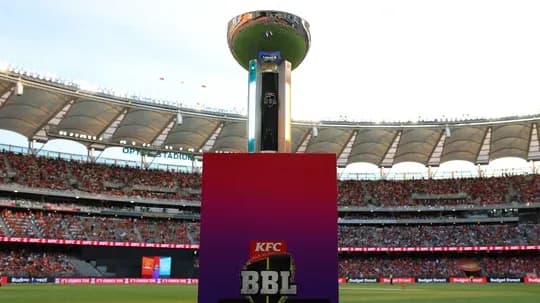
CA has hired the Raine Group, the US merchant bank that drove the blockbuster sale of The Hundred franchises in England last year. That deal has clearly emboldened CA. Chief executive Todd Greenberg has called the BBL privatisation a “billion-dollar opportunity” for Australian cricket.
On paper, it sounds like the kind of phrase that usually brings IPL owners running.
In practice, they see red flags.
Right now, only one team is on the table for full sale: Melbourne Renegades. A 100 per cent acquisition, overseen directly by CA rather than Cricket Victoria, is expected to be wrapped up by Christmas. But any buyer starts from scratch. No inherited fan base. No embedded identity. Just a name, a licence, and the task of building a brand in a crowded sporting market.
The next cabs off the rank are expected to be Hobart Hurricanes and Perth Scorchers. Here, the picture shifts again. The proposed ceiling for private investment is 49 per cent. Minority stakes, not control.
That is where IPL thinking collides with CA’s philosophy.
IPL franchises typically want to run the show. In SA20, ILT20, CPL and even Major League Cricket, they own their teams outright. They control operations, recruitment, branding, and long-term planning. They are not used to asking permission.
CA, though, has drawn a hard line. Chairman Mike Baird has been explicit: “CA and its members will maintain control over the most significant aspects of Australian Cricket operations, including international scheduling, player availability, the Big Bash Leagues salary caps, branding proposals as well as the reserve price for a licence to operate that must be achieved, and approval of investors.”
In other words, investors can come in. But they cannot run Australian cricket. Or even fully run their own clubs.
Control vs collaboration
The contrast with other leagues is stark.
In The Hundred, there is a more nuanced model. Sun Group, owners of Sunrisers Hyderabad, hold 100 per cent of Sunrisers Leeds. RPSG Group, which owns Lucknow Super Giants, has a 70 per cent stake in Manchester Super Giants. Mumbai Indians’ owners Reliance and Delhi Capitals’ co-owners GMR each own 49 per cent of MI London and Southern Brave, yet still wield operational control.
GMR, notably, also owns Hampshire County. The group had already tested the Australian waters. During the fifth and final Border-Gavaskar Trophy Test earlier this year, GMR representatives were in Sydney, exploring a potential collaboration with Cricket New South Wales (NSW) – a development first reported in January 2025. The idea involved investment in Sydney and Cricket NSW structures.
That door now looks close to bolted.
Cricket NSW is understood to be opposed to private investment in this space and may not even nominate Baird to the CA chairmanship next time. There is a clear philosophical split between Baird and Cricket NSW over private money in the BBL.
IPL owners are watching those internal politics, but they are not their main concern. Their eyes are on harder metrics: media rights, player availability, logistics, taxation, and the strength of the players’ union.
On almost every front, Australia is a tougher market.
Stars on paper, not on the park
The BBL’s biggest structural issue for investors sits at the very heart of its appeal: Australian stars.
The England and Wales Cricket Board created a clean window for The Hundred, freeing its marquee players from international duty. CA has not offered anything similar. In Australia, international cricket and the BBL routinely run side by side.
That overlap matters. Without guaranteed access to the country’s best players, the league’s ceiling – and any investor’s upside – is capped.
Pat Cummins is the most telling case study. Since 2016, he has played just seven BBL games. In the same period, he has turned out in 76 IPL matches. The comparison with India’s approach is brutal. The BCCI clears the decks for the IPL. MS Dhoni (149 games), Virat Kohli (160), Rohit Sharma (153) and Jasprit Bumrah (141) have scarcely missed a fixture in that time.
BBL investors are being asked to buy into a product that might not regularly feature its own poster boys.
The uncertainty extends beyond Australia’s centrally contracted players. There is no firm clarity on international player availability either, and that is a non-negotiable for IPL owners who have built their brands on global talent.
Taxation is another drag. Player earnings in Australia face significantly higher tax than in South Africa, UAE or Bangladesh, whose leagues clash with the BBL calendar. For overseas professionals, that calculation is simple: the same work, less take-home pay. That tilt could push them towards rival leagues.
Distance, dollars and the players’ voice
Then there is the geography.
Australia’s vastness is part of its sporting romance, but for a franchise accountant it is a headache. A trip to Perth can mean five to six hours in the air. In South Africa, where IPL owners run all six SA20 franchises, the longest hop between host cities is just over two hours. Travel demands are lighter in England, UAE and the Caribbean as well.
Every extra flight adds cost, fatigue, and complexity to scheduling. For owners already uneasy about control and player access, it is another weight on the wrong side of the scales.
The broadcast picture is no easier. CA is only three years into a seven-year media rights deal. Any new investor is stepping into a locked environment, with limited scope to immediately drive or benefit from a fresh rights boom.
On top of that sits the Australian Cricketers Association (ACA), a powerful union with a strong voice in the game’s governance and commercial direction. IPL owners are studying its influence closely. A robust players’ body can be a stabilising force, but it can also complicate attempts to rapidly reshape a league’s economics.
Profit now, questions later
For all the hurdles, there is a clear upside. Feedback within the game suggests most BBL teams are already turning a profit. That is no small detail. A league that makes money before privatisation is a very different proposition from one looking for rescue capital.
That profitability, though, may be part of the reason CA is split on how far to open the door. When your house is not on fire, you are less inclined to hand someone else the hose.
IPL owners, spread across almost every major franchise league in the world – SA20, ILT20, CPL, MLC, The Hundred – are accustomed to environments that bend to their ambition. Only the Pakistan Super League and the BBL remain outside their portfolio.
Australia, for now, is proving the hardest nut to crack.
One IPL insider captured the mood in a single line: “The ECB was difficult; CA is five times tougher to negotiate with.”
That is the crux. CA wants private money without surrendering control. IPL owners want influence proportionate to their investment. Between those two positions lies the real test of whether this “billion-dollar opportunity” ever becomes more than a slogan.
For the BBL to join the global franchise club on IPL terms, CA will have to loosen its grip. The question now is simple: how much is it really prepared to give up?