Ed Cowan's Take on Big Bash League Privatisation Risks
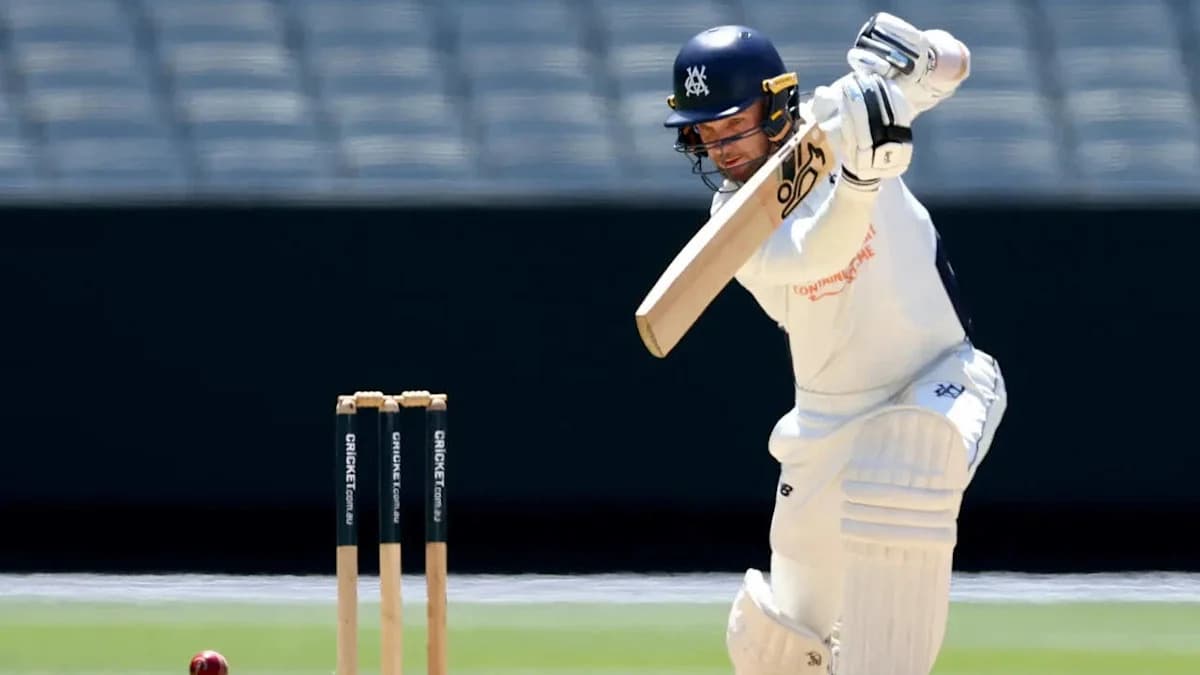
Ed Cowan has seen cricket’s boom-and-bust cycles up close. So when he looks at the Big Bash League and hears the drumbeat for privatisation, he doesn’t see a gold rush. He sees a risk of a fire sale.
The former Test opener and current Cricket NSW board member believes the BBL is nowhere near the crisis point some are suggesting, and that rushing to sell off clubs to private investors could do lasting damage.
“We haven’t lost one yet,” he reminded listeners on the ABC Cricket Podcast, as talk of an impending player exodus to rival T20 leagues grows louder.
A League Under Pressure – But Not Broken
Cricket Australia has already put its cards on the table. Earlier this month, CA confirmed an opt-in model that lets state associations take their BBL teams to market, with the option of selling stakes or even entire franchises to private ownership.
The logic from head office is clear: the global T20 arms race is here. The Hundred in England, the SA20 in South Africa, and a growing list of deep-pocketed leagues are circling the same pool of players. CA chief executive Todd Greenberg has framed privatisation as a necessity, not a luxury.
“There are opportunities now for our best Australian players to play in other leagues at the same time potentially with bigger salary caps,” Greenberg said. “So when we talk about should we wait for two years or four years? No, we can’t wait.”
For Greenberg, the threat is immediate.
“Those challenges are on our doorstep today. So we’ve got to make some decisions about how we compete. We’re a relatively small country in a big global sport. So it’s incumbent on us to make decisions that we can compete with elsewhere and that’s exactly what we’re doing.”
Cowan’s view cuts across that urgency. He points to what has actually happened on the ground, not what might happen.
The BBL has already reshaped its fixture in recent seasons, shortening the competition, trimming the bloat, and in turn lifting viewership and sharpening interest. That reset has helped lure some of the sport’s biggest names back into the fold.
Ben Stokes is heading to Adelaide. Finn Allen has signed what Cowan described as a “mega deal”. In the 2025/26 season, fans watched Colin Munro, Chris Jordan, Muhammed Rizwan and Sam Billings light up Australian grounds. Once the Test summer eased, Steve Smith, Alex Carey and Mitchell Starc dropped into the tournament and raised the standard again.
Cowan’s point: the market is still coming to the BBL.
“[In previous seasons] they’ve been able to reshape scheduling, to reshape international stars and the salary cap around that,” he said. “We’ve seen already there’s no friction to attracting some of the world’s best players.”
The Cost of “Burning the Furniture”
Where CA sees a race to keep up, Cowan sees time and options.
“There’s a view that the business could be run more effectively, which would enable some time to work out whether you actually do need to sell your star assets or not,” he argued.
Then came the line that will linger in boardrooms.
“Because when you start burning the furniture to warm the house, it can spiral quickly out of control from there.”
For Cowan, the BBL’s “furniture” is its clubs – the original eight franchises that have built a decade of identity, tribalism and broadcast value. Once sold, they don’t come back. Not easily. Not on the same terms.
He believes Cricket Australia still has levers to pull before it reaches for the most drastic one.
A Split Cricket Nation
The debate has split Australian cricket’s powerbrokers.
Cricket NSW, where Cowan sits on the board, has been the most vocal opponent of the current privatisation model. Queensland Cricket has also stepped carefully, making it clear it will not rush into a sale of the Brisbane Heat.
“We will closely monitor the sales process and at this stage, intend to retain 100 percent ownership of the Brisbane Heat, but of course remain open to private investment at the appropriate time,” Queensland Cricket chair Kirsten Pike and CEO Terry Svenson said in a joint statement.
That’s caution, not defiance. Watch first. Move later, if needed.
On the other side of the fence, Cricket Victoria has already strapped itself in for the ride. It has thrown its weight behind privatisation and will be the first to test the market, with the Melbourne Renegades license set to be sold in full.
“Private investment will unlock value for reinvestment across Victorian cricket, from the grassroots through to the elite game,” Cricket Victoria director Shaun Richardson said.
That single line captures the central promise of the model: sell now, spend smarter, grow faster. Use private money to fuel the entire pathway, not just the top end.
Global Arms Race, Local Identity
The comparison with The Hundred is instructive. Recent seasons of the English competition have featured the likes of Mitchell Marsh, Adam Zampa, Jos Buttler and Trent Boult – all of whom have played in the BBL or are locked in for the upcoming BBL16 season.
The same names are bouncing between leagues. The question is not whether Australia can attract stars. It already does. The question is how far it needs to go, structurally and financially, to keep doing so.
Cricket Australia believes privatisation is the step that ensures the BBL can stand shoulder to shoulder with the world’s richest T20 products. Cowan counters that the league has already shown it can adapt without selling itself off.
The tension sits right there, in that gap between “must” and “might”.
The Last Stand of the Original Eight?
What no one disputes is that change is coming.
CA and the state associations will keep negotiating ahead of BBL16 and WBBL12, seasons that are widely expected to be the last played under the current model with the original eight franchises intact.
One state is preparing to cash in. Another wants to hold the line. Others are somewhere in between.
As global T20 money gathers pace, Australian cricket stands at a fork in the road: double down on central control and smarter management, or open the door to private capital and accept the strings that come with it.
The BBL was built as a bold experiment. Its next act will decide whether it stays an Australian asset, or becomes something far more international – and far less predictable.