Ferrari's Monza Disappointment: Leadership and Strategy Under Fire
Ferrari left its home Grand Prix with the podium confetti still hanging in the Monza air – and a crisis brewing behind the pit wall.
On paper, the 2026 Italian Grand Prix gave the Tifosi a sixth place for Lewis Hamilton, a wrecked Ferrari for Charles Leclerc after barely two laps, and nothing more. In reality, it delivered something far more damaging: a public reminder that the Scuderia’s leadership, strategy, and technical direction are all under fierce internal scrutiny.
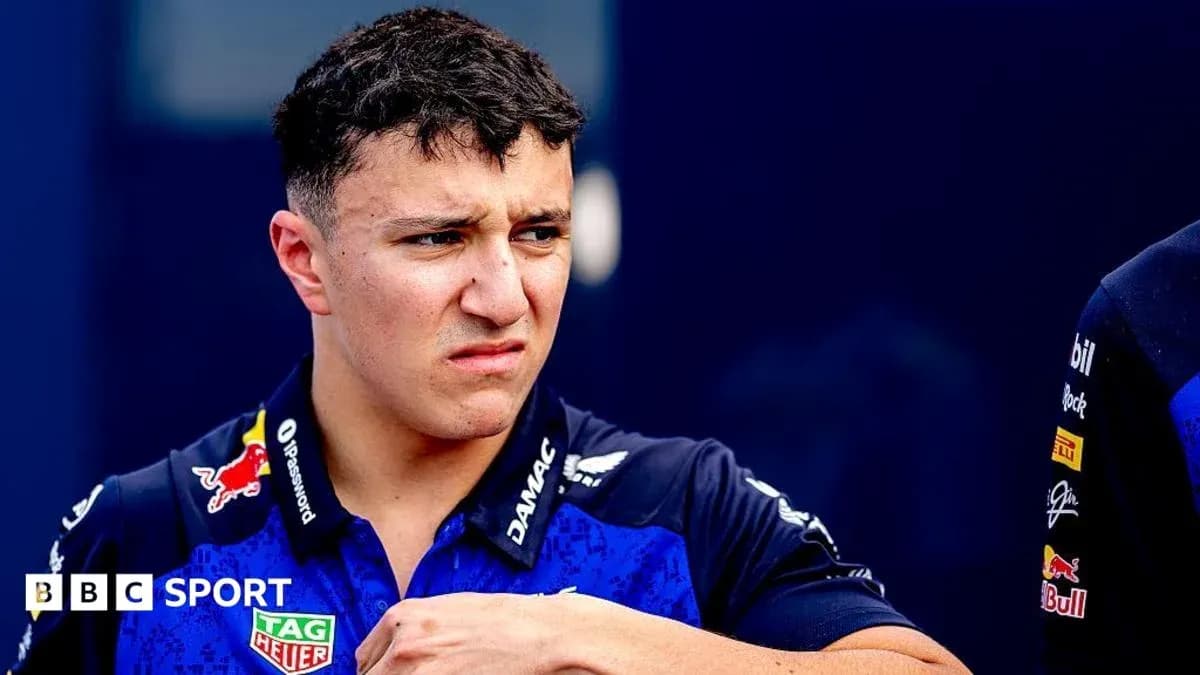
Kimi Antonelli’s stunning victory for Mercedes, carved out from 19th on the grid, only twisted the knife. On a power circuit Ferrari once treated as its private playground, a teenager in silver came from the back to win, while the red cars tripped over each other and faded.
That, in Maranello, stings more than any retirement.
A Home Race Unravels in Two Laps
Ferrari’s weekend collapsed almost as soon as the lights went out.
Leclerc and Hamilton launched from third and fourth, side by side through the opening chicane with the crowd still in full voice. It should have been the platform for a coordinated attack on Mercedes. Instead, it became the first piece of evidence in a growing case file against Ferrari’s internal management.
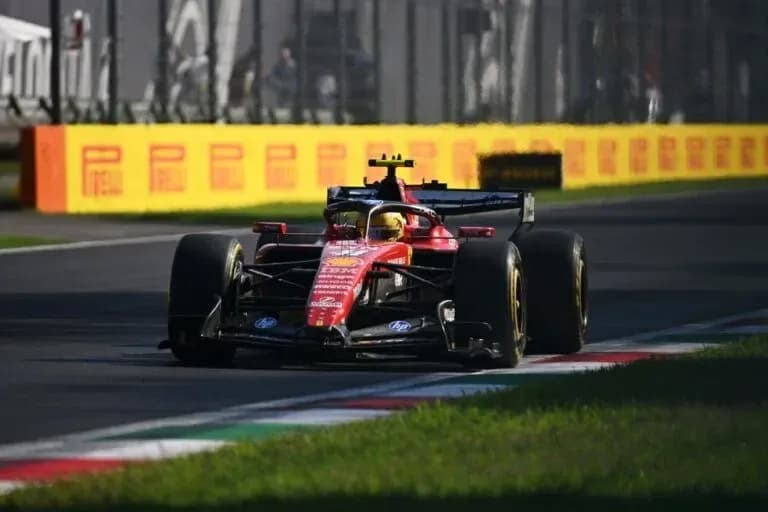
Running wheel to wheel, Hamilton was forced across the gravel as the two Ferraris disputed the same piece of asphalt. He lost crucial positions before Leclerc’s race ended with a heavy crash at Curva Alboreto on lap two. The second car was gone. The first was wounded.
Hamilton eventually dragged his car back to sixth over 53 bruising laps, but the damage – sporting and political – had already been done.
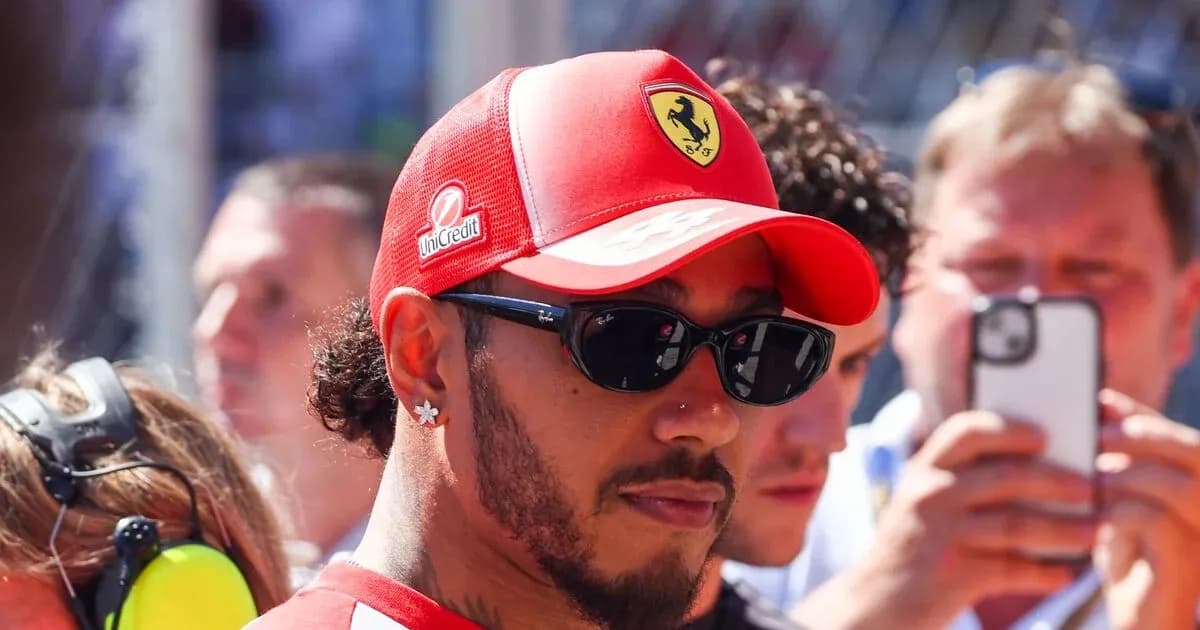
“I was ahead in Turn 2, by the apex I was ahead,” Hamilton said afterwards, pushing back at Leclerc’s suggestion that “we went far ahead” together. “So, there's no we. It was very bad for the team and put us way back in positions.”
From there, his race became one of salvage and frustration. Hamilton described trying to “reset” and chase back through the field, only to feel Ferrari had fitted “the wrong tyres” and left him with too much to do.
By the time he climbed out of the car, the disappointment ran far beyond his own afternoon.
“From today we've just lost so much ground on points,” he admitted. “It's far too late for those decisions to come. It's many, many weeks too late. All I can do is just try and turn up. I'll get up tomorrow morning and I'll give it my best.
“I feel massively gutted for the Tifosi who show up for us today. The guys back at the factory really are giving it everything. Yesterday we didn't really execute that well. And I did the same today. It's tough because we give everything I can and sometimes it's just not enough because we need all the other stuff to go well.”
Those words echoed far beyond the paddock pen. In a team already wrestling with questions of direction, Hamilton’s public frustration fed straight into a simmering debate about how Ferrari is being run.
Leadership, Rules of Engagement, and a Power Unit Under Fire
Inside Ferrari, Monza is being grouped with the Dutch Grand Prix as a case study in what is going wrong.
The first charge: driver management. The clash between Hamilton and Leclerc at the start has revived doubts over whether Ferrari has a clear, enforced hierarchy or set of rules for its two drivers in high-pressure moments. On home soil, with a front-row fight in sight, the two red cars raced each other like rivals, not team-mates.
The second: the power unit. Ferrari arrived at Monza with the second ADUO upgrade fitted and the hope that it would close the gap to Mercedes on one of the calendar’s most engine-dependent circuits. It didn’t. The works Mercedes cars, led by Antonelli’s charge, looked more potent in a straight line and more comfortable in race trim.
That gap, on this track of all tracks, has set alarm bells ringing.
There is also irritation at how Ferrari handled the revised start procedure. The Race has reported that the team’s lack of a sharp, decisive response to the updated protocols is another mark against the current operation – a detail, perhaps, but in Formula 1 the margins live in the details.
All of it circles back to one man: team principal Fred Vasseur.
Vasseur in the Crosshairs
Vasseur only signed a renewed multi-year deal last year. On paper, that should have given Ferrari stability after a revolving door of team bosses. Instead, Monza has dragged his position back into the spotlight.
Insiders quoted by The Race suggest senior management in Maranello were deeply unimpressed by how the weekend unfolded. That does not yet equate to a decision, but it explains why Vasseur’s name now dominates the internal conversation.
In Italy, the tone has hardened.
“In Maranello, and especially in Turin, they're thinking about it. We can't go on like this,” wrote Corriere della Sera, capturing the mood in the upper floors of the company. “Even Fred Vasseur has understood that, despite a recently renewed contract, his future at the helm of the team is uncertain. In Maranello, the pressures are many, and they come from on high, which could trigger a change. Not right away, we need to prepare for it. But Monza could have revolutionary effects.”
The same publication called the current moment “a major turning point at Ferrari” and underlined the severity of the scrutiny: “There is no Plan B beyond the French manager. Vasseur's Ferrari is under scrutiny. By Elkann's Ferrari, which can no longer pretend nothing is wrong.”
That line matters. It makes clear that this is no longer just about strategy calls or tyre choices. This is about the chairman, John Elkann, and his board looking down at the racing team and asking whether the entire project needs a reset.
Familiar Names in the Shadows
If Vasseur’s position becomes untenable, who steps in? The names being whispered around the paddock are not new.
Antonello Coletta, the man who leads Ferrari’s World Endurance Championship programme, has long been linked with a potential Formula 1 role. His work in returning Ferrari to the sharp end of endurance racing has impressed those who believe the company needs a more unified motorsport vision.
Christian Horner’s name, too, refuses to go away. According to The Race, the Red Bull boss remains part of Ferrari’s internal succession conversations. He reportedly turned down an approach from Elkann for the top job in the past, but the fact his name is still in the mix shows the scale of Ferrari’s ambition – and perhaps its uncertainty.
For now, they are just names. Possibilities, not plans. But the very act of discussing them, publicly and privately, piles more pressure on Vasseur and his current regime.
Ferrari left Monza with six points from Hamilton, a broken car for Leclerc, and a teenager in a Mercedes standing on the top step where a red suit was supposed to be.
The Tifosi came for a celebration. They went home with questions.
Inside Maranello and Turin, those questions are getting louder. How many more weekends like this will Ferrari tolerate before “thinking about it” becomes acting on it?