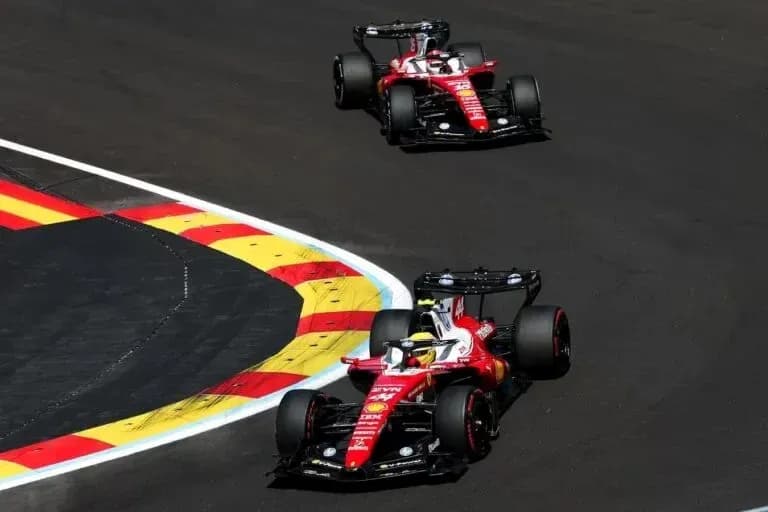
Ferrari's Spanish Grand Prix: Brake Issues and Tyre Challenges
Ferrari wrestled with a brake drama on one side of the garage and a tyre riddle on the other in a Spanish Grand Prix that left more questions about Saturdays than Sundays.
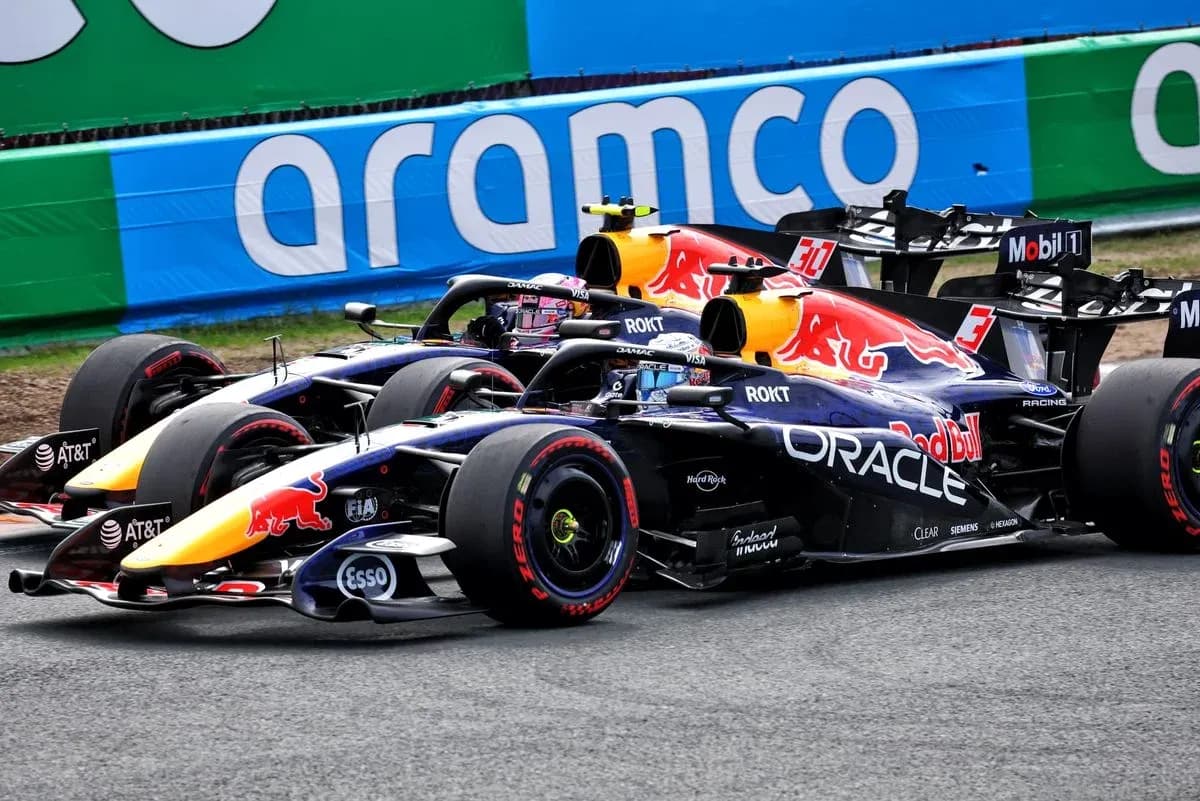
Lewis Hamilton’s race in red barely had time to breathe before it lurched into trouble. On Lap 1 at Madring, while Red Bull argued over the radio about whether Max Verstappen should hand back position after cutting the corner to stay ahead, Hamilton was fighting something far more fundamental: the brake pedal.
The seven-time champion reported a long pedal almost immediately. Verstappen slowed to give the place back to Andrea Kimi Antonelli and Hamilton, only to breeze past the Ferrari again as Hamilton’s braking issues bit hard. From the pit wall, Frederic Vasseur and his engineers tried to play mechanic by remote control.
“We tried to fix it from the pit wall,” the Ferrari team principal explained. For a moment, it seemed to work. Hamilton carried on, the problem apparently tamed. One more lap, maybe two.
Then it returned.
On a high-speed circuit with 56 laps still to run, Ferrari pulled the plug. Vasseur made it clear: gambling with a sketchy brake pedal on Lap 2 was never an option. “It would have made no sense, to take a crazy risk,” he said. Hamilton’s race was essentially over before it had even begun.
Leclerc Goes Long, But Qualifying Bites Again
With Hamilton parked in the debrief room rather than the points, Ferrari’s attention turned fully to Charles Leclerc. His race took a very different shape.
An early Virtual Safety Car nudged Ferrari towards a bold call: stretch the hard-tyre stint as far as it would go and hope the race came back to them. A safety car. A red flag. Anything.
Nothing came.
Leclerc coaxed life out of the hard compound for 49 laps, and the pace held up. Vasseur was adamant the car had the speed; the problem, in his eyes, lay elsewhere.
“The race was more than good,” he said. “We did a stint of 49 laps with the hard and the pace was still there.” Ferrari had split strategies, as many teams did, one car on softs or mediums, the other on hards to cover every scenario. Leclerc led the hard-tyre group, waiting for chaos that never arrived.
Vasseur was blunt: with a different twist of fate, the outcome would have looked very different. With the second incident and a red flag, he believed, the win was on. With a safety car, he reckoned Leclerc would have been fighting for P2 or P3, not P4. For him, this was a story of strategy and Saturday performance, not a lack of Sunday speed.
“If we miss something, it’s more qualifying,” he admitted. Ferrari know it. Leclerc knows it. The race pace is there; the grid positions are not.
The Soft-Tyre Mystery
The strangest part of Leclerc’s afternoon came late on, when he finally bolted on the soft tyres and went hunting. On paper, he had everything he needed: fresh rubber, the softest compound, clear motivation to chase down Lando Norris.
On track, it never clicked.
“The pace was quite strong on the hard,” Leclerc said. “On the soft at the end I couldn’t really push for other reasons.” The Ferrari driver, who prefers minimal radio chatter on a demanding circuit like Madring, even checked mid-race with race engineer Bryan to understand exactly what they were fighting for. Inside the cockpit, the bigger picture was unclear; the feeling on the hard tyre was not.
What happened on the softs, though, remains deliberately vague. Asked to explain the issue, Leclerc smiled and shut the door. “No, not really, no I can’t,” he replied, only adding that it would be “fine for the next race.”
Whatever the problem was, it stopped him from unleashing the kind of late-race charge the strategy demanded. The damage, in his view, had already been done on Saturday. “Eventually where we are paying the price, it’s our qualifying pace,” he said. Start too far back, and even a strong race car runs out of road.
Hamilton’s Early Drama Clears Leclerc
One thing Leclerc was keen to clear up was Hamilton’s role in his opening laps. With Hamilton wrestling that erratic brake pedal and cutting corners to keep the car on the island, there was a question over whether the Briton had cost Leclerc time in the early shuffle.
Leclerc dismissed it.
“No, I mean he did it very, very quickly obviously,” he said. With Hamilton’s brake problems forcing him to shortcut corners rather than block them, the Ferrari man insisted his race wasn’t compromised there. “He didn’t hold me up and wouldn’t have changed anything in my race.”
So Ferrari leave Spain with a car that can run long and run fast, a brake issue that ended Hamilton’s race almost before it began, and a soft-tyre puzzle Leclerc refuses to unpack in public.
The pattern, though, is becoming hard to ignore: if the red cars don’t fix Saturdays, how many more Sundays like this will they waste?