FIFA Power Struggle Intensifies: Ceferin and Montagliani Propose $10M Payouts
FIFA power struggle deepens as Ceferin and Montagliani push $10m payouts – and Infantino’s exit
GENEVA — The battle for control of world football has moved from back rooms to the balance sheet.
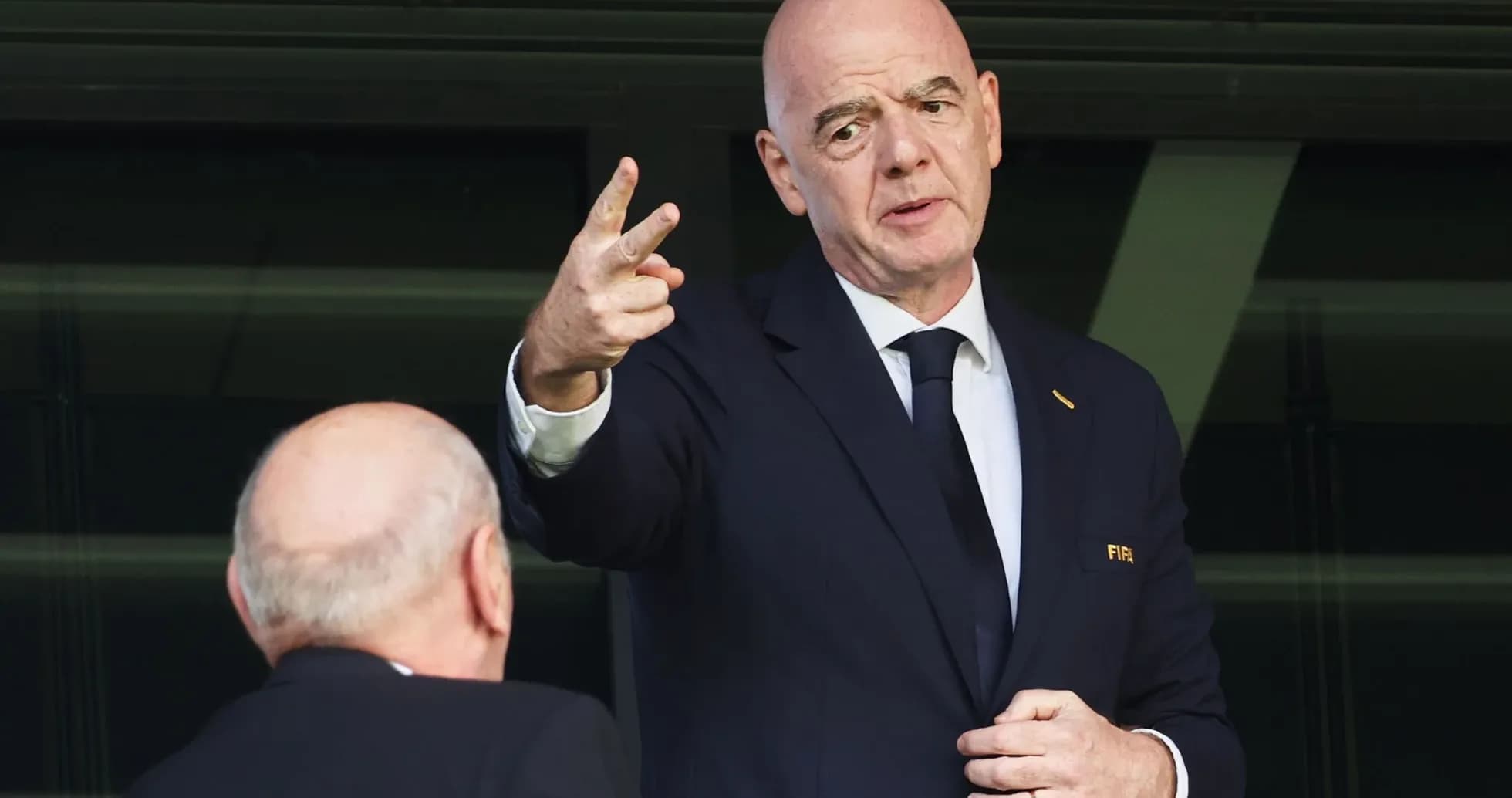
FIFA’s two most influential vice presidents outside South America and Asia — UEFA president Aleksander Ceferin and CONCACAF chief Victor Montagliani — have called for every national federation to receive an extra $10 million from FIFA’s swelling reserves, while openly maneuvering to unseat president Gianni Infantino.
The proposal landed in Infantino’s inbox on Friday, in a letter seen by The Associated Press. The timing and the numbers are no coincidence.
Cash, power, and a president under siege
Ceferin and Montagliani argue that, after a lucrative World Cup in North America, FIFA’s reserves should stand at around $6 billion. From that, they say, a “one-off release” of $2.1 billion is both affordable and justified — enough for each of FIFA’s 211 member federations to bank $10 million.
Those same federations will elect FIFA’s next president.
The offer is a direct counterpunch to Infantino’s own pitch: $20 million per federation tied to his now-abandoned plan to sell stakes in World Cup and commercial rights to private investors led by Joshua Kushner.
Infantino’s project, known as FIFA Forward Enterprise (FFE), promised a $20 billion commercial spinoff. It also sparked a global backlash when details emerged in late July, not least because of its secretive development and the involvement of Kushner — the younger brother of Jared Kushner, son-in-law of U.S. President Donald Trump.
Infantino had built close ties with Trump in the run-up to this year’s World Cup in the U.S., Canada and Mexico, becoming a regular visitor to the White House. That political proximity did nothing to calm concerns inside football when the FFE plan surfaced.
The project has since collapsed. The fallout has not.
A financial promise without Infantino
In their letter, Ceferin and Montagliani are not just dangling fresh money. They are trying to undercut Infantino’s core argument: that only he can deliver record funding.
They stress that existing commitments — $20 million per federation through 2030 — “would continue in full as already committed,” even if Infantino is removed from office. The message is blunt: the money is FIFA’s, not the president’s.
FIFA was approached for comment on the letter.
The two vice presidents have also demanded a full, independent analysis of FIFA’s finances before an October 15 meeting in Zurich. That review, they say, should determine how much can be responsibly distributed to member associations.
That Zurich gathering, a scheduled meeting of the FIFA Council chaired by Infantino, will be the first since the private equity plan was exposed. It now looms as a key moment in the president’s fight for survival.
“Lastly, please note we will be informing the other four confederation presidents to support this motion,” Ceferin and Montagliani wrote, signaling a coordinated push to line up the rest of the world behind their proposal.
Confederations split as Infantino tours for votes
The global map is fractured.
The Asian Football Confederation has turned critical of Infantino in recent weeks. UEFA has led the charge against him. By contrast, the confederations in South America and Africa have backed the Swiss-Italian, who has run FIFA since 2016.
Inside CONCACAF, the picture is more complex. Montagliani is formally Infantino’s vice president, yet now stands among his chief challengers. Last month, Infantino traveled through the Caribbean, seeking to reinforce support among smaller CONCACAF nations despite Montagliani asking him not to visit.
That kind of defiance has only sharpened tensions.
Election clock ticking toward Rabat
FIFA has set November 18 as the deadline for presidential candidates to declare. The vote will take place four months later in Rabat, Morocco — a staunch Infantino ally and co-host of the 2030 World Cup alongside Spain and Portugal from UEFA.
After a highly profitable World Cup in North America, Infantino looked poised to glide to re-election, unopposed, for a fourth and final term through 2031. The private investment furor has blown that assumption apart.
There is no clear challenger yet.
European leaders will meet at a UEFA-hosted event before the next FIFA Council session, a natural stage for backroom conversations about potential candidates. Speculation has often circled back to Montagliani himself and Nasser al-Khelaifi, the Qatari president of Paris Saint-Germain, a member of the Qatari government and a UEFA executive committee member.
Neither has publicly declared any intention to run. Infantino still enjoys open support from the Qatar Football Association, a powerful ally in both political and commercial terms.
UEFA takes the fight to U.S. courts
While the political maneuvering plays out, UEFA has opened a second front — this time in the legal arena.
The European body has asked courts in Manhattan and Florida to authorize discovery of evidence related to the FFE project. In New York, it is targeting Kushner’s investment firm. In Florida, it is seeking material from FIFA itself.
UEFA wants documents and communications around the $20 billion scheme, laying the groundwork for a potential criminal complaint against Infantino in Switzerland, FIFA’s home country, on possible financial mismanagement grounds.
For now, the president remains in office, the money remains in FIFA’s accounts, and the federations sit at the center of a bidding war for their loyalty.
Ten million dollars per federation without Infantino, or twenty million tied to a president under investigation and under siege — when the votes are finally cast in Rabat, which offer will carry more weight: the promise, or the person behind it?