Formula 1 Madring Race Review: Key Performances and Insights
The Madring did not deliver a classic. No late-race duel for the ages, no defining overtake etched into history. What it did offer was a bruising, strategic grind that exposed weaknesses, rewarded precision, and left a few big names staring at what might have been.
Some walked away vindicated. Others, quietly relieved. A handful, brutally exposed.
Here’s how the grid really measured up on Formula 1’s newest stage.
Lando Norris – Started 1st, Finished 3rd
Verdict: Only bad luck cost him victory.
Norris produced the lap of the weekend when it mattered on Saturday. Pole came from a McLaren that, by the team’s own reckoning, was not the outright fastest car, yet he dragged it there with a mighty qualifying effort. It could have been even better: a rear slide at the final corner cost him around three tenths and turned what might have been an all-time qualifying lap into a merely outstanding one.
He launched well from a compromised pole-side grid slot, built a healthy early cushion and, on pure pace, had this race under control. In race trim, he was the quickest man out there.
Then the virtual safety car arrived at exactly the wrong time. The timing flipped the order and stripped him of the lead he had earned, and with overtaking so suffocatingly difficult and Max Verstappen one of the toughest drivers to pass in any circumstances, his late charge stalled in the wake of the Red Bull. Norris did almost everything right. The one thing he couldn’t fight was the timing of the race control screens.
Pierre Gasly – Started 9th, Finished 7th
Verdict: Probably his best through-weekend execution in F1.
Gasly stitched together one of the most complete weekends of his grand prix career. After a scare at La Monumental on his first Q2 run, he delivered what he himself called “one of the best” laps he has produced to haul the Alpine into Q3, beat team-mate Pierre Gasly’s benchmark and top the midfield.
He then went one better in Q3, outpacing Arvid Lindblad and securing what was realistically the maximum starting position for an Alpine. He left a sliver of time on the table – the biggest gap to theoretical best of anyone in Q3 – but it didn’t change his grid slot.
On Sunday he controlled the midfield, headed the pack and even overachieved by one place by fending off Oscar Piastri. The only question mark is whether, in a different overtaking universe, he might have cleared Gabriel Bortoleto and then Liam Lawson. In this one, he did about as much as the car allowed.
Esteban Ocon – Started 13th, Finished 11th
Verdict: A well-executed weekend that deserved a point.
Ocon’s qualifying was solid rather than spectacular, but the gap to Bortoleto underlined the reality: in pure one-lap terms, the Haas simply did not have Audi’s edge. He still extracted a good lap in Q2.
On Sunday he did what he so often does – launched hard, gained ground off the line and muscled his way into the thick of the points fight, jumping both Audis and effectively running in the top 10 once Lewis Hamilton retired. His race craft and execution were tidy, and without the disadvantage of Haas’s less sophisticated pit equipment during the VSC stops – which dropped him behind Nico Hulkenberg – he was on course for a deserved point.
With Ollie Bearman out of the picture in qualifying, the comparison was muddied, but nothing in Ocon’s weekend suggested he left meaningful lap time unused. In the eighth-best car, this was a quietly sharp performance.
Max Verstappen – Started 3rd, Finished 2nd
Verdict: Largely made the most of the Red Bull.
This was not one of Verstappen’s annihilation weekends, but he still squeezed most of what the Red Bull had to offer. The car looked better on Saturday than over a race stint, and his qualifying lap reflected that – close to the limit, if not absolutely on it.
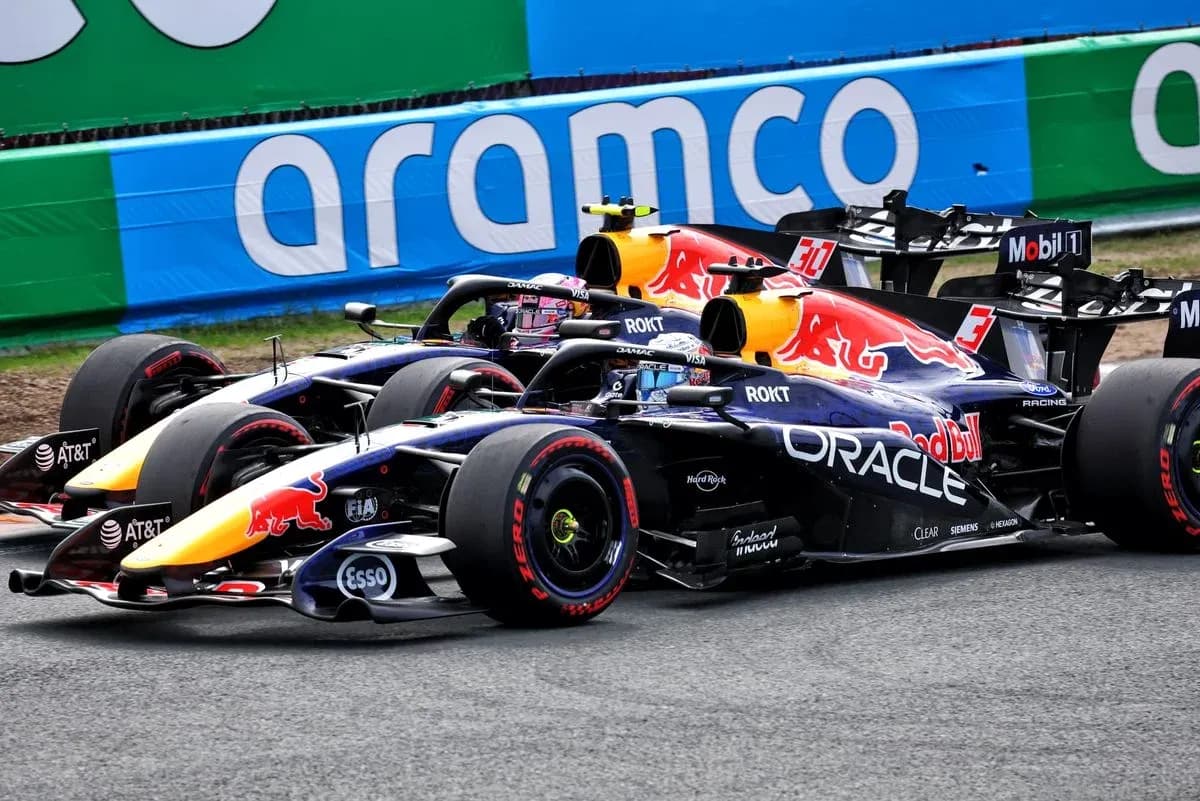
He then played the percentages in the race. On a track that suffocated overtaking attempts, he did enough to keep Norris at bay when it mattered and banked second place. Luck nudged him up the order in the reshuffle that cost Norris, but even without that he was on course to finish roughly where the car belonged.
The one black mark came at Turn 1 on lap one. The move that led to him cutting the chicane set off a chain reaction that left him behind Andrea Kimi Antonelli once Hamilton was allowed back through. It didn’t ruin his day, but it did shape it.
Lewis Hamilton – Started 2nd, Finished 1st
Verdict: Pace unquestionable, execution a touch scruffy.
Hamilton was the spearhead at Mercedes all weekend. His advantage over George Russell was clear, and over the long runs he had the kind of authority that has defined so many of his best wins.
He spent much of the race in controlled, patient pursuit, managing his tyres and biding his time while Charles Leclerc ran long. When the luck fell his way, he had the pace to convert track position into victory.
Yet his first lap told a different story. Two track cuts, at Turn 1 and Turn 5, dropped him back to third in the early chaos and gave the stewards something to look at. The rest of his race was sharp and composed, but the win still leaned heavily on fortune as much as speed.
George Russell – Started 5th, Finished 4th
Verdict: No major negatives, but short of his absolute peak.
Russell came into the weekend carrying the self-inflicted handicap of older power unit components after his Monza crash, yet he still came within 0.005s of Hamilton in qualifying. The lap was clean, if not quite perfect, especially in the early part where prep laps had not been ideal.
In the race he did the professional job Mercedes expects: clean, efficient, long stint on the hard tyres, and no major errors. With Hamilton out and the car’s pace pegging him back, fourth was always the likeliest outcome once the strategic picture settled.
He didn’t look ragged, but he also didn’t look like he’d hit his absolute ceiling. A solid, slightly muted weekend.
Sergio Perez – Started 18th, Finished DNF
Verdict: The stronger Cadillac, undone by reliability.
Perez had the upper hand over Valtteri Bottas from the start, even if the final qualifying gap was flattered by Bottas being impeded by Carlos Sainz. The Mexican looked the quicker Cadillac driver throughout and delivered when it mattered with a strong final lap.
His race followed the same pattern. He capitalised on the Turn 1 chaos, gained ground and then settled into a strong chase of Alex Albon before a water leak in the power unit forced him first to back off, then to park the car.
The only real negative? That he never got to show what the second half of that race might have looked like.
Alex Albon – Started 16th, Finished 15th
Verdict: Strong recovery, one costly FP3 brush with the wall.
Albon’s Friday was messy. Deployment problems left him trailing Sainz, and an early FP3 wall clip robbed him of valuable running. When it mattered, he responded. A sharp Q1 lap dragged the Williams forward, and with no fresh softs for Q2, 16th on the grid was about as good as the car could do.
His race was clean, his pace respectable, and there was little more on offer in a Williams that simply lacked the legs to move higher. The weekend’s one real blot was that FP3 kiss with the wall. The rest was solid.
Fernando Alonso – Started 17th, Finished 17th
Verdict: Decent, but Q2 was there for the taking.
Alonso looked like the quicker Aston Martin driver from the opening laps of practice. He showcased the car’s strengths in the corners, even as its straight-line speed left him vulnerable.
Qualifying, though, got away from him. A scruffy final sector on his last Q1 lap – around a tenth and a half down on his own best – tipped the Q2 fight in Albon’s favour. Once the race began, deployment issues and front wing damage from contact with Sainz shredded his chances of making progress.
He still dragged the car to the flag, but this was one of those weekends where the underlying pace never quite made it onto the scoreboard.
Charles Leclerc – Started 4th, Finished DNF
Verdict: Had the pace to do more, but never put the full weekend together.
Leclerc’s weekend always felt slightly out of sync. His FP3 crash cost him half the session and, crucially, his qualifying simulation. Even with that setback, he still produced a respectable starting position, but it wasn’t the maximum the Ferrari had in it.
He looked to have the stronger underlying pace of the two Ferrari drivers, yet small errors – including one early in his qualifying lap – prevented him from fully exploiting it. On Sunday, brake problems ended his race and with it any chance to convert that latent speed into a result.
This was a weekend of “what ifs” rather than points.
Arvid Lindblad – Started 10th, Finished 9th
Verdict: Recovered well from a heavy FP2 shunt.
Lindblad arrived on Friday with pace and promptly threw it at the wall in FP2 at Turn 13. The crash wiped out valuable running and delayed his FP3 participation. Confidence took a hit, and he admitted as much.
Even so, he fought his way into Q3 and started 10th. In the race he jumped Piastri at the start, ran ahead in the first stint and then, late on, resisted pressure from Hulkenberg to cling to ninth. He couldn’t keep Piastri behind once the McLaren had fresh mediums, but that was more about tyre offset than driver error.
Given the size of his FP2 mistake, the race-day response said a lot about his temperament.
Nico Hulkenberg – Started 11th, Finished 10th
Verdict: Solid, with Audi roughly where it belonged.
Hulkenberg edged his team-mate in Q2 in a session where neither Audi nailed the perfect lap. A place in Q3 was possible, but it slipped away.
He started on softs, used the VSC timing well and converted that into a point, making the most of what the car and strategy offered. Late on, he flirted with the idea of a move on Lindblad, but in this overtaking climate, that was always going to be an outside shot.
Taken as a whole, he shaded his team-mate and put the Audi in the window it should occupy.
Liam Lawson – Started 8th, Finished 6th
Verdict: Quietly effective, if not spectacular.
Lawson again found himself a step behind Verstappen as qualifying evolved, the gap ending up at 0.352s. Respectable, but not what a Red Bull second driver dreams of. It was only his third outing in the car, yet he was firmly lodged in that group of top-team number twos who live in the shadow of their team leaders.
In the race he lost out to Franco Colapinto at the start but quickly reversed that, an important early overtake that reset his afternoon. Staying out on hards during the VSC and making that strategy work, especially as Bortoleto bottled up Colapinto, allowed Lawson to climb to sixth.
Nothing flashy, nothing reckless – just an unobtrusively efficient drive.
George Russell – Started 6th, Finished 5th
Verdict: A clear step behind Antonelli.
Russell’s weekend never really ignited. He had a clean run, executed without drama and even pulled off one of the race’s few genuine overtakes when he passed Lawson after his second stop. Strategically, he was on the wrong side of the VSC after starting on hards, a choice designed to exploit an early interruption that never quite paid off once Leclerc did the same.
The bigger issue was pace. At no point did he look to be operating on Antonelli’s level. In Q3 he overcooked the tyres at Turn 11 on his final lap, losing time that only confirmed the trend: he was already slipping away from his team-mate.
This was not a disaster, but it was a clear step back in the intra-team battle.
Oscar Piastri – Started 7th, Finished 8th
Verdict: Below Norris’s level and boxed in late on.
Piastri’s weekend never truly synced with Norris’s. The opening-lap front-wing damage was not his fault, but it condemned him to fight from a compromised position and reshaped his strategy.
He did at least pass Lindblad after his stop, running a hard-to-medium strategy without the luxury of a VSC stop. Yet he couldn’t find a way past Colapinto in the closing laps, stuck behind a slower car with no realistic route by.
The raw pace deficit to Norris, though, is what lingers.
Kevin Magnussen – Started 12th, Finished 13th
Verdict: Middling, a shade behind Hulkenberg.
Magnussen’s qualifying fell short of what the car could do. He admitted he left time on the table, particularly by being too conservative into Turn 1, and that set the tone. A sluggish start dropped him further back, though starting on hard tyres mitigated that to a point.
His race stint on hards was tidy, and he did well to keep the quicker Colapinto bottled up behind him for a long stretch. The VSC timing hurt him given his starting compound, but the feeling remained that Hulkenberg had extracted a little more from the same machinery.
Not disastrous, not decisive. Just middling.
Franco Colapinto – Started 14th, Finished 12th
Verdict: Race pace strong, qualifying and pit penalty costly.
Colapinto’s speed on Sunday was encouraging. He showed the underlying pace that had been hinted at in practice, but the timing of the VSC while he was on hards trapped him on the wrong side of the strategic divide.
Qualifying, by contrast, was flat. He struggled to replicate his FP3 feeling as tyre prep went awry on the outlap, leaving him baffled at the lack of grip. A five-second penalty for pitlane speeding at the end of the race added a needless blemish, even if it didn’t cost him a position.
The speed was there when it no longer counted. When it did, it went missing.
Valtteri Bottas – Started 19th, Finished 18th
Verdict: Hurt by bad luck, but still short of Perez.
The qualifying deficit of over two seconds to Perez looked brutal on paper and wildly misleading in reality. Bottas’s best chance was wrecked by traffic on one run and by Sainz impeding him on another, leaving him stuck with an early banker lap.
His race never recovered. Early damage, not of his making, took away any real opportunity to show what he could do in clear air. Even with that mitigation, he never quite looked to be operating at Perez’s level over the weekend.
Luck went against him, but the underlying comparison did him no favours either.
Lance Stroll – Started 21st, Finished DNF
Verdict: No chance to shine – and no hint of Alonso’s speed.
Stroll’s weekend was effectively over before it began. A water leak in Q1 meant he never set a time, and with a 40-place grid penalty for power unit changes, there was no realistic opportunity to influence qualifying anyway.
He ran ahead of Alonso for a couple of laps in the early going, but brake issues and debris damage soon turned his race into a non-event and removed any meaningful comparison with his team-mate.
The harsh reality remains: across practice, there was little evidence of Alonso-level single-lap pace.
Yuki Tsunoda – Started 15th, Finished 14th
Verdict: A weekend that never really started.
Tsunoda’s problems began on Saturday. He struggled badly with the car on fresh tyres, feeling far more comfortable on scrubbed sets, and the result was a yawning 0.880s deficit to Lindblad in qualifying. He simply could not tap into the peak grip when it was available.
The race offered no redemption. Clattered by Sainz at Turn 1, he carried damage that locked him into a limited pace window. Considering that, his race speed was respectable, but the combination of poor qualifying and early damage left him with nowhere to go.
A weekend that evaporated almost as soon as it began.
Carlos Sainz – Started 20th, Finished DNF
Verdict: Speed fine, errors too frequent.
Sainz arrived with pace and looked sharp on Friday, yet the story of his weekend became one of misjudgements. The team accepted responsibility for not warning him about Bottas in qualifying, but a driver always bears some share of the awareness burden, and the incident ruined Bottas’s final lap.
He still qualified behind Albon by the barest of margins, citing timing and straightline speed deficits. Then came the race. Caught in the inevitable Turn 1 accordion, he misjudged the situation and hit Alonso, compromising his own afternoon before it really began.
The underlying speed was there. The execution was not.
Ollie Bearman – Started 22nd (pit lane), Finished 16th
Verdict: Race recovery couldn’t erase a costly FP3 crash.
Bearman’s weekend pivoted on one moment. A heavy FP3 crash, after tagging the inside wall through the Turn 10/11 sweep, destroyed his session and wiped out qualifying. It followed a lighter warning shot on Friday at Turn 15, when he clipped the front-left with less serious consequences.
From the pit lane, he drove well. He picked off a damaged Bottas and an ailing Stroll on track and made steady progress. Yet all of it came framed by the reality that his biggest impact on the weekend had already come – in the barriers, not on the timesheets.
The Madring did not hand out many easy points. It punished hesitation, magnified small errors and turned strategy calls into make-or-break moments. For some, it was a platform. For others, a warning. The next time this place appears on the calendar, who will have learned the right lessons?