Gasly Loses Monaco Grand Prix Podium Again: Court Ruling
Pierre Gasly has lost his Monaco Grand Prix podium – again.
Three months after the Frenchman stood on the rostrum in Monte Carlo, and weeks after he thought he had won his case in the stewards’ room, the FIA’s International Court of Appeal has put the penalties back on. His third place is gone. Seventh place is back. And Red Bull’s Isack Hadjar inherits the final step on the podium.
This time, the verdict came not from the pit wall or the stewards’ office, but from a courtroom in Paris.
How Gasly’s Monaco miracle unravelled
On the road in June, Gasly finished a superb third around the streets of Monaco. On paper, he finished seventh.
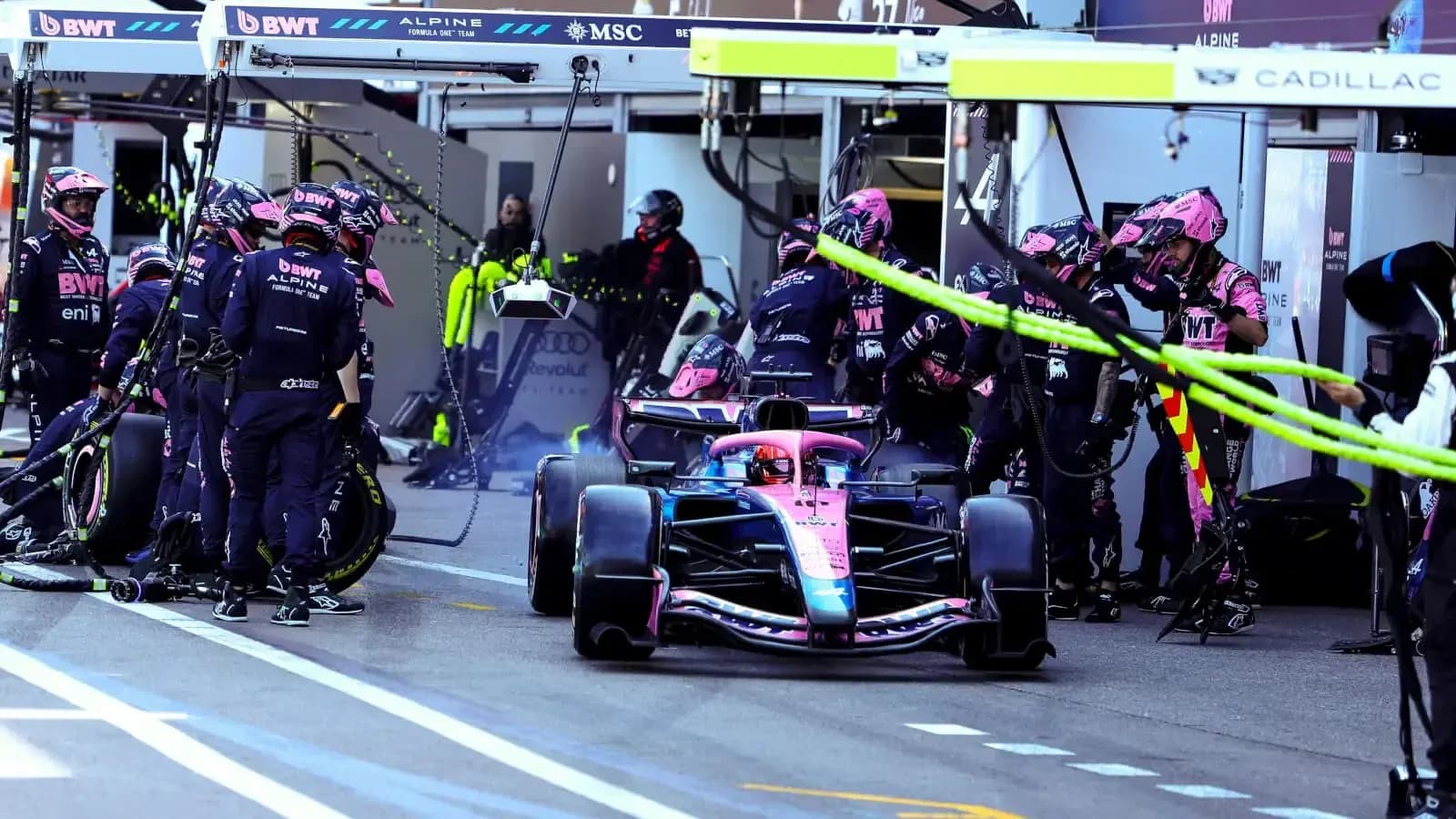
Two separate pit-lane speeding infringements – each worth five seconds – dropped him down the order once the chequered flag fell. Alpine fought back. They argued the FIA could not actually prove he had exceeded the 60km/h pit-lane limit because of uncertainty over the precise distance used in the timing calculations.
The stewards listened. They agreed. The penalties were rescinded, Gasly’s podium was reinstated and Alpine celebrated a rare high in a difficult season.
That decision opened the floodgates.
McLaren and Red Bull, whose drivers had served similar penalties in-race using the same timing system, took the matter to the International Court of Appeal. Their challenge was simple: the stewards were wrong to overturn their own original decision.
Behind closed doors in Paris, with legal teams, engineers and observers from across the grid in attendance, the sport’s highest court went to work.
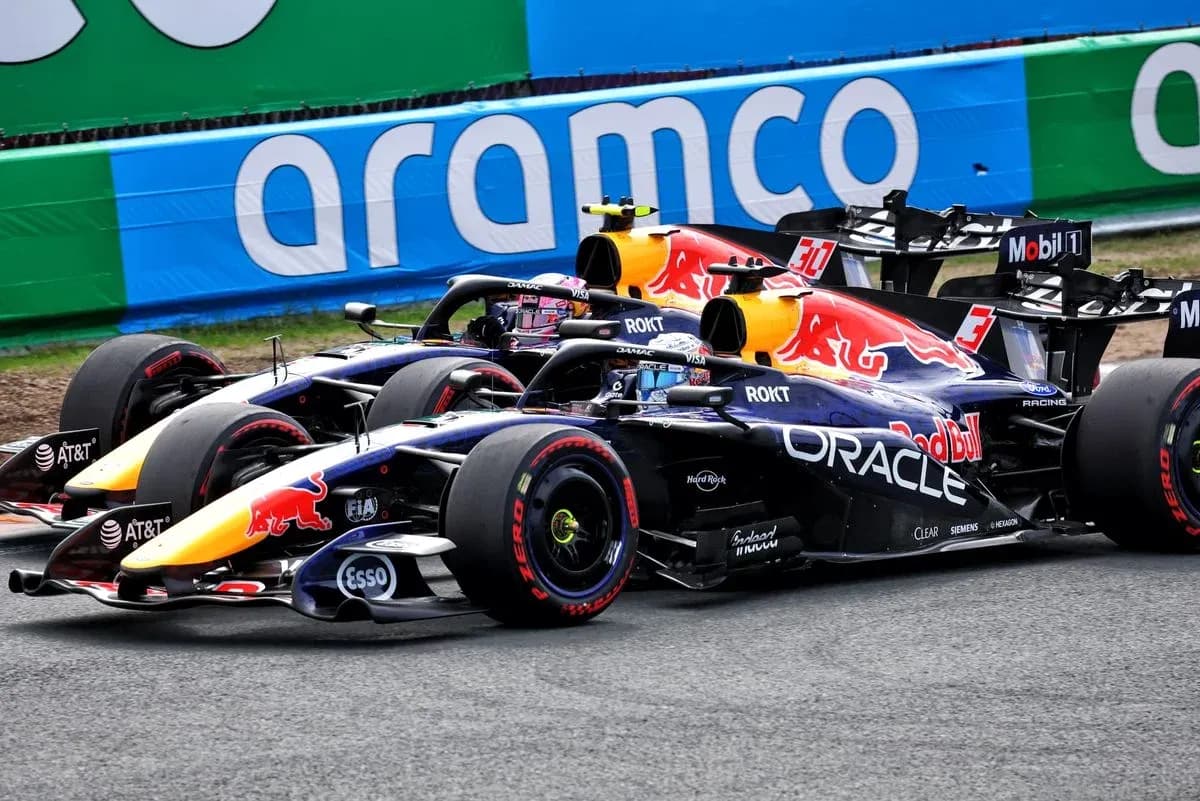
On Friday at Monza, the hammer came down. The original five-second penalties were restored. Gasly dropped back to seventh. Hadjar, who had already lost and now regained his podium without turning a wheel, was promoted back to third.
The crux of the argument: one benchmark, or many?
McLaren and Red Bull built their case on sporting fairness.
Every team, they argued, had calibrated their pit-lane speed limiters to the same official timing system, run by FOM and used by the FIA stewards. That system calculates average speed between two timing loops at the start and end of the pit lane, based on a fixed distance – 2692cm in Monaco – rather than an instantaneous speed reading.
Six drivers were flagged for speeding. Five took their penalties in the race. Only Alpine held off, choosing to carry Gasly’s two five-second penalties to the finish and then seeking a right of review.
To McLaren and Red Bull, that created a problem. If one team could later challenge the distance used in the timing calculations and have its penalties overturned, while others were punished on the same data, the playing field tilted.
Their position was blunt: the official timing system is the accepted reference. Everyone competes under it. You cannot rewrite that benchmark for one car after the race.
There was more. Early in the Monaco weekend, an electronics debrief highlighted discrepancies between the official timing system and some teams’ own data. The FIA’s F1 Electronics Team Leader, Olivier Kieffer, shared those findings with all teams. Mercedes and Williams had already spotted that the system’s numbers did not perfectly match their internal measurements.
Even so, the timing loops and the 2692cm distance remained the official standard. Teams set their limiters accordingly. Drivers trusted the dashboard. The penalties that followed were applied on that common basis.
To allow one competitor to overturn that standard retrospectively, McLaren, Red Bull and even Motorsport UK argued, would undermine the consistency of safety rules and the reliability of the FIA’s regulatory framework.
The wording from the challengers was sharp: the stewards’ Monaco U-turn contained “evidentiary errors” and was “insufficient, contradictory, and legally inadequate”.
Alpine’s fight: was Gasly actually speeding?
Alpine went back to the letter of the rule: did Gasly exceed 60km/h in the pit lane? They said no – and argued they had the data to back it up.
Crucially, the regulations do not explicitly state that the official timekeeping method is the only way to measure pit-lane speed. That gave Alpine an opening.
They attacked the 2692cm distance used by FOM between the timing loops. Their own investigation used three sources:
- FOM’s GNSS data
- Leica laser measurements carried out by Alpine
- An independent survey by Ridge & Partners LLP
FOM’s own GNSS data, Alpine said, showed the relevant minimum distance was actually 2615cm, not 2692cm. Run Gasly’s recorded times – 1.604s and 1.602s – over that shorter distance and his average speed drops below 60km/h. No breach. No penalty.
Alpine insisted that correcting the distance did not compromise safety. The limit remained 60km/h; only the flawed calculation was being fixed. Other teams, they argued, were not treated unequally – they simply had not pursued a right of review.
For Alpine, the question was binary: either Gasly exceeded 60km/h or he did not. With their reconstructed distances, they believed they had shown he did not.
Why the court sided against Alpine
The ICA chose a different line.
The judges did not question the 60km/h limit. They did not declare the timing system perfect. Instead, they focused on one principle: a single, common benchmark must apply to all competitors during an event.
The 2692cm distance, the court said, was not a “measurement” of each car’s physical path, but a notional parameter used for the timing calculations. It was the reference point everyone used. Teams had set their pit-lane speed limiters against that number. Strategy calls had been made on that basis.
Because of that, the court ruled, it could not be replaced after the race with a different distance for one team alone.
“Competitors cannot be required to calibrate their cars and make technical and strategic decisions against one official benchmark during the event, only for that benchmark to be retrospectively replaced by a different geometric or measurement methodology after the event has concluded,” the judgment stated.
The court also looked closely at Alpine’s reconstruction of Gasly’s pit-lane trajectory. Alpine itself described it as its “best estimate”, not a centimetre-perfect map. To average exactly 60km/h with Gasly’s recorded times of 1.604s and 1.602s, the distances would have needed to be roughly 2673cm and 2670cm.
FOM had not measured Gasly’s exact line. Alpine could not prove, with sufficient precision, that his true path was short enough to guarantee he stayed below the limit.
The ICA made one important clarification: the official timing system is not untouchable. It can be challenged if there is evidence of malfunction, incorrect timing, misidentified signals or other technical failures.
But that was not this case. Here, the court found, the stewards had gone too far by setting aside Gasly’s penalties based on a later geometric analysis that applied only to Alpine.
The result: McLaren and Red Bull’s appeals were upheld. The stewards’ Monaco decisions to rescind Gasly’s penalties were overturned. The original five-second sanctions stand.
The FIA and Alpine were ordered to share the court costs.
Alpine’s anger – and what comes next
Alpine did not hide its frustration.
“The team expresses its disappointment and frustration with the outcome reached by the FIA International Court of Appeal relating to the result of the 2026 Monaco Grand Prix,” a spokesperson said, reiterating the team’s belief that Gasly’s car never exceeded the pit-lane speed limit at any point.
They stressed that, while they “fully maintain” Gasly’s innocence, they accept the court’s authority and will now focus on performance and a tight championship battle. Publicly, at least, the message is one of defiance rather than resignation: this outcome, they say, will not blunt their motivation.
Privately, options remain on the table. One potential route is escalation to the Court of Arbitration for Sport, a move that would take the dispute beyond the FIA’s own structures and into the wider world of sporting law.
The FIA, for its part, acknowledged the ruling and promised a broader review. The governing body will examine the methodology and operation of the current F1 timing system, as well as related regulations, and look again at judicial procedures such as the right of review and appeal processes.
It also moved to defend its stewards, underlining their independence and the different environment in which they operate compared with the ICA, which can draw on more extensive legal input and evidence. Every ICA decision, the FIA said, feeds back into stewarding as part of a “continuous improvement” process.
For Gasly, the record books now show seventh in Monaco, not third. For Hadjar, a Grand Prix podium returns to his name.
For the sport, the case leaves a sharper question hanging over the pit lane: in a championship decided by thousandths and centimetres, how do you balance absolute accuracy with the need for one, unshakeable standard everyone can race to?