Lewis Hamilton's Controversial Spanish Grand Prix Incident
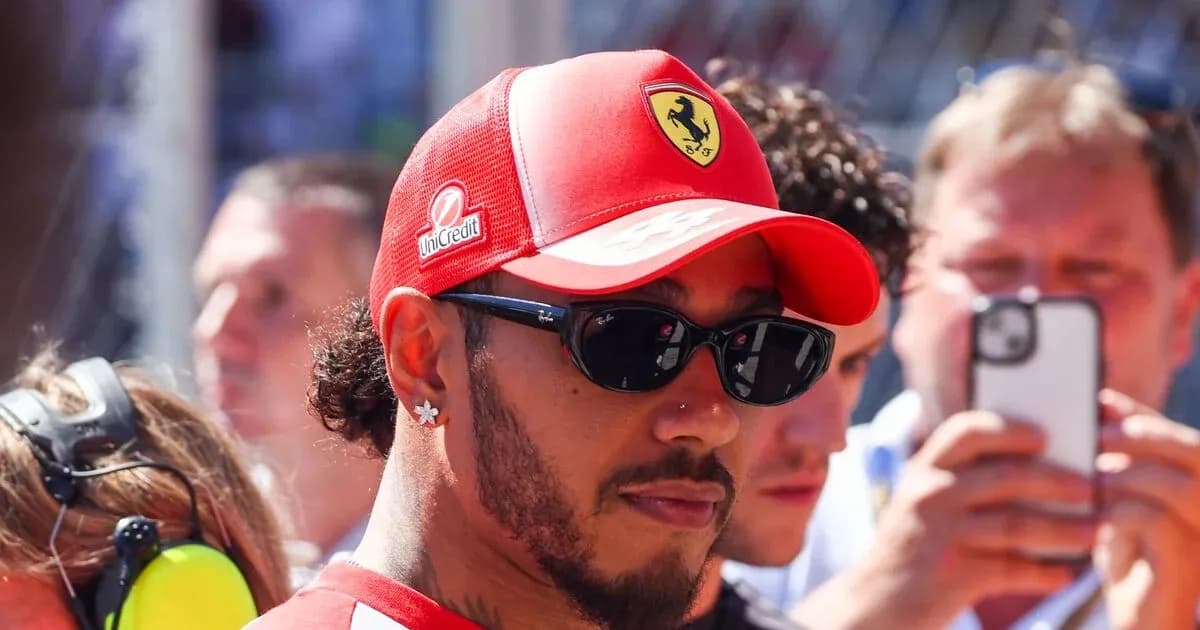
Lewis Hamilton’s Spanish Grand Prix weekend lurched into controversy on Saturday – not because of the crash that stopped final practice, but because of what happened next.
The seven-time world champion lost the rear of his Ferrari on a flying lap at the final corner, spearing into the barrier and burying the nose of the car. The red flags came out immediately at the Madring, yet Hamilton managed to slam it into reverse, wriggle the Ferrari free and get going again.
That’s when the trouble really started.
With the front wing smashed and wedged underneath the nose, Hamilton began a slow tour of the circuit, obliged to complete almost a full lap before he could even reach the pit entry. As he crept around, the damage turned from messy to alarming: the broken wing scraped along the tarmac, throwing up a shower of sparks, while the front-right tyre rubbed violently against the debris.
Smoke poured off the tyre. Then it went. The carcass finally gave way and deflated, leaving Hamilton limping on a puncture in a car that was clearly no longer safe.
From the Ferrari pit wall, the message was unambiguous.
“Stop in the safest place, in the safety place possible,” came the first call from his race engineer over the radio.
Hamilton pushed back: “If I can make it back, I will. If not, I will do it safely.”
The conversation continued, the tone hardening. “We have a puncture on the front right. Stop the car,” Ferrari told him again.
“I can see that,” Hamilton replied – but he still pressed on, ignoring the instruction to pull over. Only after continuing for a time did he finally concede, stopping the Ferrari at the side of the circuit and climbing out.
That reluctance to stop, despite the obvious damage and repeated orders, lit up the Sky Sports F1 commentary box.
Lead commentator David Croft did not mince his words. “I know he’s done 393 Grands Prix, but the rules are, you don’t drive the car in an unsafe condition,” he said. “The team is telling him to stop and the driver has twice now gone against that on the radio. And he finally does stop the car. I get the feeling race control are going to take a very serious view of that, because the team told him to stop.”
Former F1 driver Anthony Davidson focused on the communication from Ferrari, arguing the team needed to spell out the gravity of the situation more clearly.
“The team need to give him more information,” Davidson said. “They need to say, ‘The front wing is under your car and the race director is going to give us a penalty over this’.”
Then he widened the lens. For Davidson, this was about more than one veteran trying to nurse a wounded car back to the pits.
“Any young driver that is watching this right now, you don’t do that. You just don’t do that,” he warned. “That’s what you could have tried to do [get back to the pits] but that rule is there for a reason. If it went under the car completely and jacked your front wheels up and there were marshals on the track, you’ve got to think of all these scenarios.”
Hamilton’s status and experience only sharpen the scrutiny. A rookie might be accused of naivety. A driver with 393 starts is expected to know exactly where the line is between determination and danger.
For now, the matter sits with the officials. At the time of writing, race control had not announced whether they would launch a formal investigation into the incident. Under the FIA’s penalty guidelines, the range of possible sanctions is clear enough: a reprimand at the lighter end, or a grid penalty if the stewards deem his actions a serious breach of the safety rules.
Hamilton has walked that tightrope before and usually come out on the right side of it. This time, with sparks flying, a tyre destroyed and his own team twice ordering him to stop, the stewards must decide whether he stepped too far.