International Court of Appeal Defends Integrity Amid Briatore's Claims
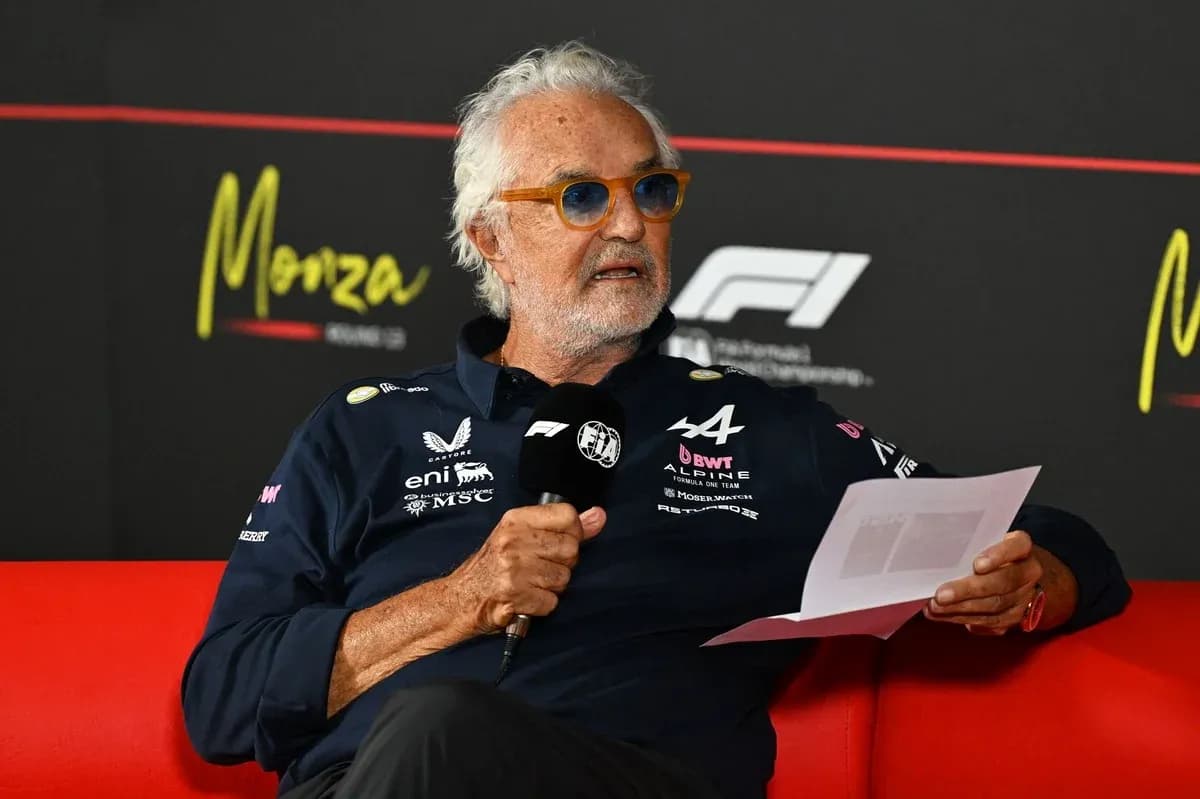
The International Court of Appeal has moved to defend its integrity after explosive accusations from Alpine boss Flavio Briatore over the panel that overturned Pierre Gasly’s Monaco Grand Prix reprieve.
Briatore, never one to pull his punches, used the Italian Grand Prix weekend to question whether the court had been truly independent when it heard McLaren and Red Bull’s appeal against the stewards’ Monaco decision. At the heart of his anger: the presence of judge Filippo Marchino, whom he claimed had ties to McLaren.
The court has now hit back.
Court pushes back on bias claims
In a detailed statement, the International Court of Appeal – which operates independently of the FIA and sits as motorsport’s highest judicial body – insisted its handling of the case followed its established legal framework and the “highest standards” on conflicts of interest.
“The FIA Courts are aware of public comments questioning the independence and impartiality of the judges of the panel that decided Case ICA-2026-06-07-08-09,” the court said, referencing the appeal lodged by McLaren and Red Bull.
It stressed that the appointment and participation of the judges “like for any other case” complied with FIA judicial procedures and practice, which it said are inspired by the IBA Guidelines on Conflicts of Interest in International Arbitration.
The reminder was pointed. So was the subtext: the court believes its house is in order.
How a Monaco podium turned into a legal storm
This all traces back to a messy afternoon in Monte Carlo.
Pierre Gasly was one of several drivers incorrectly penalised for pitlane speeding at the Monaco Grand Prix. The sanction initially cost him a podium, only for Alpine to secure a successful right of review that saw his penalties rescinded.
Not everyone was so fortunate. Other drivers had already served their penalties and, unlike Gasly, could not have them reversed. McLaren and Red Bull argued that this created an uneven playing field and took the matter to the International Court of Appeal.
The ICA sided with the appellants. Gasly’s penalties were reinstated. Alpine’s joy turned to fury, and the Frenchman’s frustration spilled into the paddock. Briatore then escalated the dispute, turning a sporting controversy into a judicial one.
The Marchino connection
Briatore’s attack centred on Filippo Marchino, one of the judges on the panel.
Marchino previously served as CEO of the One Drop Foundation, a charity founded by Cirque du Soleil creator Guy Laliberte. During that time, the foundation received several McLaren road cars from the late McLaren shareholder Mansour Ojjeh to be auctioned for charity.
Briatore also pointed to a 2018 event in Beverley Hills organised by McLaren Special Operations, where Marchino appeared as a speaker. That event had no formal link to the McLaren F1 team but, in Briatore’s eyes, it formed part of a pattern.
The court’s response did not deny those facts. Instead, it leaned on process.
‘No objections’ and strict disclosure rules
The ICA underlined that all its judges are elected by FIA General Assemblies, with some proposed by groups of at least five F1 teams, in line with FIA statutes. Every judge, it said, must meet strict independence and confidentiality standards set out in the FIA Judicial and Disciplinary Rules.
They also file annual disclosures of interests to the FIA compliance officer and sign a specific declaration of independence for each individual case, taking into account the issues and the parties involved. Those declarations are served to the parties before proceedings.
Critically, the court said no one – not Alpine, not McLaren, not Red Bull – raised any concern about the panel before or during the hearing.
“At both the beginning and conclusion of the hearing, the parties were invited to raise any issue concerning the proceedings or the composition of the court. None did so,” the statement read. “No objection was raised during the hearing concerning the manner in which the court questioned the witness or conducted the proceedings.”
The implication is clear: if there were doubts, the time to speak was in the courtroom, not in a press conference weeks later.
Diversity on the bench, and a firm line
The ICA also used the moment to defend the way it builds its panels, stressing that it deliberately mixes judges from different cultural and geographical backgrounds.
According to the court, that diversity brings a broader range of legal traditions and perspectives into deliberations and strengthens “the fairness, independence, credibility of the process and access to a fair trial.”
It accepted that its rulings will always invite debate on legal grounds, stating that “a court’s decision can leave room for various interpretations and comments as for its legal merits; that is fair and accepted by all the judges.”
But on one point it refused to bend: it expressed full confidence in “the soundness of the proceedings and the integrity of the judges,” and reaffirmed its commitment to judicial independence and the integrity of the process.
The Monaco penalties have already reshaped one race result. The fallout is now testing something far more delicate: how far Formula 1’s powerbrokers are willing to go when the integrity of their own courts is dragged into the spotlight.