Red Bull's Driver Line-Up Returns: Hadjar, Verstappen, and the Midfield Dynamics
Red Bull’s driver carousel finally slows this weekend. In Baku, the senior team gets its first-choice line-up back: Isack Hadjar alongside Max Verstappen, fit again after an injury that cost him three races and opened the door to a flurry of auditions across the Red Bull empire.
Those three grands prix after the summer break told Red Bull plenty. About Hadjar. About Liam Lawson. About Yuki Tsunoda. About Arvid Lindblad. And, crucially, about what Verstappen needs if Red Bull is serious about climbing higher than fourth in the constructors’ standings.
Now comes the hard part: turning those lessons into results.
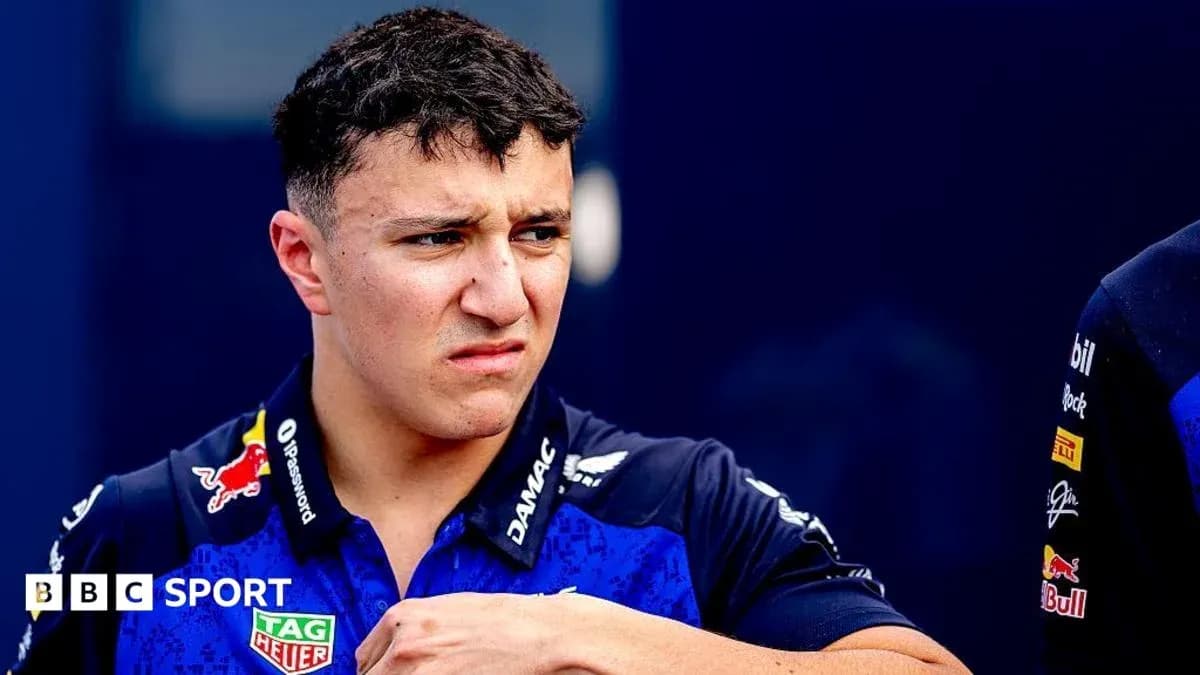
Hadjar steps back into a faster team – and a smaller comfort zone
Hadjar returns to a car that’s moved on without him. That’s both a blessing and a warning.
Before the summer break, his body of work looked strong for a first full season in a top seat. Across the opening 11 races he averaged 6.5 points per grand prix to Verstappen’s 9.9. Put simply, if Verstappen usually finished fifth, Hadjar tended to be only a place or two behind. Solid. Justifiable. The kind of profile that made his promotion feel like the right call.
Then he got hurt, stepped out, and the picture at the front changed.
While Hadjar watched from the sidelines, Verstappen dragged Red Bull to a higher level. Across the three races Hadjar missed, Verstappen’s average jumped to 12 points per race, even with a crash at Zandvoort. Podiums at Monza and the Madring underlined that the peak of this Red Bull package is rising.
Lawson, dropped into the car with no prior mileage and shuffled between teams yet again, did what he could: 4.7 points per event, twice in the top 10, always respectable, never spectacular. He kept the scoreboard ticking, but he didn’t threaten to reshape Red Bull’s season.
That’s the bar Hadjar must clear. Not Lawson’s respectable stand-in form, but Verstappen’s new level.
This is no gentle reintroduction. A triple-header will strain his fitness, his concentration, his confidence in the repaired body. Red Bull needs him to be close to his pre-injury peak immediately, then to push beyond it. If Verstappen is now consistently fighting near the podium, Hadjar can’t afford to settle back into a “good enough” supporting role a couple of places behind.
Red Bull has made its call. Baku will show if it was the right one.
Lawson shows he belongs – just not in Verstappen’s garage
Lawson’s short second stint at Red Bull was never really about snatching Hadjar’s seat. It was about erasing the doubts left by his bruising start to 2025 and proving that his strong work at Racing Bulls this year was no illusion.
He did exactly that.
Lawson arrived at the summer break as the leading driver in the points outside the top four teams, the anchor of a Racing Bulls campaign built on consistency. Inside the garage, his stock had risen sharply. Engineers talked about a clear step over the winter: more maturity, better technical feedback, and a willingness to squeeze performance from 2026’s regulations even though he doesn’t particularly like them.
He’d become a quiet force in energy management, finding gains that helped drag Racing Bulls forward. The plan looked simple enough: keep him with Arvid Lindblad, don’t disturb a working partnership, and let them lead the midfield charge.
Then Red Bull called.
Thrown into a tricky car at short notice, Lawson settled in quickly. Twice in the points. Never disgraced. Monza, his toughest weekend, was always going to be damage limitation from the back of the grid with an engine penalty. He coped, he learned, he survived.
Did he do enough to make Red Bull tear up its long-term plan and put him next to Verstappen? No. He didn’t deliver the sort of seismic, undeniable statement that forces a superteam to change direction.
But he did something almost as valuable: he removed any doubt that he is exactly the kind of driver Racing Bulls needs if it wants to stay on top of the midfield. Reliable, fast, and able to translate a good car into good points.
His future looks more secure now than it did before his Red Bull cameo. Just not in the car that wears the world champion’s number.
Tsunoda proves his point – and might have signed off on his own terms
Yuki Tsunoda’s late call-up at Zandvoort carried a quiet subtext: was this a farewell tour, or the start of another chapter?
On track, he gave a familiar answer. Put him in decent machinery and he’ll bring it home in the points.
Dropped back into Racing Bulls’ 2026 car with no real build-up, Tsunoda was immediately on it. At Zandvoort he qualified just a tenth slower than Lindblad. No rust, no fluster. Just a driver who still knows how to lean on a car.
At Monza he turned a messy Saturday into a reward on Sunday. A Q1 exit and some clumsy grid positioning at the start could have derailed his race entirely, and Audi is still trying to have that solitary point taken away over the grid infringement. On the stopwatch, though, he did what he has done so many times before: reset, race hard, score.
Madrid was the outlier. Damage ended any realistic hope of repeating the trick. But by then Tsunoda had already reminded the paddock what he is: an ideal stand-in. Quick to adapt. Capable of delivering points. Not transformative enough to demand a permanent seat ahead of Red Bull’s younger projects, but too competent to be ignored.
He summed it up himself: “I gave it my all and there’s nothing to regret.”
If this really is the end of a 114‑race F1 career, it will feel far more fitting than the early-season grind of chasing Verstappen from a distance. He leaves, if he leaves, as a driver who proved once more that he can still do the job.
Lindblad quietly shifts the balance at Racing Bulls
Amid all the movement, one constant stood out: Arvid Lindblad kept passing every test thrown at him.
The only rookie on the grid this year has already impressed, but this three-race stretch asked a different question. With Lawson shuttling to Red Bull and Tsunoda dropping into the second Racing Bulls seat, who would lead?
Lindblad did.
His partnership with Lawson has been one of the most effective in the midfield. Together they’re a big part of why Racing Bulls still sits ahead of Alpine in the constructors’ championship. Yet with the line-up in flux, Lindblad needed to show he could be the reference point, not just the quick kid learning on the job.
Monza provided the clearest evidence. His pace was strong enough to beat an Alpine he had no real business finishing ahead of, even allowing for Franco Colapinto’s self-inflicted drama. At the Madring he didn’t have a perfect weekend, but he still banked two valuable points. And at Zandvoort, where a harsh in-race penalty knocked him out of contention, he still played the spoiler, disrupting Pierre Gasly’s race and giving Tsunoda the best possible shot at scoring.
Seven consecutive Q3 appearances now underline the trend. This isn’t a flash of form; it’s a pattern.
At 19, he’s delivering the kind of consistency and race craft that always catches Red Bull’s eye. The question inside Racing Bulls is no longer whether Lindblad belongs. It’s whether the internal balance of power has already tilted his way.
Verstappen needs Hadjar at full tilt
Verstappen has never hidden how much his team-mate’s level matters to him. It shapes his races, his strategies, his margin for error.
In 2026, that matters more than ever. Mercedes, Ferrari and McLaren can usually count on both of their drivers in the fight. Red Bull rarely has that luxury. Too often, Verstappen has been swinging alone.
Lawson’s stint underlined the problem. He didn’t finish within a minute of the race winner in any of his Red Bull starts. There were reasons: lack of familiarity, mid-season disruption, the car’s quirks. But the outcome was clear. When the race settled into its rhythm, Verstappen and Red Bull were effectively fighting one-handed.
Now Hadjar returns to change that equation.
If he can hit his stride immediately, he gives Red Bull a second car that can influence the front of the field – blocking rival strategies, stealing points, helping Verstappen in the title fights that still feel just out of reach. He also offers something subtler: proof, in Verstappen’s eyes, that the physical demands of F1 2026 are not as extreme as some make out. Miss three races, spend two months away, and come back sharp? That would fit Verstappen’s own theory neatly.
Red Bull heads to Baku with its preferred line-up restored, its rookie rising, its stand-ins vindicated, and its star driver demanding more support.
The drivers have made their cases. Now the rest of the season will decide whose performances actually move the needle inside the most ruthless talent machine in Formula 1.