IPL Media Rights: A One-Horse Race with JioStar
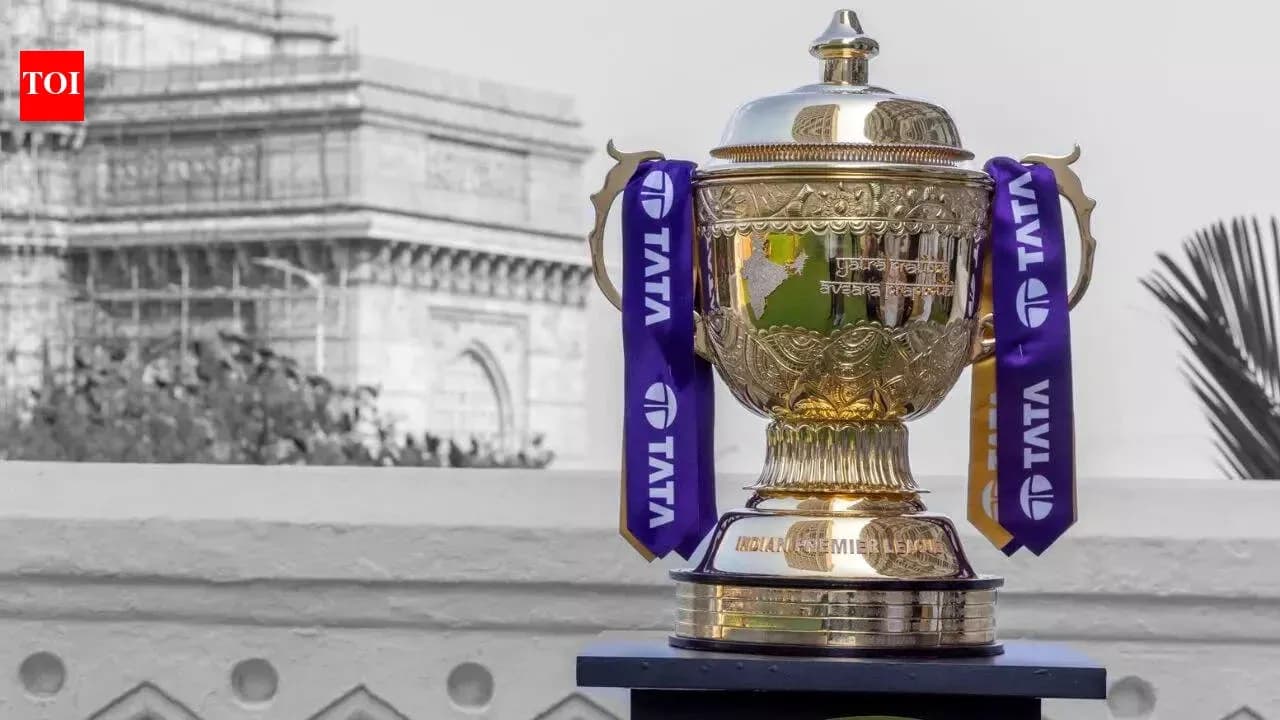
The IPL trophy has never looked more valuable. Or more vulnerable.
With roughly six months left before the final IPL season of the 2023-27 media rights cycle, a quiet anxiety is spreading through the cricket economy. Not about the product on the field, which remains unmatched in its pulling power, but about what happens off it — in the boardrooms where the next set of rights will be sold.
Right now, one name dominates that conversation: JioStar. And that is precisely the problem.
A One-Horse Race for a Golden Property
For more than a decade, the IPL’s media rights have thrived on one thing above all else: a fight. Bidders pushing each other higher. Broadcasters stretching their balance sheets. Platforms betting on cricket as the engine of their growth.
That competitive tension built the IPL into one of the most expensive sports properties on the planet.
This time, the market fears a procession.
There is no credible rival, at least not yet, to stand toe-to-toe with JioStar. Without that, there can be no genuine price discovery. No real test of what the IPL is worth in a changing media landscape. And no guarantee that Indian cricket extracts the maximum value from its most powerful asset.
The irony is that one of the loudest warnings has come from inside the house.
At the ET World Leaders Forum, Uday Shankar — vice-chairman of JioStar and a central figure in the story of Indian sports broadcasting — did not pretend everything was rosy.
“Ten years ago, you would have multiple and serious media companies (around four) competing for major sports rights. You'd have four or more companies genuinely fighting for properties. Today, increasingly, it feels as if we are the only ones standing. And that's not healthy,” he said.
That is not a rival complaining about a rigged game. That is the market leader sounding the alarm.
Costs Soar, Monetisation Lags
Shankar’s diagnosis cut deeper than just the lack of opponents.
“The fundamental issue is that the cost of the rights has risen dramatically. But the ability to monetise those rights hasn't necessarily risen at the same rate. The value of sports is enormous, but the rights holder, broadcaster and platform all need to participate in a sustainable ecosystem,” he added.
That word — sustainable — hangs over this tender.
JioStar’s business model leans heavily on cricket consumption. Its subscription numbers are welded to the IPL’s gravitational pull. No one doubts it will bid aggressively.
The concern lies elsewhere. What if it is the only one doing so?
Without multiple serious bidders, the Board of Control for Cricket in India (BCCI) risks selling a blue-chip property in what looks uncomfortably like a closed shop. The absence of a Plan B for Indian cricket is no longer a theoretical risk. It is a live issue.
And the question being asked, quietly but insistently, is this: why has the BCCI not done more to widen the field?
The Giants Watching From Afar
Globally, the sports media map has been redrawn by technology platforms that once sat on the sidelines.
YouTube has moved from hosting clips to stitching together rights packages. Its strategy is clear: sport as the anchor of a larger pay-TV and subscription universe, not just a one-off content buy.
The seven-year deal for exclusive US distribution of NFL Sunday Ticket — reportedly worth $2 billion a season — is the template. For YouTube TV subscribers, it is a premium sweetener. For everyone else, it is a standalone product sold through YouTube channels.
That is not a toe in the water. That is a full dive.
Of course, the economics of the US and Europe look nothing like the Indian subcontinent. Average revenue per user in the West dwarfs what platforms can hope to earn in India. Sheer volume of users does not automatically close that gap.
Yet, in this part of the world, only one sports market offers enough scale, passion and appointment viewing to tempt a player like YouTube into a serious experiment: Indian cricket. Specifically, the IPL.
Netflix, too, has been edging closer to live sport. Co-CEO Ted Sarandos recently told The Economic Times that the company is interested in live sport, including cricket, but does not want to become a “conventional full-season sports broadcaster.”
That sounds like a door half-open. And it points directly at a tournament like the IPL.
Short, intense, story-rich, and built around a defined window — the league fits neatly into the kind of event-led, narrative-heavy live offering Netflix could shape around its existing strength in storytelling and documentaries.
The IPL is not just a television product. It is an India-first saga with global reach: a billion-plus at home, a vast diaspora abroad, and emerging markets where cricket is one of India’s most effective exports and a subtle arm of soft power.
If any sports league from this region can sit on the table of YouTube and Netflix, it is this one.
The Board’s Blind Spot
So why are those conversations not front and centre?
Shankar’s line — “At some point, the economics have to make sense” — applies as much to the BCCI as it does to any bidder. For the numbers to add up, the federation cannot simply wait for the world to arrive at its doorstep. It has to sell the story.
That means more than issuing a tender document and assuming that global giants, several time zones away, fully understand the scale and nuance of the India cricket economy.
The IPL may be India’s most coveted prime-time asset. But to believe a distant media executive is completely tuned into the India narrative, without hearing it first-hand from those scripting it, is a gamble.
This is where the BCCI’s current stance feels baffling. The board sits on a property that could command interest from dozens of media, technology and streaming platforms worldwide. Yet the industry sees no clear evidence of a structured push to bring them into the room.
No roadshow. No visible pitch. No aggressive courting of new-age players whose models do not resemble the traditional broadcaster.
Plan A, But What Next?
JioStar is Plan A. It is a strong Plan A. It will not walk away from the IPL without a fight.
The real test of Indian cricket’s vision lies beyond that.
Does the BCCI have a Plan B that involves YouTube, Netflix or another global platform stepping in as a challenger, a partner, or even a disruptor? Is there a Plan C that reimagines how rights are packaged, bundled or shared to tap into different layers of the market?
Or will the next rights cycle begin the way the current one looks set to end — with one dominant bidder, a subdued auction, and the uneasy feeling that the world’s most explosive cricket league went to market without truly testing how much it was worth?