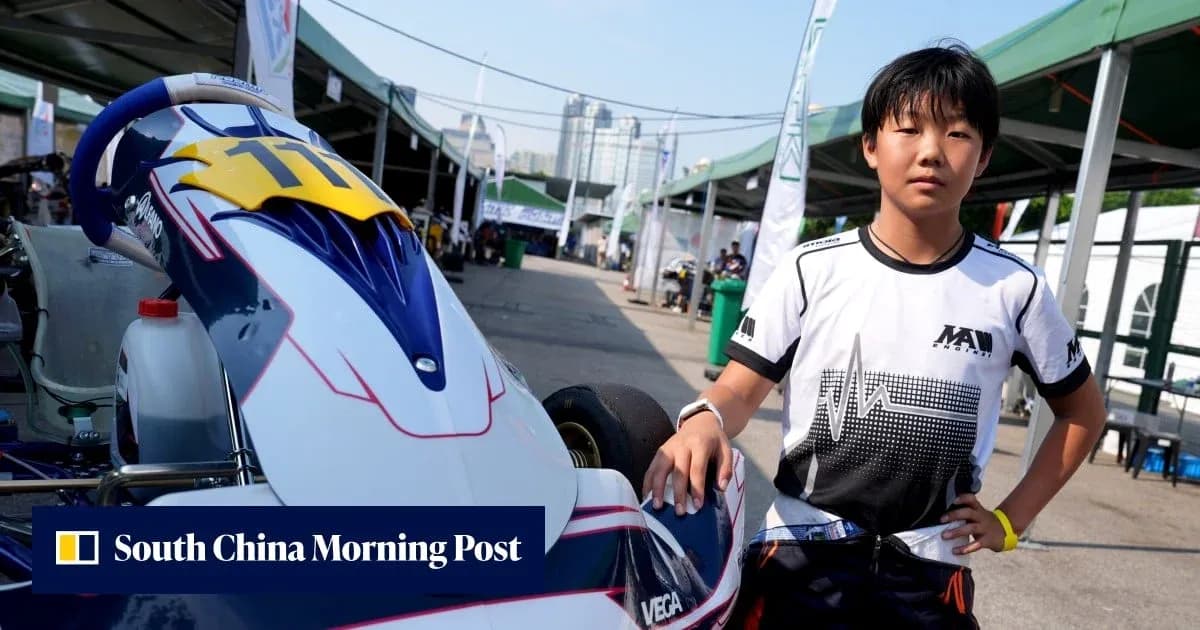
John Han's Remarkable Win at FIA Karting Championship in Macau
On a humid Sunday in Macau, on the narrow ribbon of tarmac that winds around Coloane Karting Track, a 12-year-old from Hong Kong offered a glimpse of what Asia’s next wave of motorsport might look like.
His name is John Han. Remember it or don’t, for now. What matters is what he did on the final lap.
Locked in a tight fight at the front of the 2026 Junior FIA Karting Arrive and Drive Asia-Pacific Championship, Han waited. Lap after lap, he shadowed the leader, reading the kart, reading the track, reading the pressure. Coloane is unforgiving – tight, technical, with little room for error and even less for hesitation.
Then the gap appeared.
On the last lap, with the race hanging in the balance, Han dived for his chance and nailed a bold overtake, threading his kart through Macau’s tricky layout with the kind of composure that makes people in paddocks stop talking and start taking notes. One move, perfectly timed, delivered the title.
For a region still asking where the next Zhou Guanyu might come from, this was not an answer, but it was a hint.
Zhou, now a reserve driver with new Formula 1 entrant Cadillac, remains a trailblazer: the first, and still the only, Chinese driver to hold a full-time F1 seat. His presence at the top level hangs over every junior category in Asia, an invitation and a challenge rolled into one. Young drivers see him and know the door can open – if they can find a way through the sport’s towering financial wall.
That is where this championship tries to change the script.
The FIA’s Junior Karting Arrive and Drive concept strips things back to something close to pure talent. No private test days. No custom-built engines. No endless arms race of equipment. Drivers arrive at the circuit and meet their machinery for the first time that weekend. Every kart is identical. Engines are routinely swapped between competitors to kill off any suspicion of a “golden” or “dud” unit.
You don’t win this series in the workshop. You win it in the braking zone.
For families across Asia-Pacific, that matters. Traditional karting can drain bank accounts long before a child reaches their teens. This format, launched last year as part of the FIA’s global karting plan, aims to lower the financial barrier that has quietly filtered out countless potential talents before they ever faced a grid of rivals.
On Sunday in Macau, the concept met its ideal advertisement: a tight field, equal machinery, and a young driver willing to risk everything on a single, decisive move.
Han’s victory does not guarantee anything. Karting is littered with champions who never made it beyond junior categories. But the way he won – on a notoriously tricky circuit, under late-race pressure, in a series designed to expose raw ability – will not go unnoticed.
Somewhere in the data sheets and timing screens from Coloane, talent scouts and team bosses will see a 12-year-old who, given the same kart as everyone else, found a way to be the one in front when it mattered.
The search for the next Zhou Guanyu is far from over. On this evidence, though, it may already be gathering speed.