Kimi Antonelli Defies Odds at Monza Italian Grand Prix
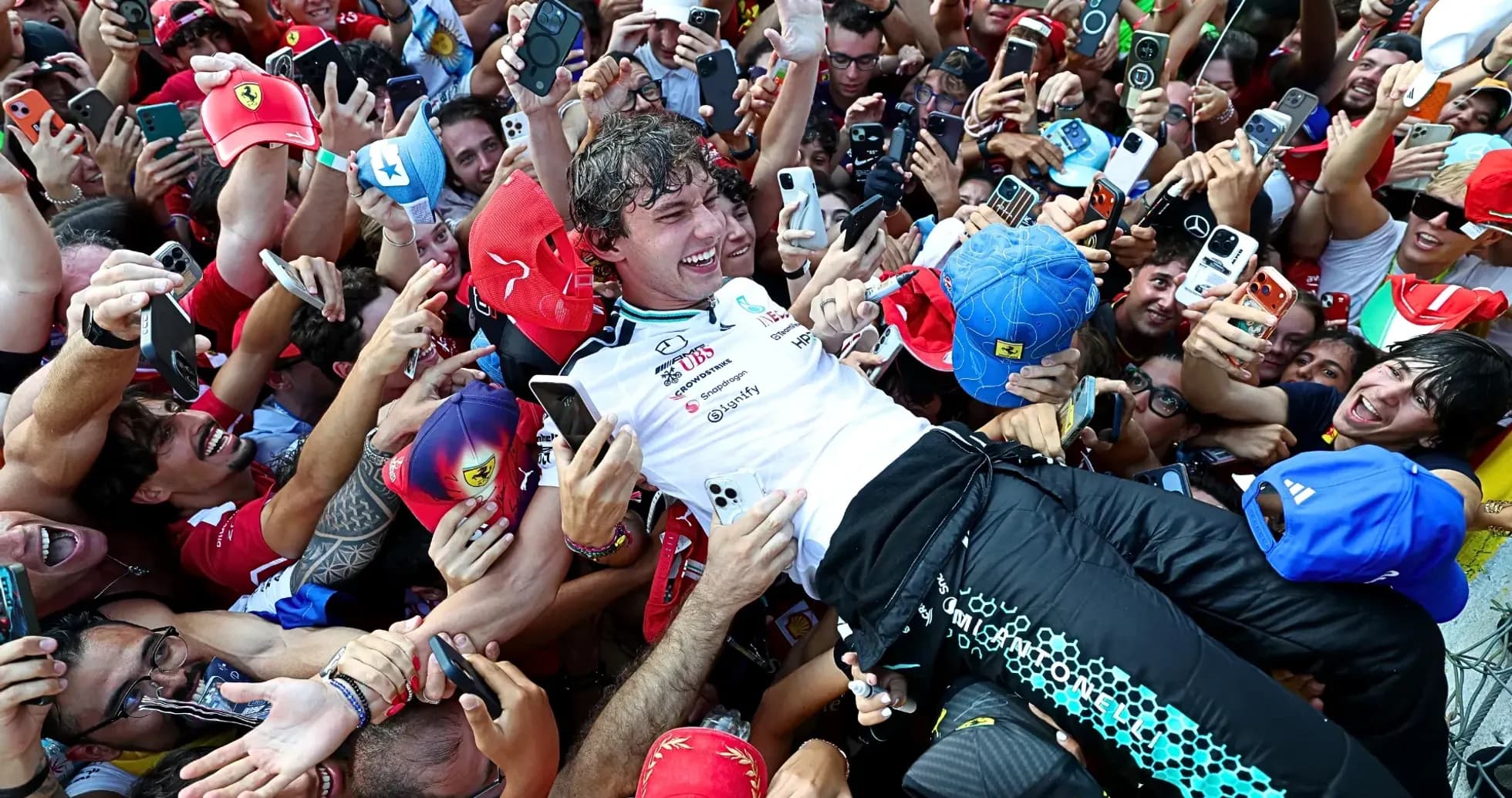
Kimi Antonelli sat 19th on the grid at Monza, staring down the main straight of his home Italian Grand Prix and, you suspect, quietly raging at the numbers that had put him there.
This was Mercedes by the book. Cold, calculated, clinical. Team boss Toto Wolff made it clear: an algorithm had decided Antonelli would take a back-of-the-grid engine penalty at his home race. No sentiment, no romance, no allowance for the tifosi roaring for one of their own. As Wolff put it, the computers “don’t take [drivers’] nationality into consideration”.
They ran the simulations. They crunched the data. The verdict was blunt. From that far back, the model said, Antonelli had no realistic shot at victory. A top-five finish was the ceiling, the sensible outcome. Even if chaos unfolded ahead, even if he produced something special, the projections still boxed him in.
Then the lights went out.
What followed shredded the script. Antonelli carved his way through the field with a charge that felt more like instinct than strategy, more like a driver feeding off the energy of a home crowd than a man following a pre-race plan. By Lap 18, he had done the unthinkable: he led the Italian Grand Prix.
The numbers hadn’t seen that coming.
Yet even as he hit the front, the data still loomed over his race. Mercedes’ tyre strategy, again shaped by those same systems, pointed to a hard limit. The models said the rubber wouldn’t last, that degradation would drag him back, that second place was the realistic high-water mark.
On paper, the computers were right. On track, Antonelli was busy proving that some days, the human element refuses to be reduced to probability.