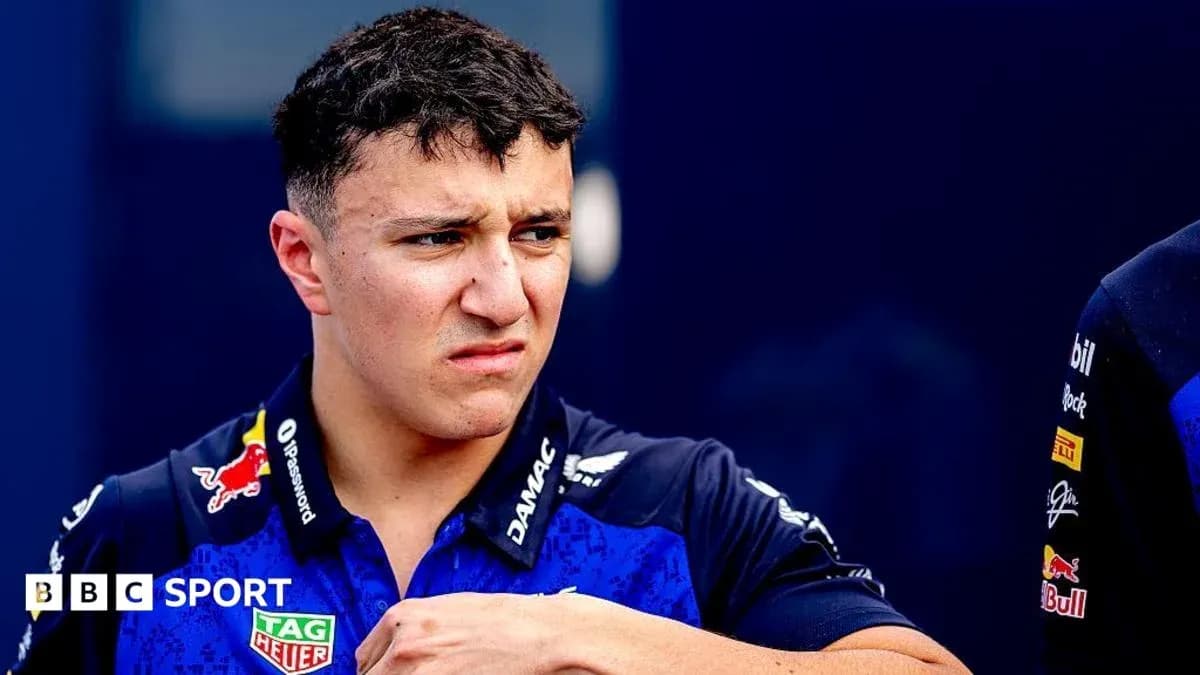
Kimi Antonelli's Rise: A Verstappen-style Charge from P19
Kimi Antonelli is starting to look uncannily like his good friend Max Verstappen. The way he slices through traffic, the way his pace builds and builds across a Grand Prix, even the weak spot in his armour – it all feels familiar. There is, though, one crucial area where the comparison still breaks.
A Verstappen-style charge from P19
Starting 19th and winning a Grand Prix used to be Verstappen territory. In recent years, when the Dutchman lined up at the back while his teammate sat on pole, the script hardly changed: calm, ruthless, inevitable victory.
Antonelli just wrote his own version at Monza.
From P19 on the grid to the top step in front of the Tifosi, the 19‑year‑old made it look disturbingly routine. He cut through the pack with barely a pause, picking off cars with the sort of composure that usually comes after a decade in F1, not a season and a bit.
Yes, the red flag and restart helped him reset the race. Yes, the timing played into his hands. But there was never a sense that the Italian needed a miracle to win his home Grand Prix. On raw pace and racecraft alone, it felt like he would have found a way anyway.
For George Russell, that reality will sting for a long time.
Russell humbled, Antonelli ascendant
At the end of 2025, Russell spoke like a man ready to fight for a world title. The narrative then was of a driver entering his prime, about to cash in on years of graft and near-misses.
Twelve months on, he is being taken apart by a teenager.
Monza was brutal. Russell was beaten and exposed in a way usually reserved for recognised number twos – the Sergio Perez and Valtteri Bottas types who orbit around a superstar. You do not associate that kind of public dismantling with a Lewis Hamilton or a Max Verstappen. They simply don’t allow it to happen over a season.
That’s the uncomfortable truth for Russell. But it says even more about Antonelli.
In only his second year in Formula 1, still just 19, Antonelli is dismantling a teammate who, not long ago, many inside the paddock saw as a future world champion. It brings to mind Daniel Ricciardo’s final days at Red Bull, when he realised just how high Verstappen’s ceiling really was and chose to step away rather than live in that shadow.
For Russell, that option has gone. He had the upper hand through much of 2025. In 2026, he is being overrun.
Race-day dominance: Antonelli’s Verstappen trait
The gulf is clearest on Sundays.
Strip away the noise and look at the numbers from the first 13 Grands Prix of 2026. Excluding the Belgian GP, where Russell retired early, Antonelli has been the quicker man in race trim at 10 of the remaining 12 rounds.
Only in China and Austria did Russell produce a better race pace, and even then by less than a tenth of a second. Across those 12 Grands Prix, Antonelli’s average advantage sits at 0.380s per lap. Over a race distance, that is enormous.
This is where the Verstappen and Fernando Alonso comparisons truly bite. Hamilton and Sebastian Vettel arrived in F1 as qualifying assassins, drivers who could conjure a single lap of magic almost on command. Verstappen’s gift, from the very start, lay elsewhere: he broke races open on Sundays.
Antonelli has that same instinct. The race comes to him. Tyres, traffic, strategy, pressure – he bends it all to his rhythm.
Saturdays still the weak link
The parallel with Verstappen runs deeper. Like Max in his early Red Bull years, Antonelli’s soft spot is qualifying.
Verstappen needed seasons alongside Carlos Sainz and Ricciardo before he began crushing teammates on Saturdays as well as Sundays from 2018 onwards. Antonelli is in that earlier phase now. Over a single lap, Russell remains his biggest threat.
The numbers underline it. Antonelli leads the qualifying head-to-head 7–6, but the gap is razor-thin. His average advantage is just 0.093 seconds – a fraction of the margin he enjoys when the lights go out on Sunday.
So the raw picture is clear: Antonelli is already the stronger racer, but not yet the complete package. There is still work to do if he wants to dominate a weekend from FP1 to the chequered flag in the way Verstappen has made routine.
Where Antonelli still falls short of Verstappen
Two big differences still separate the friends.
The obvious one is the record book. Verstappen owns the titles, the wins, the years of relentless excellence. Antonelli is at the beginning, not the peak. He must first show he can sustain this level over an entire campaign, then repeat it, then build on it. That grind is where careers are defined.
The second gap cuts to the heart of modern F1: wheel-to-wheel racing.
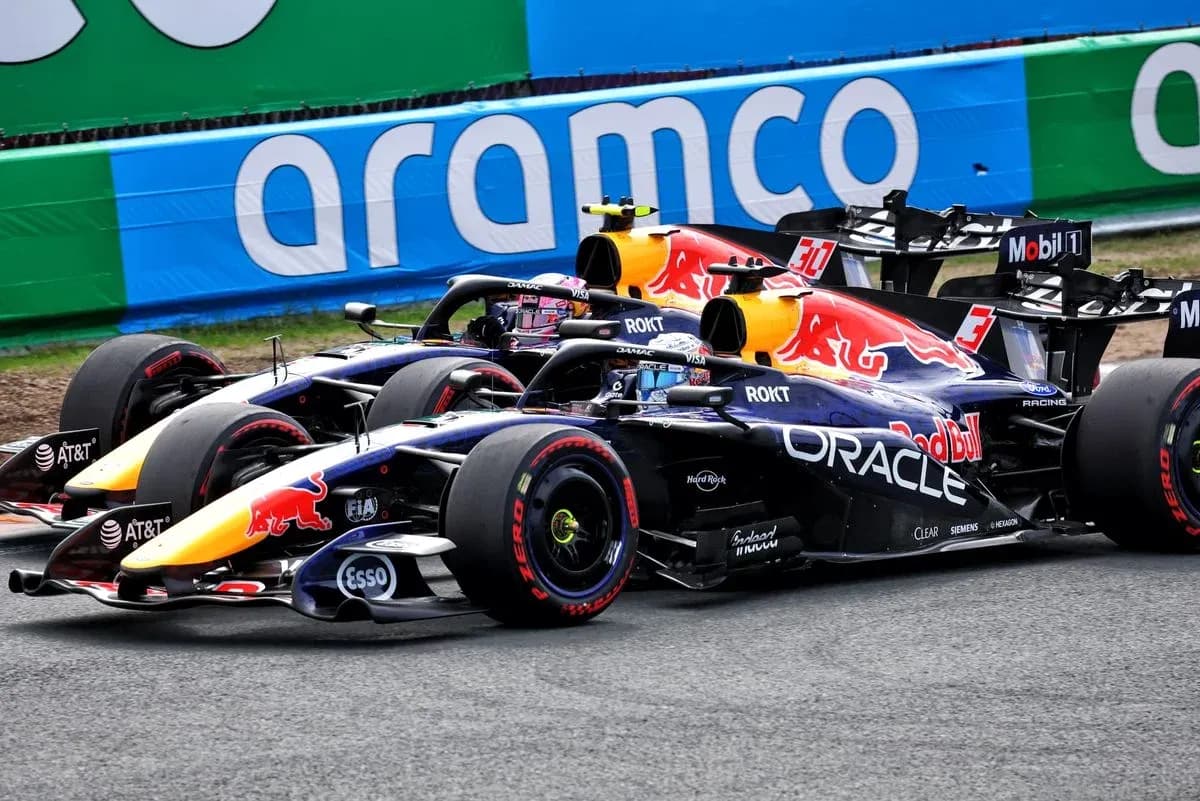
Verstappen’s racecraft in combat is unmatched. His timing, his positioning under braking, the way he forces rivals into no‑win choices – it remains the gold standard. Even at Monza, he stamped his authority with aggressive but controlled attacking and defending, finding lines and gaps that others simply do not see.
Antonelli is not there. Not yet.
His wheel-to-wheel work can still look untidy. Against Russell at Monza, he ran off the track in a duel in a way you rarely see from Verstappen in his current guise. Earlier this season, Charles Leclerc publicly questioned Antonelli’s side-by-side judgement. Those criticisms did not come from nowhere.
The flip side? He is learning fast. The rough edges are being sanded down in real time, under the harshest spotlight the sport can offer.
Verstappen’s heir – or something different?
What is no longer in doubt is Antonelli’s talent. His race pace is crushing. His reading of a Grand Prix is mature beyond his years. His ability to dismantle an established teammate across a season is already Verstappen-like.
A first world title, in only his second year in F1, now feels less like a dream and more like an expectation.
Verstappen, for the first time in a long while, appears to have a genuine successor on the horizon – a driver who, in equal machinery, could make his life very uncomfortable.
The question is no longer whether Antonelli belongs in that company. It’s how quickly he turns the resemblance into a rivalry.