Kimi Antonelli’s Historic Victory at Monza
Kimi Antonelli arrived at Monza buried in 19th on the grid, a home hero in name only, stuck in the shadows at the back. He left it as the man who lit up the Temple of Speed.
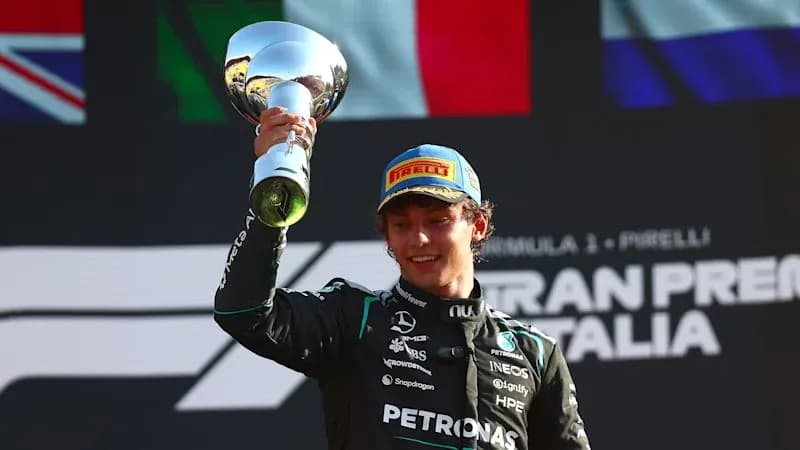
Over 53 laps of chaos, strategy gambles and raw nerve, the 20-year-old Italian carved his way through the field and then, in a late, brutal twist of fate for George Russell, snatched his first Formula 1 victory in front of a delirious home crowd. From 19th to first. At Monza. For an Italian. In 2026.
You don’t script that. As David Croft put it, you simply can’t.
An Italian finally conquers Monza again
When Antonelli crossed the line, the roar from the grandstands told its own story. Italy has waited six decades for this. Not since Ludovico Scarfiotti in 1966 had an Italian driver won at Monza. Generations have come and gone, Ferrari icons have risen and fallen, but the drought lingered.
On the podium, Antonelli could barely get the words out. Tears streaked his face as the anthem rang out. Later, once he had gathered himself, he summed it up simply.
“Unbelievable. I am so happy. I could never have imagined to be here today. We managed to pull it off, and I am really happy,” he said.
To grasp the scale of it, only John Watson has ever won from further back on the grid, storming from 22nd to victory at the 1983 United States Grand Prix. That is the level of company Antonelli just joined.
Russell’s heartbreak, Verstappen’s salvage job
For much of the afternoon, this looked like George Russell’s race. The Mercedes man launched past pole-sitter Pierre Gasly, controlled the pace and appeared to be cruising towards a statement victory. The car underneath him was quick, the strategy seemingly solid, the threat behind contained.
Then the race turned on its head.
Charles Leclerc slammed into the barriers in a huge early accident that silenced the Ferrari faithful and brought a 30-minute delay while marshals repaired the damage. The red cars were in pieces; the red grandstands were in shock.
The stoppage reshuffled the deck. It dragged Antonelli into contention and opened the door for Oscar Piastri as the race reset around them.
Once the action resumed, the two Mercedes went to war. Lap after lap, the silver cars see-sawed for control, Russell holding track position, Antonelli stalking, waiting, probing. The tension built with every tour of the 5.793km circuit, with every blast down the main straight into the brutal braking of Turns 1 and 2.
Then Lance Stroll triggered a virtual safety car. That was the crack in the armour.
Mercedes rolled the dice. They kept Russell out. They called Antonelli in.
The younger man pitted, bolted on fresh tyres and suddenly had a golden ticket: clear air, grip, and time to hunt. Russell, left exposed on older rubber, became a sitting duck in the closing laps.
The pressure finally told. In the final three laps, Antonelli closed, attacked and broke Russell’s resistance, stealing the win and shattering his teammate’s afternoon. Russell, composed but clearly stung, admitted the surprise afterwards.
“I thought we were both going to stay out, I was surprised to see him pitting,” he said. “In the end, it was a roll of the dice both ways.”
This time, the gamble fell squarely in Antonelli’s favour. Russell had to settle for second.
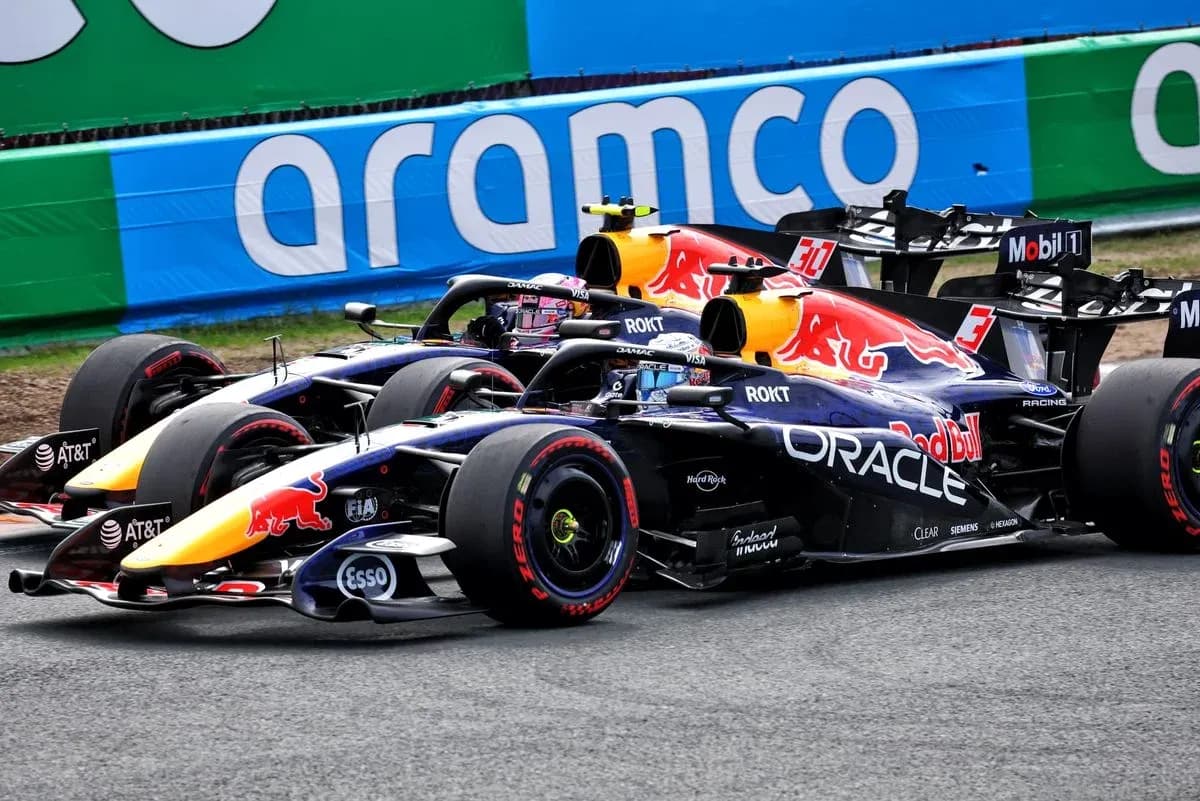
Behind them, Max Verstappen turned what could have been a damage-limitation exercise into a podium. Locked in an intense fight with Oscar Piastri, the Dutchman dug in, defended hard and then edged clear to secure third. It was not a dominant display, but it was ruthless enough.
Piastri’s late agony, Norris’s last-gasp move
For Oscar Piastri, Monza promised so much and delivered only frustration.
The Australian had been thrust into podium contention by the early chaos and the timing of the interruptions. He fought fiercely, kept himself in the mix, and for long stretches looked poised to leave Italy with a top-three finish.
Verstappen had other ideas. Their duel was one of the race’s standout battles, the Red Bull man ultimately edging Piastri aside for third. Even then, fourth still looked like a decent consolation.
Then came the sting in the tail.
Lando Norris loomed in Piastri’s mirrors in the dying moments, the two McLarens locked in their own private scrap. Norris launched an attack, Piastri held firm, and the radio crackled with anger.
“He pushed me off track,” Norris complained. “That was dangerous.”
The team quickly reminded Piastri to keep it clean, to avoid turning a tense intra-team fight into a disaster. As the final lap unfolded, Norris pounced. In the last seconds of the race, he slipped by his teammate, snatching fourth and pushing Piastri down to fifth.
For a driver still chasing his first podium since Miami in May, it cut deep. Another chance gone. Another near-miss on a day when the race had briefly opened up for him.
Gasly’s lost pole and Monza’s unforgiving nature
At the very front of the day’s script, Pierre Gasly had arrived with his own dream. A maiden pole, at Monza of all places, and a chance to rekindle memories of his shock win here six years earlier.
Reality bit hard. The pace simply wasn’t there to hold off the Mercedes on Sunday. Gasly’s pole was a triumph of Saturday execution, but once the lights went out he could do little to stop Russell’s charge. The Monza layout, with its long straights and brutal braking zones, rewards power and precision. Gasly found himself outgunned.
That is the nature of this place. The Temple of Speed offers some of the best overtaking spots on the calendar, but it also exposes any weakness. The long main straight into the first chicane, the slipstream battles through Curva Grande, the heavy stops at the Roggia and Ascari – they all punish hesitation and reward courage.
On this day, no one embraced that more than Antonelli.
From 19th on the grid, he attacked Monza as if it were a kart track, picking off rivals, surviving the chaos, and then, when it mattered most, outfoxing his own teammate in a tactical knife fight.
Italy came to see a race. It left having witnessed a coronation. The question now is simple: was this a one-off miracle, or the first chapter of a career that will redefine what home glory means at Monza?