Lawson's Impressive Performance Amidst Sao Paulo GP Grid Penalties
Liam Lawson walked out of a drenched Interlagos on Sunday with the kind of result that keeps careers moving forward. Third on the grid for the Sao Paulo Grand Prix. Equal to his best in Formula 1. Achieved in conditions that expose nerves, judgement and raw feel for a car.
The Kiwi had ended qualifying only fifth on the timesheets after a treacherous final session on a soaked track. That alone was tidy work from the Racing Bulls driver. The rain came in waves, grip vanished corner to corner, and every lap felt like a bet against the barriers.
Then the penalties landed.
Power unit changes ripped through the provisional order, dragging big names backwards and lifting Lawson onto the second row. George Russell and Charles Leclerc, who had finished second and fourth in qualifying, both dropped down the grid after exceeding their engine allocations. Lawson became one of the clear winners from the reshuffle, promoted to third and suddenly staring at clean air into Turn 1.
It matches his standout qualifying performance in Azerbaijan last year and arrives at a delicate moment in his career. Racing Bulls and their senior partners at Red Bull have yet to confirm his seat for 2027. Performances like this are his loudest argument. Ninth in the drivers’ championship, now starting from the sharp end again, and on course to chase points for a fifth straight Grand Prix – his body of work is growing.
At the very front, Lando Norris delivered when it mattered most. The McLaren driver took pole by 0.204 seconds, securing his first start from the front since the Madrid Grand Prix in September and a remarkable third consecutive pole at Interlagos. This is a circuit that rewards rhythm and courage; Norris has both in abundance here.
The session demanded constant tyre calls as the weather swung between threatening and brutal. Slicks or intermediates, push or protect. One wrong lap could end the day.
“You feel you want to push so much more but you can't,” Norris admitted afterwards, summing up the tightrope every driver walked.
Newly crowned world champion Kimi Antonelli will line up alongside him on the front row. The Mercedes rookie had originally qualified behind teammate Russell but inherited second when Russell took a five-place grid penalty for adding fresh engine components. Antonelli’s calm under pressure, with the title already secured, gives this front row an intriguing balance: one chasing validation, the other already wearing the crown.
Behind them, the grid tells a distorted story of pace versus punishment.
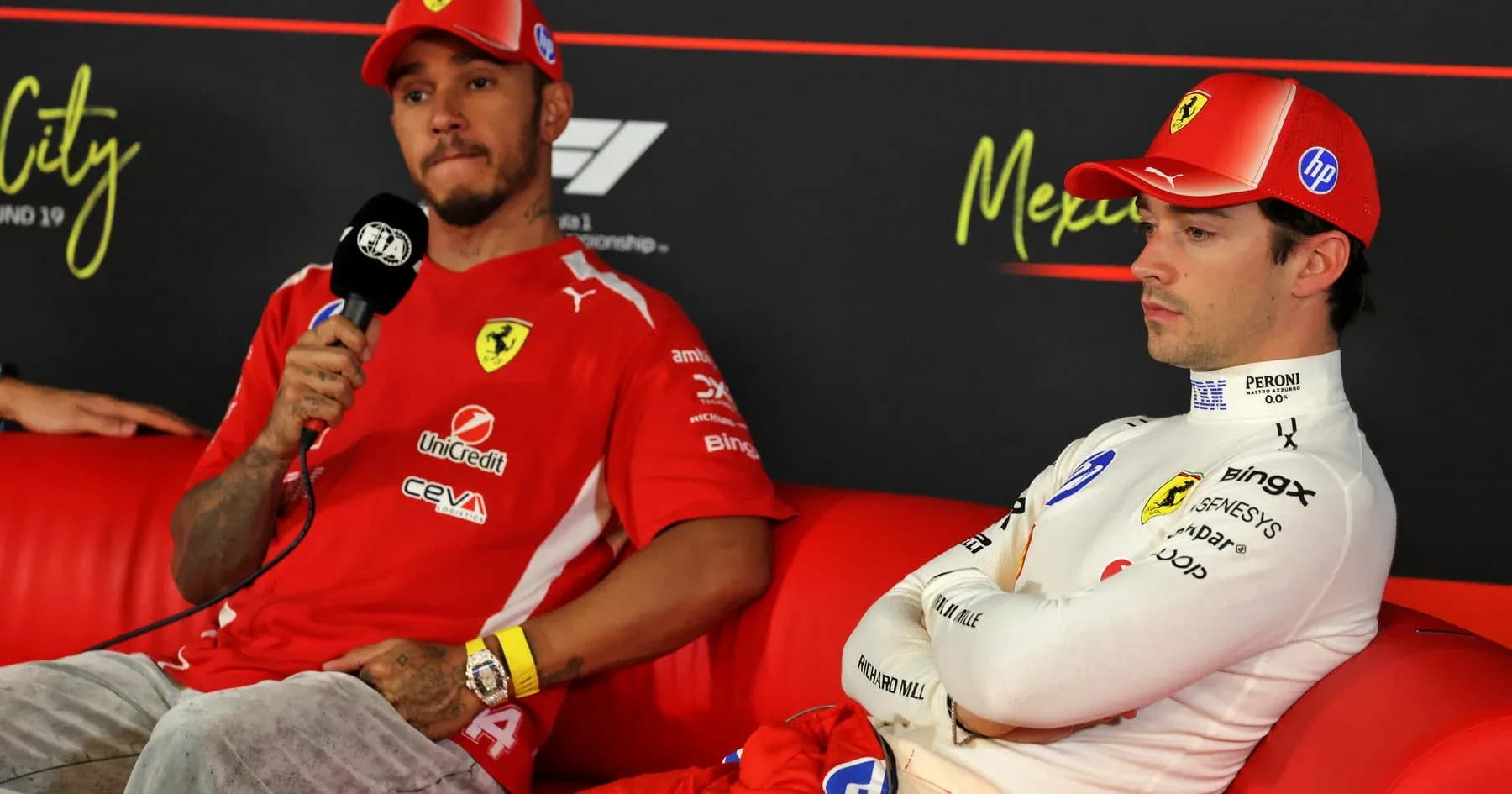
Red Bull’s Max Verstappen and Ferrari’s Lewis Hamilton both paid heavily for power unit changes. Verstappen, hit with a massive 30-place cumulative penalty for a full power unit change, could qualify no better than 16th and will tumble even further down the order. Ferrari’s drivers initially received 10-place penalties for new internal combustion engines, only for Hamilton to drop even deeper after further power unit changes on his car.
Cadillac’s Sergio Pérez joins them at the wrong end of the grid, also starting from the back after fitting new elements to his power unit.
On most circuits, that would sound like a death sentence for their Sunday hopes. Interlagos is different.
This is the place where Hamilton carved through the field in 2021 with a charge that has already slipped into F1 folklore. The same track where Verstappen launched from 17th to victory in 2024. The short lap, the long run to Turn 1, the constant chances to attack – Sao Paulo invites chaos, and the sport’s elite have often embraced it.
The warning signs for the rest of the field were there earlier in the day. Verstappen topped the final practice session, edging Antonelli by just 0.025 seconds. Norris sat third, Russell fourth. Hamilton, though, languished down in 12th, more than a second off Verstappen’s benchmark.
That gap underlined the scale of the task ahead for the seven-time champion, even before the penalties shoved him deeper into the pack.
For Lawson, the picture is clearer. He has a car that has quietly found form, a grid position that puts him in the fight from the first lap, and a run of results that is starting to demand attention from decision-makers.
On a day when champions were pushed to the back and the weather tried to turn qualifying into a lottery, the 22-year-old from New Zealand kept his head and put himself exactly where he needs to be.
Now comes the real question: with a prime starting spot at a circuit built for drama, how far can he push his case for a long-term future on the F1 grid?